Win the $760 million Powerball and you might keep just $157 million. Where you buy the ticket matters
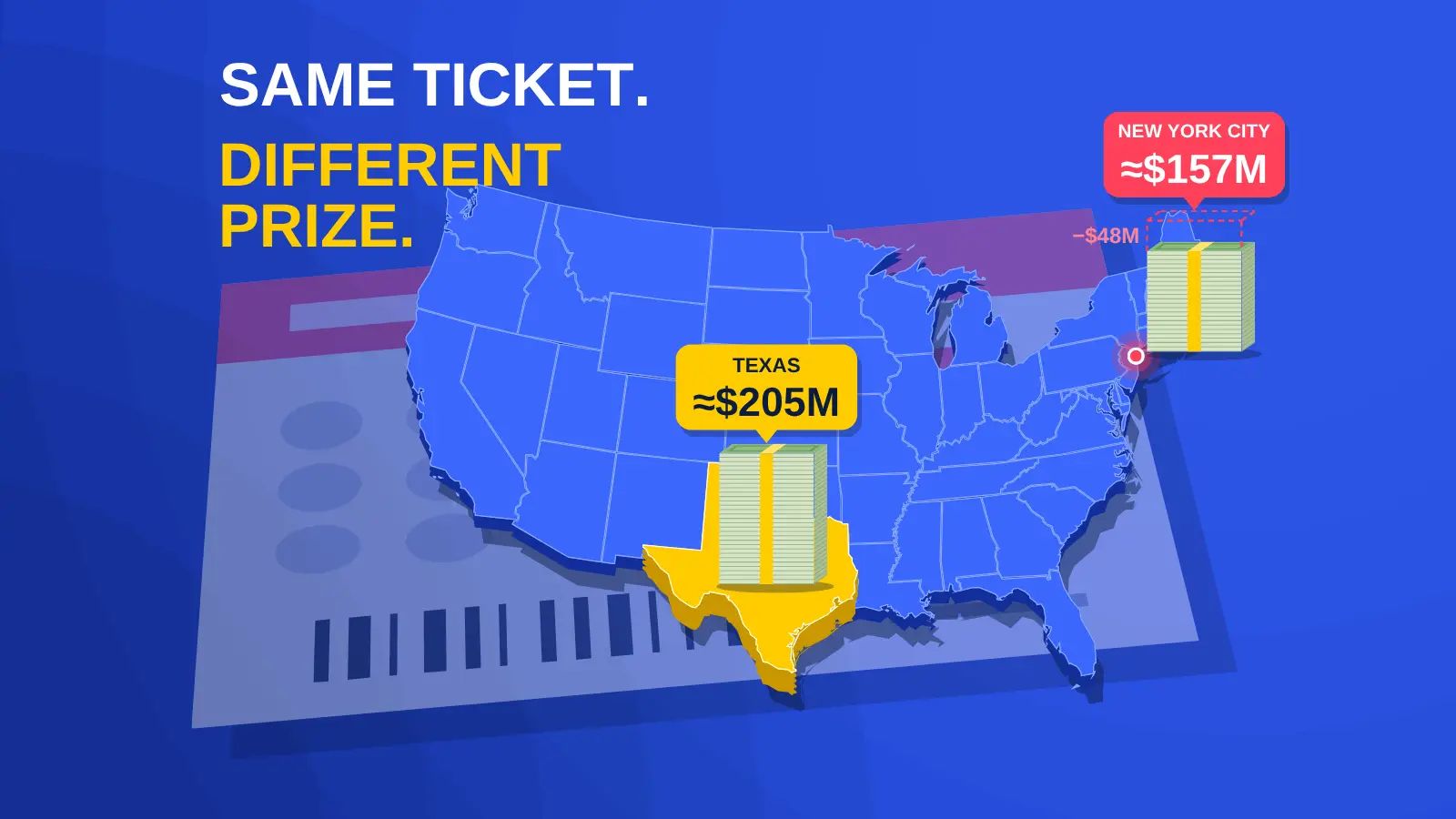
If one person wins Saturday's $760 million Powerball jackpot and takes the cash, they would keep an estimated $205 million in Texas but only about $157 million in New York City, a $48 million difference for the exact same ticket.
Key takeaways
- The money the IRS takes at payout is far from the final bill.
- In New York City, the winner ends up with less than half of the cash prize.
- The $760 million headline number is not the real prize anywhere.
Three winners, one ticket
Nobody hit the jackpot in Wednesday's drawing, so Saturday's prize has grown to an estimated $760 million. That's the number on every billboard, but it's the annuity value, paid out over decades. A winner who takes the money all at once gets the cash option instead, which is $326 million before taxes.
That's where the shrinking starts. Imagine three people who each match all six numbers with the same ticket. The only difference between them is where they bought it.

- The Texan: Texas has no state income tax, so only the federal government takes a cut. Estimated take-home: about $205 million.
- The New Yorker in Buffalo: New York State adds its own tax of up to 10.9%. Estimated take-home: about $170 million.
- The New Yorker in Manhattan: New York City adds another 3.876% on top. Estimated take-home: about $157 million.
The New York City winner walks away with less than half of the $326 million cash prize, and about a fifth of the $760 million on the billboard. The Texan keeps $48 million more, enough to make a third person very rich, just by buying the ticket in a different place.
The IRS bill comes in two parts
When a lottery prize is paid out, 24% goes straight to the IRS. On a $326 million cash prize, that's about $78 million withheld on the spot. Many winners see the check that's left and assume the federal part is done.
It isn't. Lottery winnings count as ordinary income, and a prize this size lands deep in the top federal tax bracket of 37%. The real federal bill is closer to $121 million, so the winner would owe roughly another $42 million when they file their return the following spring. The 24% is a down payment, not the final bill.
That federal share is the same everywhere in the country. It's the state, and in a few places the city, that makes the big difference.
Why the state matters so much
On a prize this big, a few percentage points turn into tens of millions of dollars. Every 1% of state tax on $326 million is about $3.3 million.
At one end are states like Texas and Florida, which have no state income tax at all, so a winner there pays only the federal share. New York sits at the other end. Its 10.9% top rate takes about $36 million, and New York City's own income tax adds about $13 million more. Most other states land somewhere in between.
There's one surprise in the middle of the map. California, a state known for high income taxes, doesn't tax California Lottery prizes at all, so a Powerball winner who bought the ticket there keeps as much as one in Texas.
Two more details are worth knowing. The state where the ticket was bought usually gets the first claim on the tax, and a winner who lives in a different state may owe tax at home too, usually with a credit for what they already paid. And not every state is in the game. Alabama, Alaska, Hawaii, Nevada and Utah don't sell Powerball tickets at all.
What about the $760 million?
The advertised jackpot is real money, just not all at once. A winner who picks the annuity gets 30 payments spread over 29 years, with each payment 5% bigger than the one before. Added up, they come to the full $760 million.
Each of those yearly payments is taxed in the year it arrives, by the same federal government and the same state as the cash option. So the gap between Texas and New York City doesn't go away with the annuity. It just gets spread over three decades.
Of course, all of this assumes a single winner. If two tickets match all six numbers, the prize is split, and so is every number in this article. And the odds of winning the jackpot at all are about 1 in 292 million.
Try our lottery tax calculator to run your specific scenarios!
Methodology
The jackpot and cash option are the estimates for the Saturday, October 31, 2026 drawing, published after the October 28 drawing had no jackpot winner. Estimated take-home applies the top federal income tax rate of 37% to the $326 million cash option, plus New York State's top rate of 10.9% and New York City's 3.876% where relevant. Texas has no state income tax. These are simplified estimates. A real tax bill depends on the winner's other income, deductions and timing, and the top rates apply only above certain income levels, so the actual amounts could differ slightly.
Most Read



loading