NASA's Swift telescope just fell back to Earth. What else is up there?
• Science
NASA's Swift gamma-ray telescope fell back into the atmosphere on November 4, 2026, two weeks after falling below 171 miles. But the fragments of USA 32 that broke apart in September could stay up there for decades, possibly centuries.
The difference? Altitude.
Key takeaways
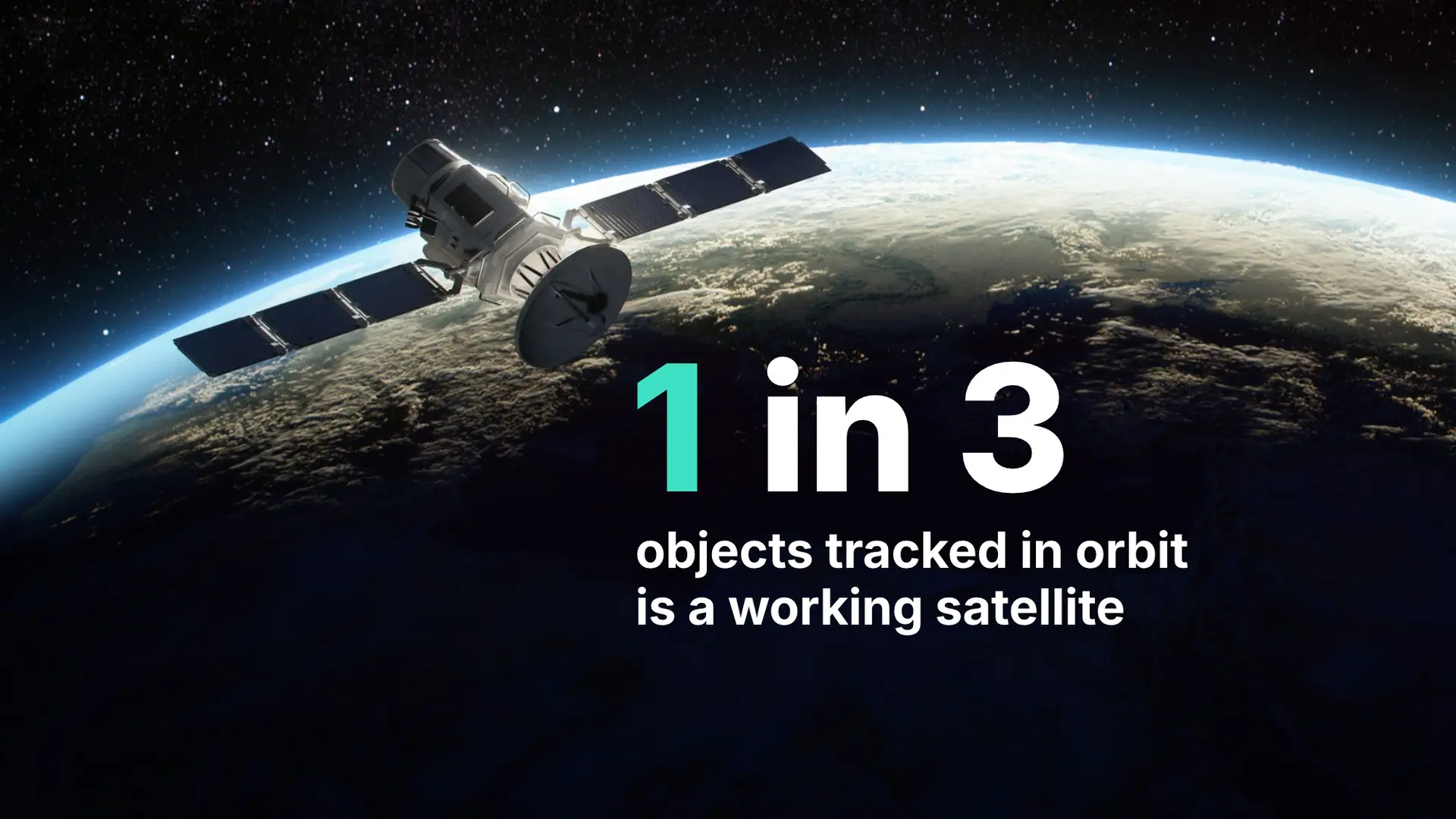
- ESA is currently tracking about 47,270 objects orbiting Earth. 34% are working satellites, 7% are dead satellites, and 59% are rocket bodies and debris (ESA, October 23, 2026).
- USA 32 broke apart at 482 miles, just below the altitude where NASA says debris stays for centuries.
- In 2025, about 11 new satellites reached orbit each day, while only about 3 intact objects, including old satellites and rocket bodies, re-entered per day.
Two-thirds of tracked objects don’t work
According to NASA’s Orbital Debris Program Office, radars and telescopes routinely monitor objects larger than 4 inches. The European Space Agency (ESA) counts 47,270 of them in orbit today. Of those, around 15,900 (34%) are working satellites.
Since the ESA is currently tracking a total of about 19,440 satellites in our orbit, that means that roughly 3,540 satellites no longer work. That’s 7% of all tracked objects.
The other 27,830 objects (59%) are rocket bodies and debris. ESA’s latest breakdown, from the end of 2025, splits this group into roughly 2,080 intact rocket bodies, 13,470 fragments from explosions and collisions, 11,090 objects of unknown origin, and about 1,380 parts released during missions, such as lens covers.
So, about a quarter of all these tracked entities aren’t identified, but also over one-third is working hardware—these space objects are not all junk and waste.

An object's altitude largely determines how long it stays in orbit.
NASA’s own catalog, which counts 34,054 objects, lists 18,323 (54%) as American, including 13,635 of the 19,154 working and non-working spacecraft.
Then, there are about 1.5 million pieces of 0.4 to 4 inches, and 230 million of 0.04 to 0.4 inches, according to ESA’s estimates. But these are too small to follow.
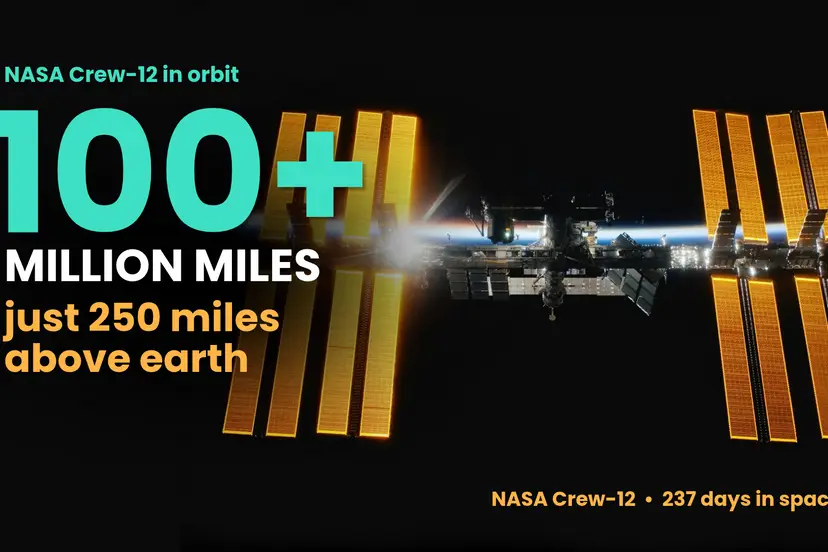
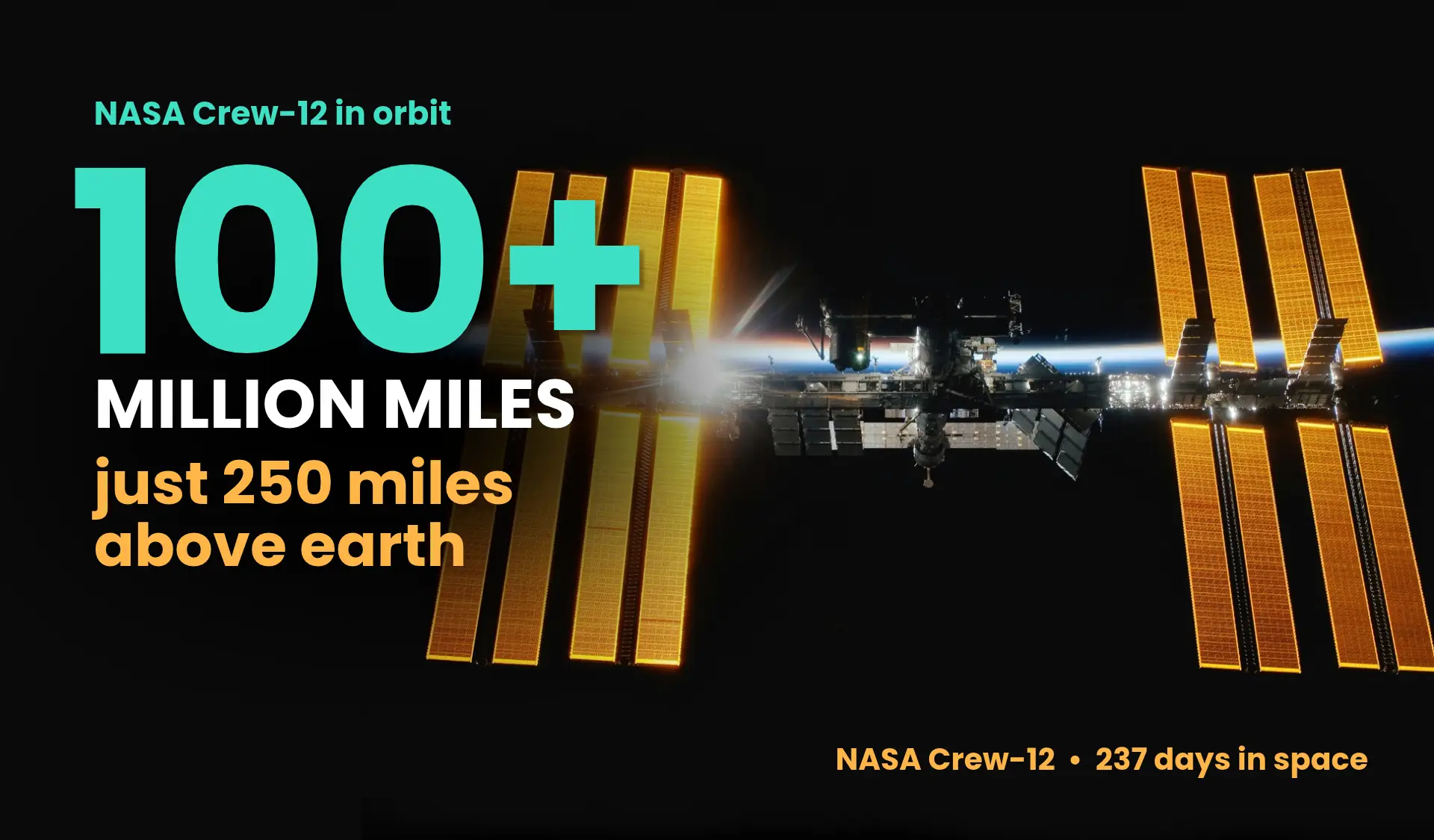
Why does that matter? Because not everything is harmless. NASA says the security shields around the International Space Station (ISS) stop debris up to 0.4 inches, but the 1.5 million pieces of 0.4 to 4 inches can be a threat to critical components, as objects in low orbit can travel at roughly 17,000 mph.
And since they’re not tracked, the ISS can’t steer around them.
Swift and the space station fly at almost the same speed
Towards the end of its journey, Swift circled Earth about 16 times a day. Here’s how it compares to other entities:
| Object | Altitude | One orbit takes | Speed |
| Swift on Oct 20 | 171 mi (275 km) | 90 min | 17,300 mph |
| International Space Station | 257 mi (415 km) | 93 min | 17,100 mph |
| USA 32 | 482 mi (775 km) | 100 min | 16,700 mph |
| Geostationary satellite | 22,236 mi (35,786 km) | 23 h 56 min | 6,900 mph |
At 171 miles, Swift was only 86 miles lower than the ISS, and just about 1% faster. Without engines pushing it up, it fell within weeks of reaching that height, while the space station regularly fires its engines to stay up.
Weeks, years, centuries, forever: How long do objects stay in orbit?
Low orbit is close to the atmosphere. The lower an object flies, the denser the air it moves through, and the faster drag pulls it down. Here’s roughly how long objects stay up at different heights:
- Under 200 miles: Weeks. Swift dropped below 200 miles in early October. By late October it was losing nearly 2 miles of height a day, until it re-entered on November 4, 2026.
- About 250 miles: One to two years. That’s roughly the height of the ISS. Without regular engine boosts, it would fall to Earth within a year or two, according to NASA’s estimates.
- About 350 miles: Years to decades. Swift initially reached about 373 miles. It lasted almost 22 years, from 2004. Due to recent solar activity, the upper atmosphere expanded and became warmer, increasing drag. This sped up Swift’s fall.
- About 500 miles: Centuries. USA 32 broke apart just below this band, at 482 miles.
- Above 600 miles: 1,000 years or more.
- About 22,000 miles: Effectively forever. In absence of air, nothing can pull these objects down. At the end of their lives, many satellites here are pushed about 186 miles higher, into graveyard orbits, to keep the busy geostationary belt clear.
Swift’s last weeks
Swift launched on November 20, 2004. What was initially supposed to be a two-year mission led to 22 years of operations. It observed over 2,000 gamma-ray bursts and 1,400 supernovae. It collected information and data used in 7,000 scientific papers.
In July 2026, Katalyst Space launched its LINK craft in an attempt to lift Swift higher, which would allow it to serve for even longer. But on August 19, NASA announced that the rescue spacecraft would not capture Swift.
Upon re-entry, Swift’s orbit only allowed it to fall between 20.5° N and 20.5° S. That band includes Puerto Rico, the US Virgin Islands, Guam and Hawaii’s Big Island. It came down over North Sumatra, Indonesia (about 3°N, 99°E), according to the U.S. Space Force
Without engines, the observatory could not be steered during the fall.
USA 32: Debris that will stay
USA 32 was a satellite launched for the National Reconnaissance Office on September 5, 1988. It broke into pieces on September 13, 2026.
At the time of the incident, it was orbiting at around 482 miles at a speed of about 16,700 mph.
The cause for this event is unknown, as is the number of fragments the satellite split into. The pieces sit just below the belt where NASA says debris stays for centuries.
Swift came down within weeks of dropping below 171 miles, but USA 32’s pieces, more than 300 miles higher, are likely to stay up for decades, possibly centuries.
Methodology
Space object counts: ESA, updated October 23, 2026. Breakdown by object type: ESA Space Environment Report 2026 (published September 2026, data as of end-2025). US share: NASA Orbital Debris Quarterly News, August 2026. Calculations assume circular orbits, with Earth’s equatorial radius of 3,963 miles.
Sources
Most Read




loading