$10,000 in bitcoin 10 years ago is worth over $1 million. One stock in your index fund did even better
• Finance
$10,000 in bitcoin 10 years ago is worth over $1 million. One stock in your index fund did even better
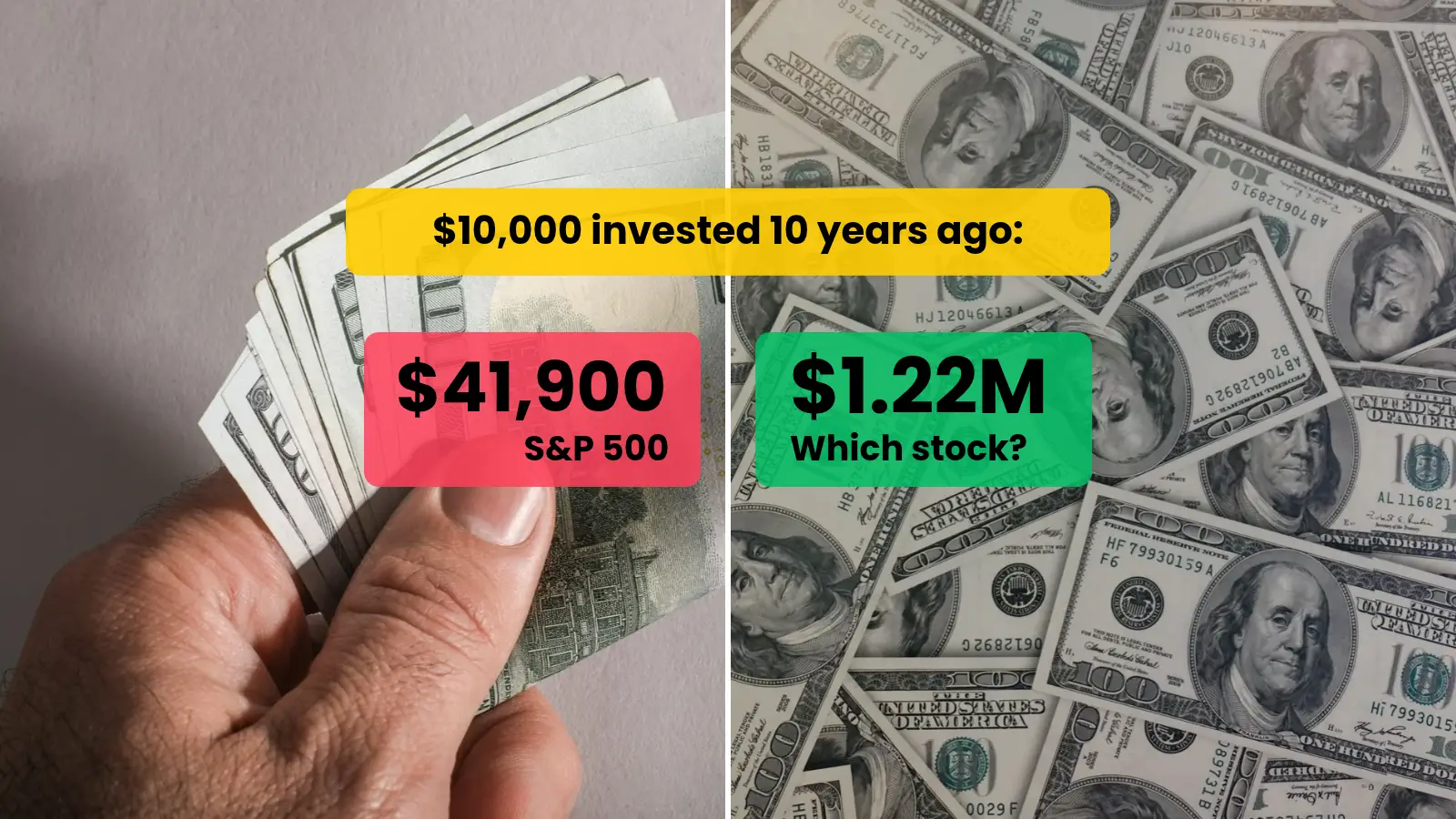
Ten thousand dollars put into one particular S&P 500 stock in October 2016 would be worth about $1.22 million today, more than the same money in bitcoin and 29 times what the S&P 500 itself turned it into.
Key takeaways
- The stock that beat bitcoin owes part of its early growth to crypto itself.
- Holding it all the way would have meant sitting through some brutal drops.
- The gap between first and second place is about as big as the S&P 500's entire result.
Where $10,000 from 2016 is now
We compared four ways to invest the same $10,000 over the same decade, from late October 2016 to October 26, 2026, using total returns from ChartRow, which count reinvested dividends where there are any.
- The S&P 500, through a fund tracking it: about $41,900, a return of 319%
- The Nasdaq-100, through a fund tracking it: about $64,500, or 545%
- Bitcoin: about $1.18 million, or 11,692%
- The mystery stock: about $1.22 million, or 12,101%

The first two are the kind of results most investors would be very happy with. The S&P 500 more than quadrupled the money. Then come two numbers in a different league altogether. Bitcoin, the asset most people would name as the decade's big winner, turned $10,000 into more than a million. And one company in the S&P 500 did even better.
That company is Nvidia.
It was a photo finish. Nvidia beat bitcoin by about $41,000, which is small next to a million-dollar result and can shift from one week to the next. But look at it from the other side, and that margin alone is roughly what the whole S&P 500 turned $10,000 into over the same 10 years.
How a video game chip maker beat bitcoin
In 2016, Nvidia was best known to most people as the company behind the graphics cards in gaming PCs. Its chips were built to do one thing very well, run huge numbers of small calculations at the same time to draw images on a screen.
That skill turned out to be useful far beyond games. Around 2017, crypto miners started buying graphics cards in bulk, because the same kind of parallel number crunching is what mining needs. Most of that demand came from mining other cryptocurrencies rather than bitcoin itself, but in a way, the stock that beat bitcoin got an early lift from the crypto boom.
The much bigger wave came later. Training and running artificial intelligence models also comes down to enormous amounts of parallel math, and Nvidia's chips became the standard tool for it. As tech companies raced to build AI data centers, demand for its chips grew faster than almost anything the company had seen, and the stock followed. That's the main reason most of the stock's gain came in the second half of the decade.
Bitcoin's path was different. It has no company behind it, no sales and no profits. Its price comes down to how much people are willing to pay for it, and over this decade, that turned out to be a lot. The two ended up in roughly the same place for very different reasons.
The catch nobody puts on the chart
It's easy to look at $1.22 million and wish you'd bought in 2016. But Nvidia is in this comparison precisely because it turned out to be the winner. Back then it was one of roughly 500 companies in the S&P 500, and plenty of other promising tech names from that era went nowhere. Picking the winner is only easy in hindsight.
Holding on would also have taken nerves of steel. Both Nvidia and bitcoin went through steep crashes along the way, the kind where years of gains disappear in a few months. Plenty of people who did buy early sold during one of those drops and never saw the million.
One more thing explains why old Nvidia prices can look strange. The company has split its stock more than once in the past decade, turning each old share into several new, cheaper ones. The figures here use split-adjusted prices, so they compare like with like.
So is it too late? Nobody knows. Past returns say nothing reliable about the next 10 years, for Nvidia, bitcoin or anything else. What the comparison does show is how far a single winner can drift from the market as a whole, and that the S&P 500, which owns Nvidia along with hundreds of other companies, still quadrupled the money with far less drama.
Most Read



loading