IRS Confirms 2027 Tax Brackets: How Much Will You Save?
• Finance
Want more stories like this?
Follow Omni on Google.


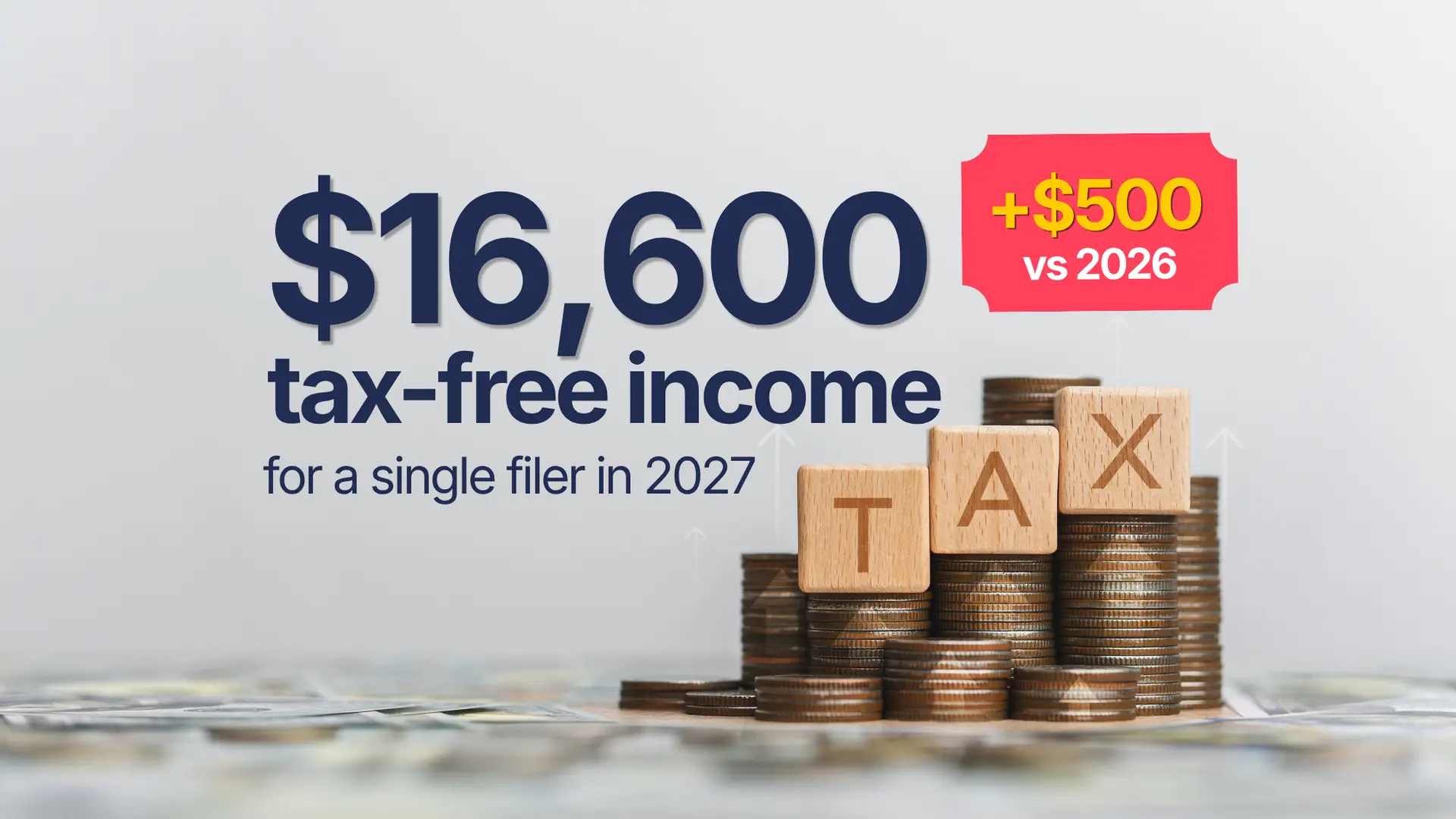
The IRS has confirmed that the standard deduction for single filers will rise to $16,600 in 2027, up $500 from 2026. For someone with no other taxable income, this means they can earn $500 more before owing federal income tax.
Key takeaways
- Every bracket edge moves up too, and a raise that only keeps up with prices leaves your tax share almost exactly where it was.
- The new numbers won't show up on the tax return you file next spring.
- One gift-giving limit is set to rise for the first time since 2025.
What changes for 2027
On November 5, 2026, the IRS released its official inflation adjustments for the 2027 tax year. The new thresholds closely match Bloomberg Tax's September projections, including the $500 increase in the standard deduction for single filers.
The standard deduction is the part of your income that isn't taxed at all, and it's the number most people feel first. Here's how it would move:
- Single filers: $16,100 in 2026, $16,600 in 2027
- Married couples filing jointly: $32,200 to $33,200
- Heads of household: $24,150 to $24,925
The bracket edges for single filers shift the same way. The 10% rate would cover the first $12,800 of taxable income, up from $12,400. The 12% bracket would run to $52,025, up from $50,400, and the 22% bracket to $109,125, up from $105,700.
The tax rates themselves stay the same, seven of them from 10% to 37%. What moves is the point where each one starts. That's why a bigger number on your paycheck doesn't automatically mean a bigger slice goes to the IRS.
What it means on a $60,000 salary
Take a single filer earning $60,000 in wages, with no other income, who takes the standard deduction. In 2026, $43,900 of that pay is taxable, and the federal income tax comes to $5,020. Under the new 2027 rules, the same $60,000 leaves $43,400 taxable, and the bill drops to $4,952. That's $68 less, without earning a dollar more.
The more realistic case is a raise. Say the pay goes up 3.2% to $61,920, just enough to keep up with prices. The tax bill rises to about $5,182. That sounds like more, but it's still 8.4% of pay, the same share as in 2026. The worker isn't richer in real terms, and the IRS isn't taking a bigger cut either.
Without the yearly adjustment, the picture would be different. If the 2026 deduction and brackets stayed frozen, tax on the same $61,920 would be about $5,250. The worker would hand back part of a raise that never made them better off in the first place.
You can run your own numbers with our income tax calculator.
Why the IRS moves the brackets every year
Tax brackets are set in dollars, but the value of a dollar keeps shrinking. If the thresholds never moved, a raise that only matched inflation would push more of your income into higher brackets. You'd pay a bigger share of your pay in tax even though it couldn't buy anything extra. This is called bracket creep, and it works like a quiet tax increase that nobody ever votes on.
To stop it, the law requires the IRS to raise the standard deduction, the bracket edges and dozens of other amounts each year in line with inflation. Since the 2017 tax law, the measure used is chained CPI, a version of the consumer price index that accounts for people switching to cheaper products when prices rise. It tends to grow a little more slowly than the regular CPI, so the thresholds climb a little more slowly too.
When the new numbers apply
The 2027 figures are for income earned in 2027, which means they show up on the return filed in early 2028. The return due next spring still covers 2026 income and uses the 2026 numbers. Where the change can show up sooner is in paychecks, because employers usually switch to the new withholding tables in January.
The same yearly update also moves dozens of smaller limits. One that many families notice is the annual gift exclusion, the amount you can give any one person in a year without having to report it to the IRS. It stayed at $19,000 for 2026, and the IRS has now confirmed it will rise to $20,000 for 2027.
Methodology
The 2026 figures come from the IRS release on tax year 2026 inflation adjustments, published October 9, 2025. The 2027 figures come from the official IRS announcement published November 5, 2026 (IR-2026-133). The tax calculations assume a single filer with only wage income, the standard deduction, and no tax credits. They cover federal income tax only, excluding state income taxes and payroll taxes.
Most Read

loading