Heating one room with a space heater costs $2.14 a night. Your furnace costs nearly twice that
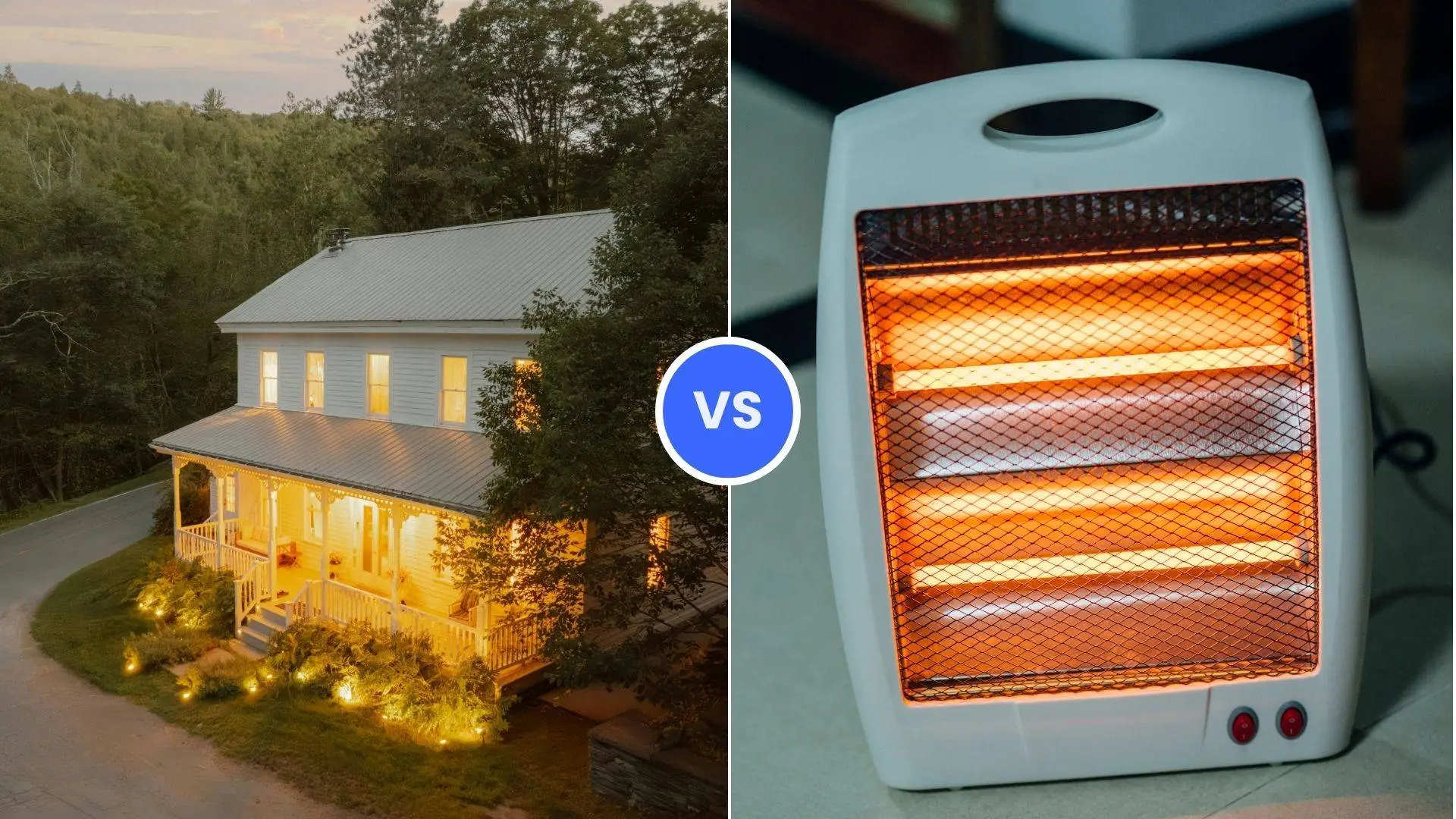
The production of heat using a space heater can cost around 3.4 times as much as heat from a gas furnace; and yet, it can actually help lower your heating bill. Given the average electricity rate in the US is 17.83 cents, a typical space heater running at 1,500 watts costs roughly 27 cents per hour. But it will only save you money if you lower the central thermostat and use it to heat a single room at a time.
Key takeaways
- It costs $52 to produce one million Btu of heat using a space heater, but only $15.25 using a gas furnace.
- A space heater can generate savings, but only if the main thermostat is turned down.
- A whole-house gas furnace can cost around $3.90 to run for an entire evening. A space heater heating just one room will run at $2.14.
Why space heaters cost more per unit of heat
In the US, a unit of energy from electricity costs about 3.4 times as much as the same amount of energy produced using natural gas. And heat pumps move existing heat as opposed to making it, which allows them to deliver around 3 units of heat for every unit of electricity they use.
These ways of producing heat are fundamentally different and difficult to compare, so let’s look at the cost per unit of heat produced. It costs around $52 to make one million Btu (British thermal units) of heat with a space heater. With a 95% efficient gas furnace, that’s $15.25, and an air-source heat pump costs $17.40 per million Btu—assuming it delivers 3 units of heat for each unit of electricity it consumes. If you’re using an electric furnace instead of a gas one, you can expect a price similar to a space heater.
The single-room math
But what if instead of heating the whole house, we wanted to heat just the one room that we’re using?
An 80,000 Btu furnace cycling 40% of the time at 0.032 MMBtu/hr costs roughly 49 cents per hour. This means that for an entire 8-hour evening, we would spend around $3.90, plus the fan. On the other hand, it would cost $2.14 to run a 1,500-watt space heater for the same amount of time.
So, it turns out a space heater, which is a relatively expensive heat source, can actually be a saving, but only if we turn the central thermostat down. The Department of Energy has estimated that adjusting the temperature on the thermostat by 7-10°F for 8 hours a day can save up to 10% per year on heating and cooling.

Heating a single room with a space heater costs around $2.14 per evening, compared to $3.90 for a whole-house gas furnace.
How to calculate the cost of a space heater
To calculate how much you would spend on a space heater, you need to divide the wattage of your heater by 1,000, then multiply that by the amount of hours that it runs and by the local price of electricity per kWh.
For example, a 1,500-watt heater running 8 hours a day for 30 days with an electricity price of 17.83 cents per kWh costs about $64 per month. These costs will vary by location—look at the table below to compare the 5 cheapest and most expensive states.
| State | Avg. residential price (¢/kWh) | Per hour | Per 8-hour evening | Per month* |
| Most expensive | ||||
| Hawaii | 41.53 | 62¢ | $4.98 | $149.51 |
| California | 32.08 | 48¢ | $3.85 | $115.49 |
| Massachusetts | 30.63 | 46¢ | $3.68 | $110.27 |
| Maine | 30.34 | 46¢ | $3.64 | $109.22 |
| Rhode Island | 29.84 | 45¢ | $3.58 | $107.42 |
| Cheapest | ||||
| North Dakota | 11.45 | 17¢ | $1.37 | $41.22 |
| Nebraska | 12.16 | 18¢ | $1.46 | $43.78 |
| Missouri | 12.36 | 19¢ | $1.48 | $44.50 |
| Idaho | 12.52 | 19¢ | $1.50 | $45.07 |
| Arkansas | 12.81 | 19¢ | $1.54 | $46.12 |
| US average | 17.83 | 27¢ | $2.14 | $64.19 |
* 8 hours a day for 30 days. Washington, DC (24.19¢) is not included in the ranking. Source: U.S. Energy Information Administration, Electric Power Monthly, Table 5.6.B, average residential price, January-March 2026.
Read also

Methodology
Electricity prices use the January-March 2026 US residential average from the EIA Electric Power Monthly (Table 5.6.B). Gas prices use the EIA residential average for the January–March 2026 heating season. The cost to run a whole-house furnace depends on the size of the house, insulation, and climate.
Sources


loading

Loading