NOAA data shows US cities hit 32°F months apart, from September in Fargo to January in Phoenix
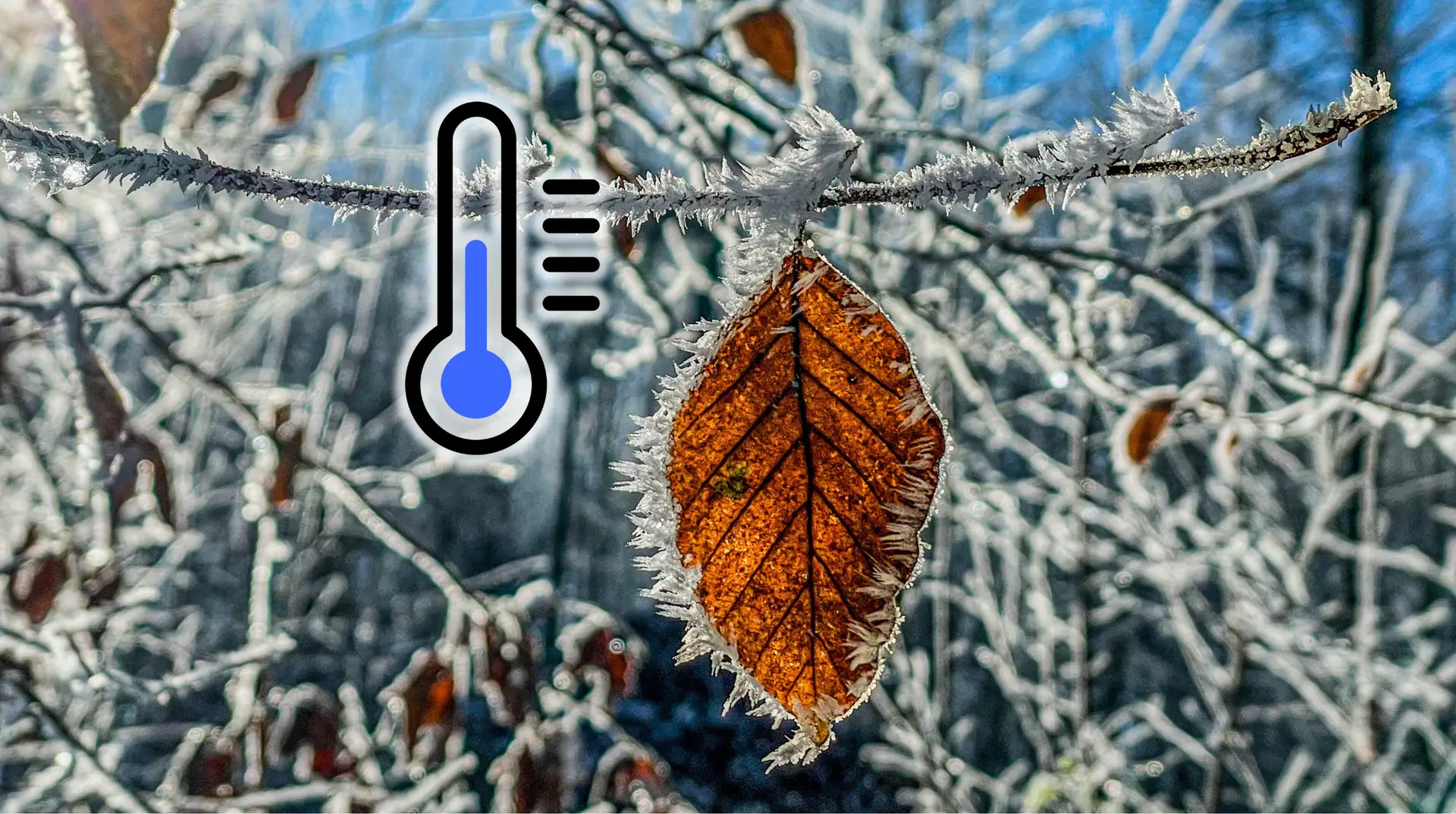
Fargo, North Dakota, gets hit by its first freeze in late September; Phoenix has to wait until January, while LA and Miami rarely get to 32°F at all. NOAA’s 30-year normals express the date of a first freeze as a median value at 50% probability—half the time the freeze will come before it, and half the time after. But these dates have been shifting. According to the EPA (US Environmental Protection Agency), the first fall freeze now comes later than the long-term average, and the growing season is over two weeks longer than in the early 1900s.
Key takeaways
- In the US, some places are hit by the first freeze in September, while others experience it in December or even early January.
- Many Midwestern and Northeastern cities get their first freeze in mid-to-late October.
- The EPA has found that the first fall freeze now arrives later than the long-term average.
The first fall freeze on a map
The first fall freeze doesn’t spread in an even wave going North to South. Putting the data on a map clearly shows clusters of early freezes in the North and at high elevations. October is the most common month—much of the high-elevation West to the Midwest and Northeast has to prepare for sub-32°F temperatures by the time Halloween comes around, including Denver, CO, Billings, MT, Indianapolis, IN, and Manchester, NH.

Typical first fall freeze dates for 50 U.S. cities, based on NOAA's 50% probability data from 1991 to 2020
Why similar latitudes freeze months apart
Looking at the map, we can notice that even the latitude doesn’t determine the date of the first fall freeze—Boston and Detroit are both at 42° latitude, but the latter experiences 32°F for the first time in October, while the former in November.
The date of the first freeze depends on elevation and proximity to the coast and to the Gulf of Mexico. For example, the weather station at Denver International Airport is located at an altitude of 5,434 feet—the city can expect its first freeze in early October. Wilmington, DE, situated at a similar latitude, is on the coast and at sea level, which keeps it insulated till November.
Why your lawn can frost over at 35°F
So, the first freeze happens at 32°F; but one day, you wake up to a crispy lawn while the local news station tells you the overnight low was 35°F. This is because the official temperatures aren’t measured on the ground. To get standardized readings, meteorologists position their measuring boxes about five feet above the ground.
When a professional thermometer set at five feet detects 35°F, the temperature down on the ground might be 31°F. On clear nights, the ground cools faster because the heat radiates into the sky, because it’s not blocked and sent back by clouds, and the dense cold air remains close to the ground.
A shifting calendar
Freeze dates are shifting. According to the EPA, since 1980, the first fall freeze has come about three days later than the 1895–2023 average. Three days might not seem like much, but it’s important for agriculture—this shift is connected to a broader phenomenon that has lengthened the growing season by over two weeks since the early 1900s. This means that we can grow different crops or harvest multiple times. But the longer growing season also has some downsides: invasive species and weeds might start developing, some crops cannot be grown, and there might arise a need to irrigate more.
If you’re curious to find out when your area gets hit by its first fall freeze, look at the table below.
| City | Median first freeze (32°F) | Median hard freeze (28°F) |
| Birmingham, AL | Nov 11 | Nov 24 |
| Anchorage, AK | Oct 3 | Oct 14 |
| Phoenix, AZ | Jan 3 | Rarely freezes |
| Little Rock, AR | Nov 10 | Nov 21 |
| Los Angeles, CA | Rarely freezes | Rarely freezes |
| Denver, CO | Oct 7 | Oct 18 |
| Hartford, CT | Oct 11 | Oct 23 |
| Wilmington, DE | Oct 27 | Nov 10 |
| Miami, FL | Rarely freezes | Rarely freezes |
| Atlanta, GA | Nov 14 | Dec 1 |
| Honolulu, HI | Rarely freezes | Rarely freezes |
| Boise, ID | Oct 11 | Oct 24 |
| Chicago, IL | Oct 24 | Nov 7 |
| Indianapolis, IN | Oct 20 | Nov 1 |
| Des Moines, IA | Oct 11 | Oct 24 |
| Wichita, KS | Oct 27 | Nov 9 |
| Louisville, KY | Oct 31 | Nov 13 |
| New Orleans, LA | Dec 15 | Rarely freezes |
| Portland, ME | Oct 10 | Oct 23 |
| Baltimore, MD | Oct 29 | Nov 12 |
| Boston, MA | Nov 7 | Nov 25 |
| Detroit, MI | Oct 21 | Nov 3 |
| Minneapolis, MN | Oct 13 | Oct 24 |
| Jackson, MS | Nov 12 | Nov 29 |
| Kansas City, MO | Oct 22 | Nov 2 |
| Billings, MT | Oct 1 | Oct 11 |
| Omaha, NE | Oct 13 | Oct 25 |
| Las Vegas, NV | Dec 5 | Dec 23 |
| Manchester, NH | Oct 2 | Oct 14 |
| Newark, NJ | Nov 12 | Dec 4 |
| Albuquerque, NM | Oct 31 | Nov 12 |
| New York City, NY | Nov 17 | Dec 12 |
| Charlotte, NC | Nov 6 | Nov 19 |
| Fargo, ND | Sep 26 | Oct 7 |
| Columbus, OH | Oct 26 | Nov 9 |
| Oklahoma City, OK | Nov 4 | Nov 16 |
| Portland, OR | Nov 14 | Dec 5 |
| Philadelphia, PA | Nov 11 | Nov 26 |
| Providence, RI | Oct 16 | Oct 30 |
| Charleston, SC | Nov 28 | Dec 18 |
| Sioux Falls, SD | Oct 3 | Oct 14 |
| Nashville, TN | Nov 1 | Nov 15 |
| Houston, TX | Dec 7 | Dec 28 |
| Salt Lake City, UT | Oct 20 | Oct 30 |
| Burlington, VT | Oct 11 | Oct 24 |
| Richmond, VA | Nov 4 | Nov 15 |
| Seattle, WA | Nov 23 | Dec 10 |
| Charleston, WV | Oct 26 | Nov 5 |
| Milwaukee, WI | Oct 29 | Nov 8 |
| Cheyenne, WY | Oct 1 | Oct 11 |
Methodology
We used NOAA’s 1991–2020 U.S. Climate Normals to find the date by which each city’s main weather station (usually the airport) has a 50% chance of recording its first fall low of 32°F or below. Cities where a freeze happens in fewer than half of the years are marked as rarely freezing. Trend figures come from the EPA’s growing-season indicator (1895–2023).
Sources

loading

Loading