
Spay or Neuter a Cat: A Complete Guide for Cat Owners
Report Highlights
Deciding whether to spay or neuter a cat isn’t just routine care — it’s a choice that can affect your cat’s health over the long term. Various large studies show some noticeable benefits: spayed female cats may live up to 39% longer, while neutered males can live up to 62% longer, partly due to less roaming around, fewer injuries, and a lower chance of cancer.
In this guide, we’ll cover topics like:
- What is the difference between spaying and neutering?
- When to neuter a cat, and whether it’s ever too late.
- Cat neuter recovery and caring for a cat after neutering.
- Male cat behavior after neutering, and whether neutered cats can spray.
Hopefully, the info here helps you figure out what’s best for your furry friend without too much stress.
🚀 New features incoming
Soon, you’ll be able to create and customize your own calculators for your cat and beyond. Register for a free Omni Account to get access to powerful new features.
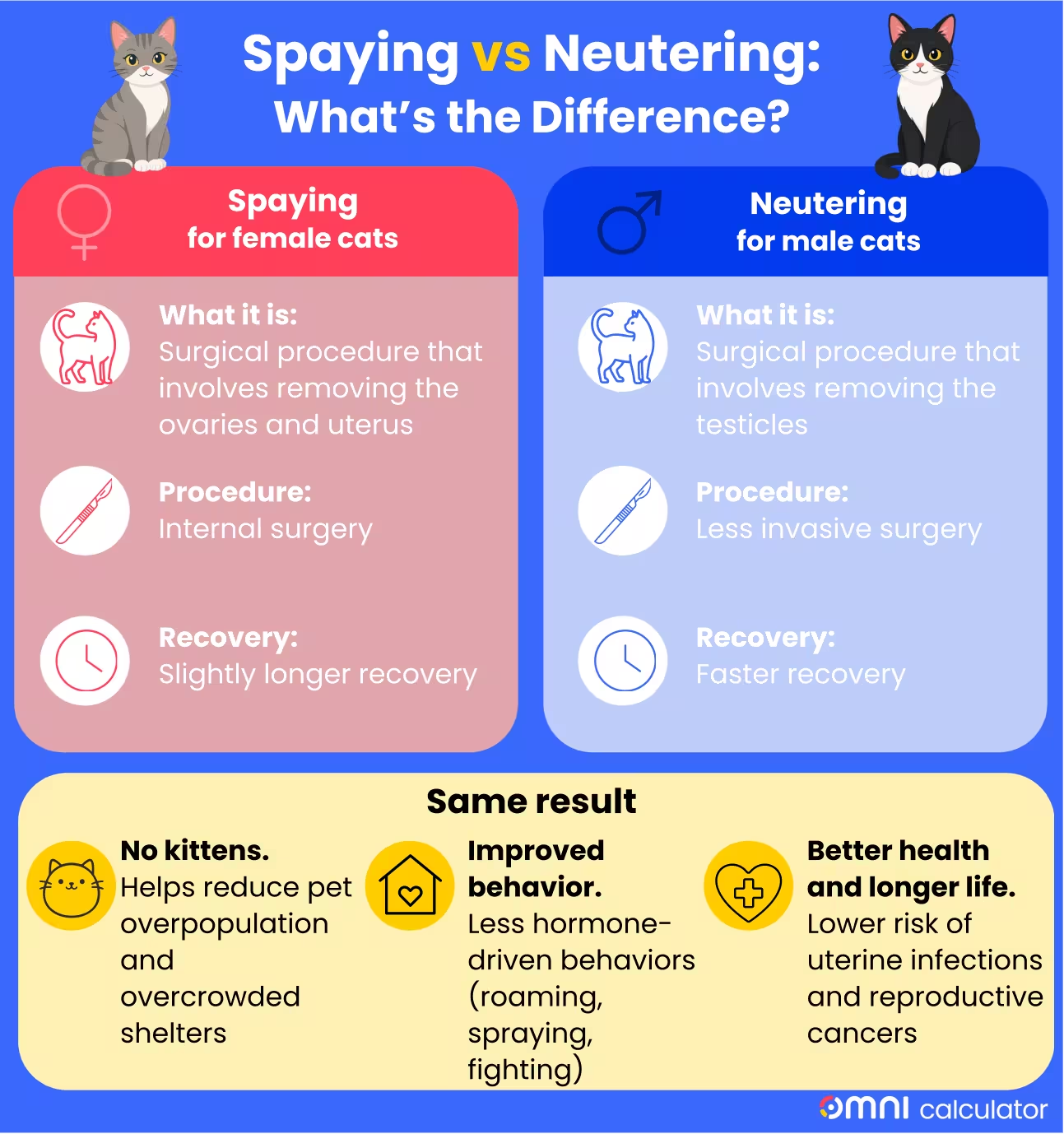
If you’re curious what the difference is between spaying and neutering, here’s the quick scoop: both stop your pet from reproducing, but they’re for different sexes.
Spaying is a surgical procedure for female cats; it involves removing the ovaries and uterus. Neutering (castration), which usually refers to males, is basically removing the testicles. Either way, the endgame is the same — your kitty won’t be able to have kittens anymore.
Spaying or neutering a cat is a common veterinary procedure that requires general anesthesia, and is often mentioned in first-time cat owner checklist. Before the surgery, your cat will undergo a health check to confirm they’re fit for the operation.
🩺 Potential benefits of spaying or neutering a cat:
- Prevents unwanted kittens and overcrowded shelters;
- Behavioral changes after neutering, such as less roaming, spraying, and fighting, lower their chances of getting into fights, picking up infections (e.g., feline leukemia and feline AIDS), or suffering injuries from traffic.
- Spaying is linked to a lower risk of uterine infections (especially fatal pyometra) and reproductive cancers, including ovarian, uterine, and mammary (breast) tumors.
- Neutering removes the possibility of testicular cancer and might also help with prostate problems.
Understanding when to neuter a cat is important to prevent unwanted litters and avoid early behavioral issues. Most vets nowadays suggest doing it when the cat is about 4 to 5 months old, before they hit sexual maturity. This timing is widely accepted among veterinary groups because it reduces the risk of accidental breeding and hormone-driven behaviors. Animal shelters often go for early (or pediatric) neutering, which can be done as early as 6 to 8 weeks.
Waiting longer than that doesn’t really bring any benefits and might make issues like spraying, roaming, or mating more likely.
💡 If you’re curious about how your kitty grows up, check our “How old is my cat really?“ guide and try the cat age calculator. Don’t forget to test your knowledge with a cat age quiz.
When is it too late to neuter a cat?
There’s usually no hard cutoff; adult cats and even seniors can get neutered, as long as they’re healthy enough to handle anesthesia and the surgery itself. Sure, older cats can still gain from the procedure, but some of their habits may already be established.
Can a cat be spayed while in heat?
Yes, a cat can be spayed while in heat, although it’s not usually the first choice. When a queen is in heat, her reproductive organs have increased blood flow, which can make the surgery a bit more complicated and might raise the chances of bleeding or infection. Because of that, vets often suggest waiting if you can. If the operation goes ahead, your vet might take extra care, and it could end up costing more.
🐱 Myths vs. facts:
❌ Myth: My cat needs to have one litter first.
✔ Fact: There’s no real reason for your cat to have a litter before getting neutered. In fact, breeding can be draining and sometimes harmful for female cats.
❌ Myth: They’ll get fat.
✔ Fact: Your cat might gain a little weight, but only if you keep feeding them the same amount. Neutered cats don’t burn calories as quickly anymore, so they need fewer snacks. If you’re unsure, check healthy cat weight.
❌ Myth: Indoor cats don’t need to be neutered.
✔ Fact: There’s always a chance that an indoor cat could escape and find a mate. If you’ve got a few related cats in the house, they might still end up with kittens if they aren’t neutered.
❌ Myth: Spay or neuter surgery is painful and risky.
✔ Fact: It’s a pretty straightforward procedure. Your vet will use a general anesthetic during the surgery, so your cat won’t feel any pain at all.
Costs to spay or neuter a cat vary depending on where you take your kitty and their health. If you’re wondering “How much does it cost to spay a cat?“, it usually falls between $300 and $500 at a regular vet. However, there are cheaper places, like animal shelters or nonprofit clinics, that might charge anywhere from $25 up to about $150. The big difference is usually what you get for your money.
What affects the cost? | How? |
|---|---|
Clinic type | Private vet clinics cost more than shelters or low-cost programs |
Cat’s age and health | Older or sick cats may require additional tests or care |
Location | Urban areas tend to have higher prices |
Procedure complexity | Cat pregnancy or conditions like pyometra can increase costs |
Included services | Monitoring, IV fluids, and cat medication raise the price |
The difference in cat neuter cost or spay cost mostly boils down to what’s actually part of the deal. Usually, a full-service vet clinic provides pre-surgery checkups, anesthesia monitoring, IV fluids, and pain meds, while low-cost clinics tend to keep it simple — just the basics to keep the cost down.
Option | Estimated cost | What’s included |
|---|---|---|
Private veterinary clinic |
| Full exam, anesthesia, monitoring, pain relief |
Low-cost clinic / shelter |
| Basic procedure, limited extras |
How much does it cost to neuter a cat?
The typical range is around $200-$400, depending on the type of care and clinic. Spaying tends to cost about 40%-50% more since it’s an internal surgery that needs stitches, whereas neutering is easier because it’s done outside and isn’t as intense.
Procedure | Estimated cost | Why the difference |
|---|---|---|
Spaying (female cat) |
| More complex abdominal surgery (removal of ovaries and uterus) |
Neutering (male cat) |
| Simpler, faster procedure with fewer surgical steps |
💰 Can spaying or neutering be free or cheaper?
Yes, in a lot of places you can find low-cost or even totally free programs. Usually, these come from:
- Animal shelters;
- Rescue groups; or
- City-run voucher deals.
The whole idea is to reduce overpopulation, so if money’s tight, it’s worth checking local options!
Cat neuter recovery is generally smooth, mainly because neutering a male cat doesn’t require surgery inside the abdomen. They tend to heal more quickly, but proper care for a cat after neutering is still important.
Typically, male cats bounce back in about 5 to 7 days after a simple neuter. For abdominal surgery (like spaying), the recovery can take closer to 10 to 14 days. Kittens neutered between 8 weeks and 6 months often recover faster and have fewer hiccups.
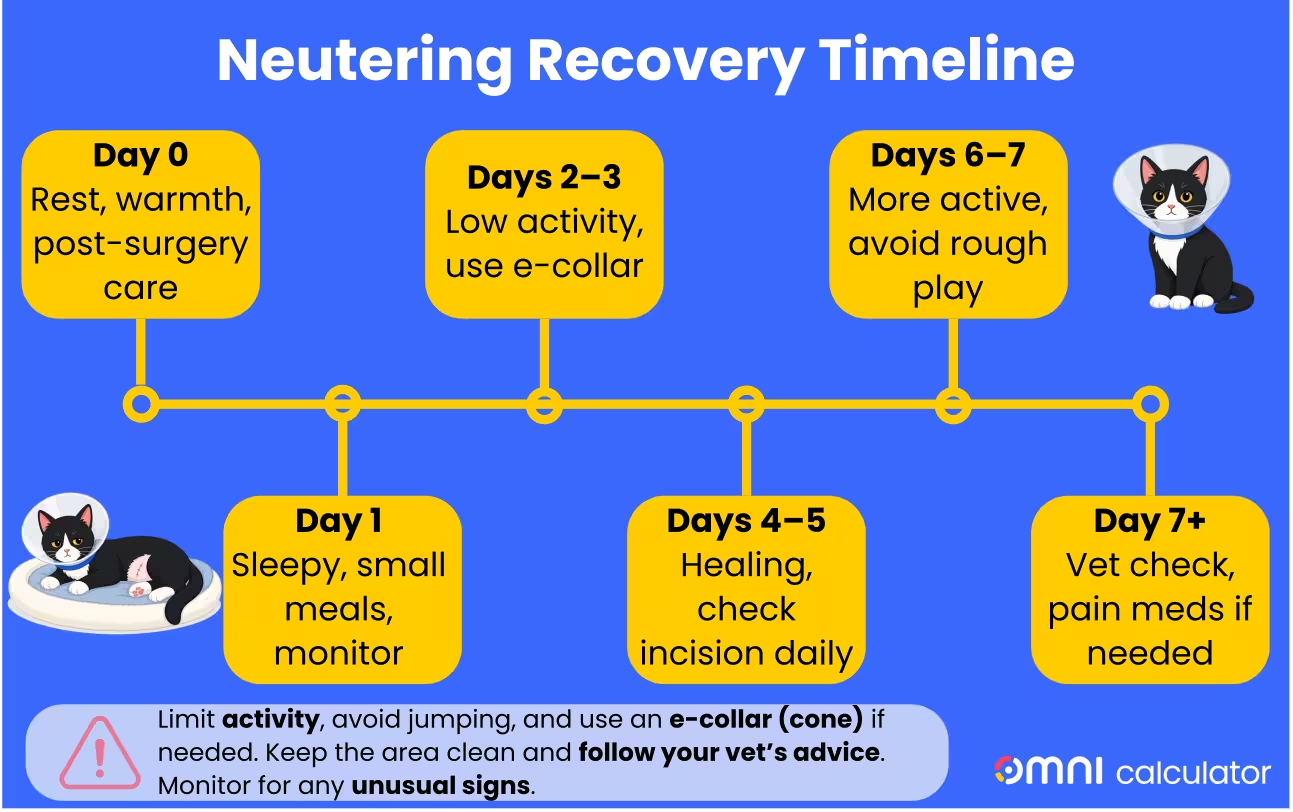
Try to keep your cat chilled out and limit activity for a few days. If needed, use a cone to prevent licking. To manage postoperative pain, your vet might suggest meloxicam, which is typically alright for short-term use, as long as your cat doesn’t have any signs of kidney disease. Just make sure you stick to the right meloxicam dose for cats.
Many owners worry about when it is too late to neuter a cat and whether an older cat will handle the procedure well. Usually, it’s not a big deal. Most healthy grown cats do just fine with the operation, although they might take a little longer to recover.
🚨 When to call your vet?
If you notice any of these signs, contact your vet as soon as possible:
- Swelling, redness, discharge, or an opening at the incision site;
- Trouble urinating or defecating;
- Sudden behavioral changes, such as lethargy or unusual hiding;
- Not eating;
- Vomiting or diarrhea; or
- Not urinating within the first
24 hoursafter surgery.
Changes in male cat behavior after neutering come from the decrease in testosterone. This drop leads to fewer hormone-driven actions such as spraying, wandering, and aggressive behavior without affecting your cat’s personality. These behavioral shifts aren’t immediate. Since hormone levels fall gradually, it can take a few weeks before you see much of a difference. Also, some habits that the cat learned before neutering may take longer to fade.
Time after neutering | What to expect |
|---|---|
First 24-72 hours | Temporary changes (sleepiness, confusion, clinginess) due to anesthesia |
2-4 weeks | Early changes; calmer demeanor and fewer attempts to escape, lower vocalization |
1-3 months | Noticeable drop in spraying, marking, and aggression |
Long term | Long-term behavior stabilizes; most hormone-driven behaviors reduced |
Can a neutered cat spray?
If your cat was neutered around 5 or 6 months old, many never really start spraying. But if you wait longer, especially after 1 year, spraying may continue, but it tends to slow down as time goes on.
This article was written by Joanna Śmietańska-Nowak and reviewed by Steven Wooding.