
Cat Pregnancy Week by Week: Timing, Symptoms, and Expected Due Dates
How long are cats pregnant?
The average cat pregnancy length is about days (around weeks). Therefore, a cat's gestation period is often broken into three trimesters, each lasting roughly days.
First trimester | Days 1-21 | Subtle changes — slight increase in appetite, early nipple changes (“pinking up”) |
|---|---|---|
Second trimester | Days 21-42 | Belly starts to grow, your cat may become calmer and more affectionate |
Third trimester | Days 42-63 | Visible pregnancy — enlarged belly, swollen nipples, nesting behavior |
📅 How to estimate queen’s due date
Knowing cat’s pregnancy lasts about days, you can estimate the due date yourself or use a cat pregnancy calculator. Enter an approximate mating date; for example, Feb 14 suggests birth between Apr 13–26, with an average due date around Apr 18.
How do I know if my cat is pregnant?
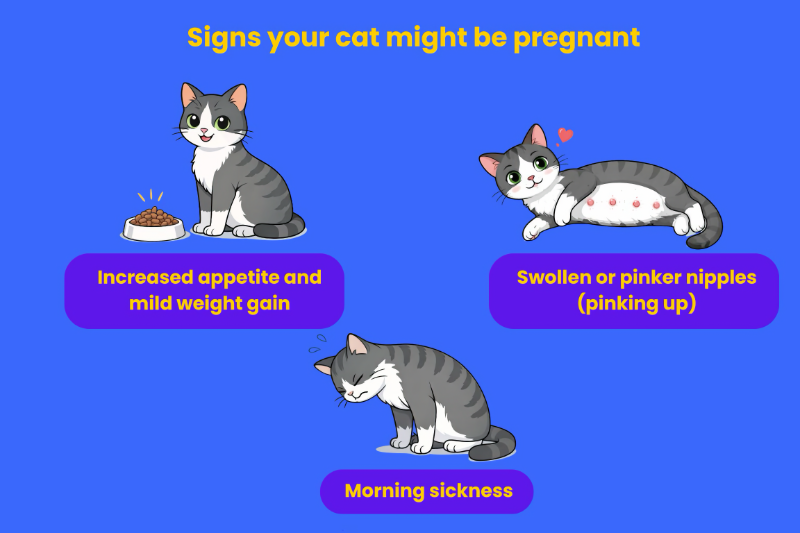
Right after your cat mates, you won’t know for sure if she's pregnant. But there are some early symptoms of a cat pregnancy to watch for.
One of the first clues that the queen is pregnant will be that she won’t go into heat anymore. Check the other tell-tale signs below.
 |
|---|
Is your queen having kittens? |
You may observe behavioral changes; some cats become more affectionate and calm than usual. All these symptoms may appear within the first two weeks after mating.
If you notice any of the above early signs that a cat is pregnant, it’s best to visit your vet to confirm your cat is pregnant and to find out what to do next.
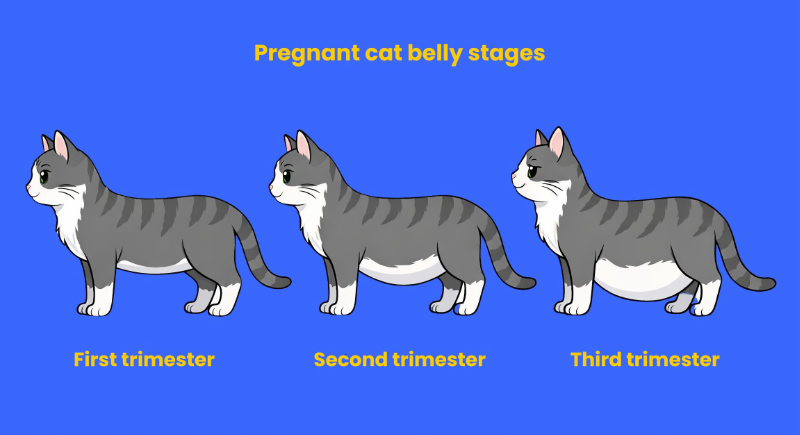
By this time, the pregnant cat’s belly stages become more noticeable. Your cat’s belly starts to round, and she may appear more affectionate, calm, and less active than before. At about three to four weeks, the vet may be able to hear the kitten’s heartbeat with an ultrasound as well!
 |
|---|
Stages of a cat’s pregnancy. |
🥣 Diet and feeding
Your girl needs more energy now because kittens are growing inside of her. The proper diet during a cat’s gestation period should include high-quality, high-calorie cat food.
- Switch her to kitten food or pregnancy and lactation food.
- Feed her smaller amounts of food at least three times a day.
- Always have fresh water available to her.
As the kittens grow, she may eat less at each feeding due to reduced abdominal space. This is normal. It’s better to feed her smaller amounts of food more frequently.
💊 Health care and vet visits
Cats are supposed to have their vaccinations before they become pregnant; however, if the queen is already pregnant, consult with your veterinarian to determine which vaccines are appropriate for her at this time.
Some medications can still be given, but many will need to wait until after she has delivered her kittens.
Regular check-ups help monitor her health during cat pregnancy — learn more about common health risks in kidney disease in cats. If you notice any of the following, contact your vet immediately:
- Decreased appetite;
- Vomiting or diarrhea; or
- Any unusual discharge.
🛡️ Parasite prevention
You have to continue parasite prevention during cat gestation, but only use products that are safe for pregnant cats.
During a house cat’s pregnancy, intestinal parasites like worms can transfer from the mother to her kittens during pregnancy and nursing. This issue will slow growth in the kittens and can cause problems with their overall health. Take extra care when feeding a raw food diet for cats.
Talk to your vet about safe treatments for your cat. You might be asked to provide a fecal sample to test for worms. Your veterinarian will then recommend a worm medicine based on that result.
We’re now in the final stage of cat gestation, when changes become much more obvious. Your cat’s belly is fully rounded; she has probably started to eat more, and she will probably be grooming her belly a lot. Around week , kittens can often be seen on an X-ray as their skeletons begin to form, which helps confirm the number of kittens to expect.
At this point, your cat will begin nesting: looking for a warm, private place away from noise where she can have her babies.
This instinct comes from wild felines, who seek hiding spots where they can keep their kittens safe. In a typical house cat pregnancy, the queen continues that behavior, but now she relies on you to provide a safe, quiet place where she can give birth comfortably. To help her, prepare a comfortable nesting area:
- A box or bed with a blanket covering it;
- Soft blankets or towels (without loose threads, which can be swallowed or cause injury) that she can snuggle into; and
- A quiet, draft-free location, since newborn kittens cannot regulate their body temperature well and are very sensitive to cold.
 |
|---|
Comfortable nesting area in a box or bed with soft blankets in a quiet, draft-free location. |