
Raw Food Diet for Cats: Benefits, Risks, and Long-Term Effects
Raw food diets for cats have become more popular, and many people are asking whether cats can eat raw meat, raw chicken, and raw salmon. Raw feeding is similar to the natural diet of wild cats, but it isn’t as easy as just adding raw meat to your cat’s bowl. Before switching to raw cat food, it’s essential to understand both the potential benefits and the real risks.
Let’s take a closer look at the pros and cons, and discuss:
- Whether cats can eat raw meat safely;
- Whether cats can eat raw chicken or raw salmon;
- The risks and benefits of raw meat for cats;
- The role of taurine in cat food; and
- The long-term effects of a raw food diet for cats.
What you should remember?
- A raw food diet for cats can work, but only if it’s balanced.
- Raw cat food carries a higher risk of bacterial contamination and nutritional imbalance.
- Can cats eat raw salmon or pork meat? It depends on sourcing and preparation.
- Proper taurine in cat food and nutrient balance are critical for long-term health.
- Always talk to your vet before switching diets.
A raw food diet for cats means feeding your cat meals made from uncooked animal ingredients rather than processed kibble or canned food. Although cats are obligate carnivores, they rely on the nutritional content of animal tissues. Unlike humans or dogs, they primarily rely on protein (specifically animal protein) as their main source of energy. That’s why raw meat for cats typically forms the base of these diets. Key nutrients like taurine in cat food, vitamin A, vitamin D, certain B vitamins, and fatty acids must be present in the right amounts to support heart health, vision, metabolism, and overall function.
You may also hear the term BARF, which stands for “biologically appropriate raw food” or “bones and raw food.” These diets emphasize raw bones and organs alongside meat, sometimes with added vitamins and minerals to prevent deficiencies.
While feeding raw cat food may sound more natural, it’s important to remember that domestic cats live much longer than wild cats, and their nutritional needs must be carefully balanced to support long-term health.
📢 New feature: get ready for custom calculators
We’re about to launch a feature that lets you build, edit, and share your own custom calculators. This feature will be available exclusively to signed-up users, so register now for a free Omni Account.
Most raw cat food formulas include raw muscle meat, organ meat, and often ground bones. Chicken and fish are common, but some diets may also include eggs or other proteins. The idea is simple: to feed your cat in a way that mimics what wild felines would eat.
If you’re considering raw cat food, use the quick guide below to outline common questions about specific ingredients. Treat it as general information, and consult your vet before making any significant dietary changes.
Can cats eat raw chicken?
Fact: Raw chicken is commonly used in balanced raw diets, but it carries a risk of contamination with bacteria such as Salmonella and Campylobacter, as well as parasites like Toxoplasma gondii. To reduce risk, choose high-quality meat from a reliable source, keep it properly frozen until use, and follow strict hygiene practices during handling.

![]() |
|---|
Poultry is common in raw cat diets, but may carry bacteria. |
Can cats eat raw salmon?
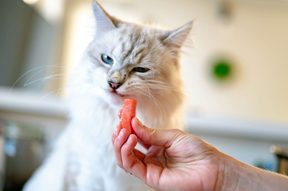
Fact: Salmon is rich in high-quality protein and omega-3 fatty acids, but when fed raw, it can carry harmful bacteria such as Salmonella and E. coli, as well as parasites. Small bones can also pose choking or gastrointestinal hazards. Feeding plain, cooked salmon without seasoning or bones is generally a safer option.
![]() |
|---|
Salmon provides omega-3s, but raw fish may carry bacteria or parasites. |
Can cats eat pork meat?
Fact: While pork provides protein and B vitamins, raw pork may contain harmful bacteria and parasites such as Trichinella. Pork is also relatively high in fat and sodium, which can lead to health issues if fed regularly. It should only be offered cooked, unseasoned, and in small amounts.
Can cats eat raw beef?
Fact: Beef provides high-quality protein and essential amino acids, but like all raw meat, it carries a risk of bacterial contamination. If offered, it should be fresh, unseasoned, and fed in moderation as part of a balanced diet.
Can cats eat eggs?
Fact: Eggs can be a nutritious occasional treat. However, raw eggs are not recommended. They may contain bacteria such as Salmonella, and raw egg whites contain avidin, which can interfere with biotin (vitamin B7) absorption if fed regularly. So while cats can eat eggs, they should be fully cooked, served plain and without seasoning, to be safe.
High-quality raw meat for cats should provide complete nutrition, not just protein. A properly designed raw feeding plan generally consists of muscle meat, an appropriate amount of bone for calcium and phosphorus, and organ meat for necessary vitamins. The most commonly quoted ratio for raw feeding is 80-10-10 (80% muscle meat, 10% bone, 10% organs). However, this is just a guideline, and the ratios may need to be modified for the individual cat based on its needs.
Protein quality is also important; cats depend on meat proteins to have enough amino acids to regulate their metabolism and maintain their muscle mass. Taurine in cat food is especially critical, as cats cannot produce it on their own. Feeding only raw fish, for example, may lead to thiamine deficiency due to thiaminase content.
Different cat life stages also matter. Kittens and nursing cats require higher amounts of protein than older or sick cats (especially those with renal failure) should have their protein intake monitored carefully.
Homemade raw cat food may create nutritional gaps if not carefully formulated. Proper supplementation should be based on your cat’s specific needs, and some commonly discussed options are outlined below.
Supplement | Role | Notes |
|---|---|---|
Fish oil for cats | Source of omega-3 fatty acids (DHA, EPA); supports skin, joints, heart, and brain health | Must be dosed carefully; excess omega-3 may disrupt inflammatory balance |
Vitamin E | Antioxidant; may be needed in diets high in omega-3 fats | Fat-soluble vitamin; risk of accumulation if overdosed |
Kelp (iodine source) | Supports thyroid function | Excess iodine may cause thyroid imbalance |
Blue-lipped mussel | Provides omega-3s and trace minerals such as manganese | Should not replace a balanced mineral plan |
Psyllium husk | Adds soluble fiber to support digestion | Use only if diet lacks natural fiber |
Certain types of fatty acid supplements for cats, such as fish oil for cats, will benefit your cat if dosed properly, but some types of supplements are generally not recommended in your cat's diet.
Ingredient | Why to avoid |
|---|---|
Garlic and onions | Toxic to cats; may cause anemia |
Willow bark, birch, feverfew | Potentially harmful herbal compounds |
Excess vitamin A or D | Can accumulate and cause toxicity |
Human supplements | May contain unsafe doses for cats |
🙋 Even high-quality raw cat food can lead to weight gain if portions are not adjusted. Use a cat calorie calculator to estimate how many calories your cat should eat per day.
Raw food diet for cats is often thought of as being more natural and nutrient-rich than processed foods, and many advocates believe that feeding your cat raw food will improve their coat quality, hydration, and overall health, as raw meat contains a lot of moisture and animal-based protein. If properly balanced, raw cat food can provide the amino acids and fats that felines need to thrive as obligate carnivores.
Benefits | Risks |
|---|---|
High moisture content | Bacterial contamination (Salmonella, E. coli, Listeria) |
High animal-protein content | Parasites in raw meat |
May support coat quality | Nutritional deficiencies if unbalanced |
Fewer processed ingredients | Risk to humans through cross-contamination |
While the nutritional benefits seem significant, safety is a major concern when feeding your cat a raw diet. Raw meat for cats is at increased risk of contamination by pathogens such as Salmonella, E. coli, and Listeria. Studies show that commercially prepared raw foods have higher rates of these pathogens than conventional pet food options. As discussed earlier, raw poultry is frequently contaminated with pathogenic bacteria.
U.S. Food & Drug Administration (FDA) reveals that these pathogens are not only a risk for your cat; they can also be transmitted to people via handling raw foods, touching contaminated surfaces, or coming into contact with the cat’s saliva or feces. The risk of transmission to humans is especially high for kittens, older cats, immunocompromised individuals, and households containing young children or elderly members.
Finally, raw cat diets also carry the risk of being nutritionally unbalanced if not prepared correctly; over time, deficiencies of particular nutrients (such as taurine in cat food) can develop in cats eating an unbalanced diet. Monitor body condition regularly and maintain a healthy cat weight to detect early signs of under- or overfeeding.
How to minimize risk
While some owners choose raw feeding, major veterinary organizations advise extreme caution. If you choose to handle raw cat food, strict hygiene practices are essential:
- Wash your hands thoroughly with soap and water after handling raw meat;
- Clean and disinfect countertops, utensils, feeding bowls, and cutting boards;
- Keep raw meat frozen until use, and thaw it in the refrigerator or microwave;
- Do not rinse raw meat, as bacteria can spread through splashing;
- Keep raw ingredients separate from other foods;
- Refrigerate leftovers immediately or discard uneaten food promptly; and
- Avoid close face contact with your cat after it eats raw food, and wash your hands after handling or petting.
A raw food diet for cats may seem natural and protein-rich, but it requires careful planning and strict hygiene. Questions like “Can cats eat raw salmon?” or **“Can cats eat pork meat?” ** don’t have simple yes-or-no answers. Safety depends on sourcing, preparation, and proper nutritional balance, including adequate taurine.
If considering raw cat food, consult your vet closely. Your cat may need more than just meat to have a balanced, healthy diet.
This article was written by Joanna Śmietańska-Nowak and reviewed by Steven Wooding.

