
86% of Engineers in the US Are Using AI. Only 6% Trust It Without Hesitation. (2026 Study)
Report Highlights
-
While adoption of AI is widespread, only 6% of engineers actually trust AI results without hesitation, while the rest either verify every result (89%) or don’t trust the output at all (5%).
-
71% use it to save time and cut out everyday grunt work, but only 9% think it improves work accuracy.
-
52% of engineers still use “back-of-the-envelope” math to make sure the AI isn’t hallucinating.
Engineering has always required certainty.
Calculations must be correct, designs must work, and mistakes can have serious legal and ethical consequences.
For the past decade, the industry has been quietly changing with the introduction of Artificial Intelligence.
Today, we know that AI is already part of daily work.
To understand what’s currently happening, we surveyed 402 engineering professionals and students across the United States about how AI fits into their work and studies in 2026.
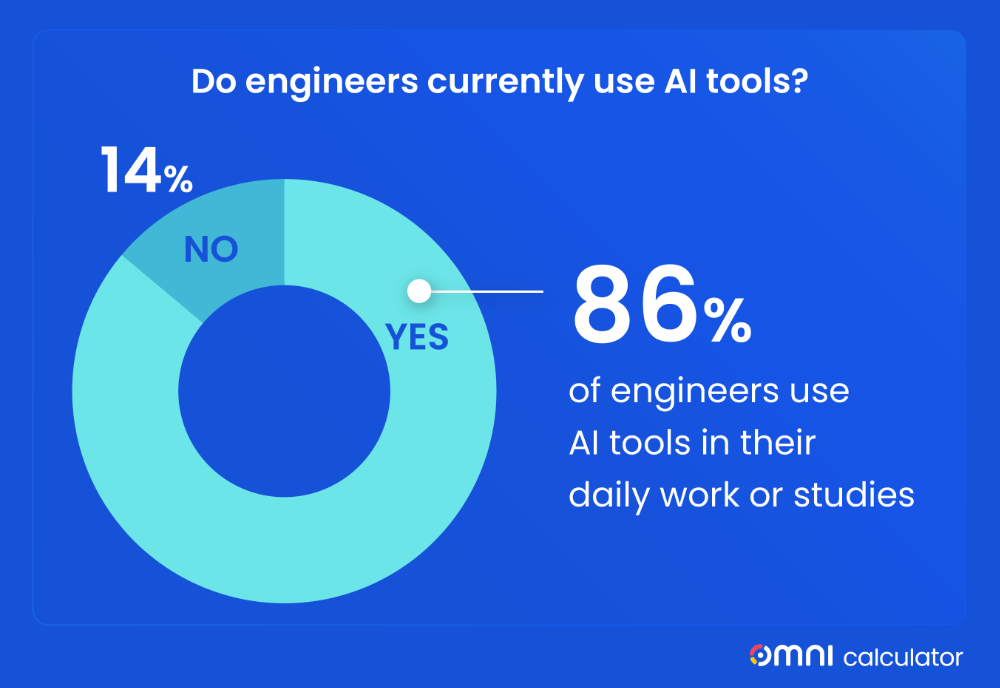
AI is no longer just for early adopters. Now, 86% of engineers use AI tools in their daily work or studies.
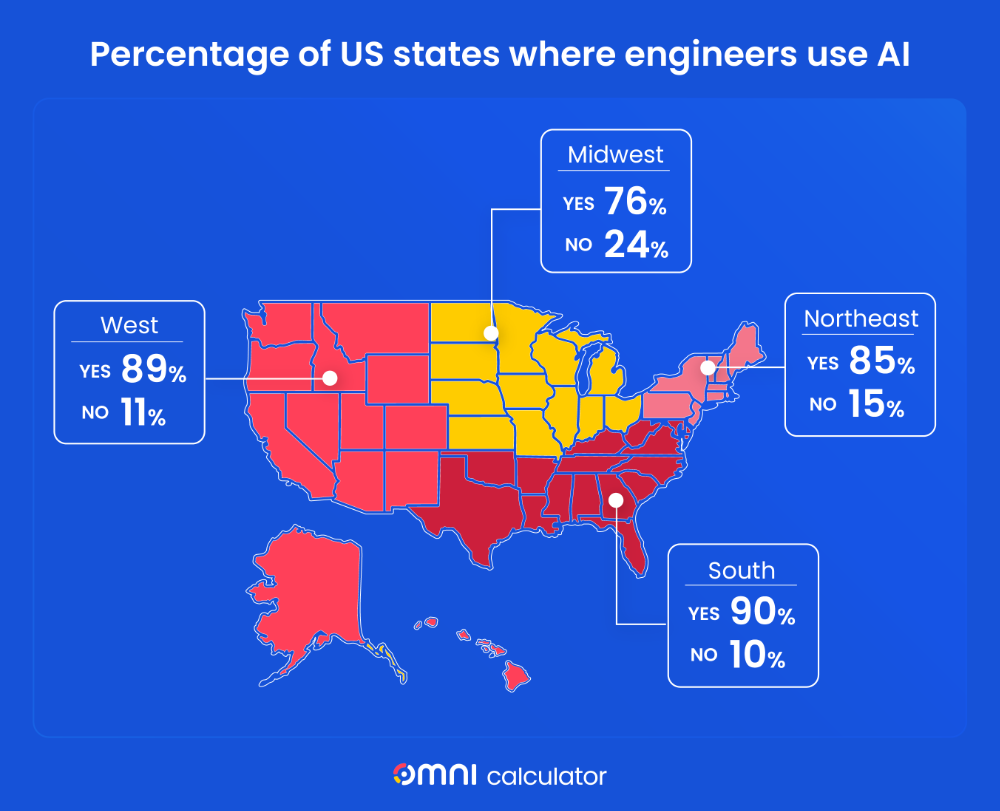
However, the rules haven’t yet caught up to the tools. Even though engineers across the US are using AI, the actual policies for it are still all over the place, depending on where they’re located.
The US Heat Map below shows that AI use is highest in the South at 90% and in the West at 89%. This distribution suggests that technology hubs and industrial centers are leading the adoption.
When looking at the main technology used, one name still stands out:
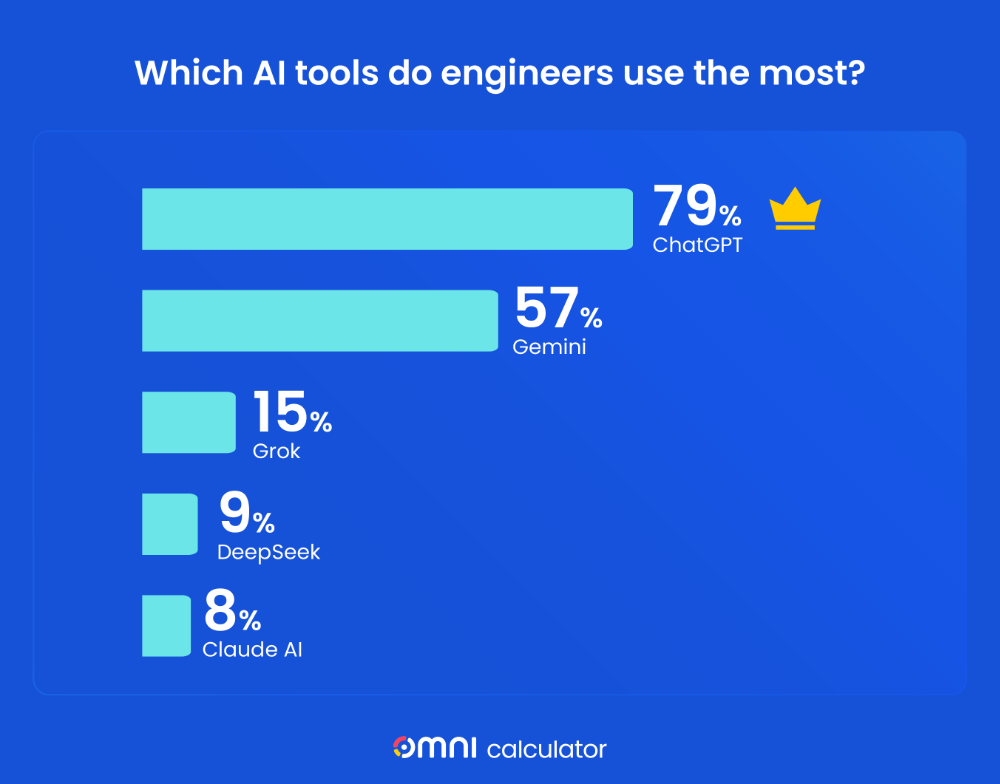
AI usage is consolidating around a small group of mainstream platforms. This trend signals growing standardization rather than experimentation. Companies appear less concerned about AI itself and more concerned about uncontrolled, unvetted tools.
If engineers don’t fully trust AI outputs, why are they using them at such high rates?
Because it saves time.
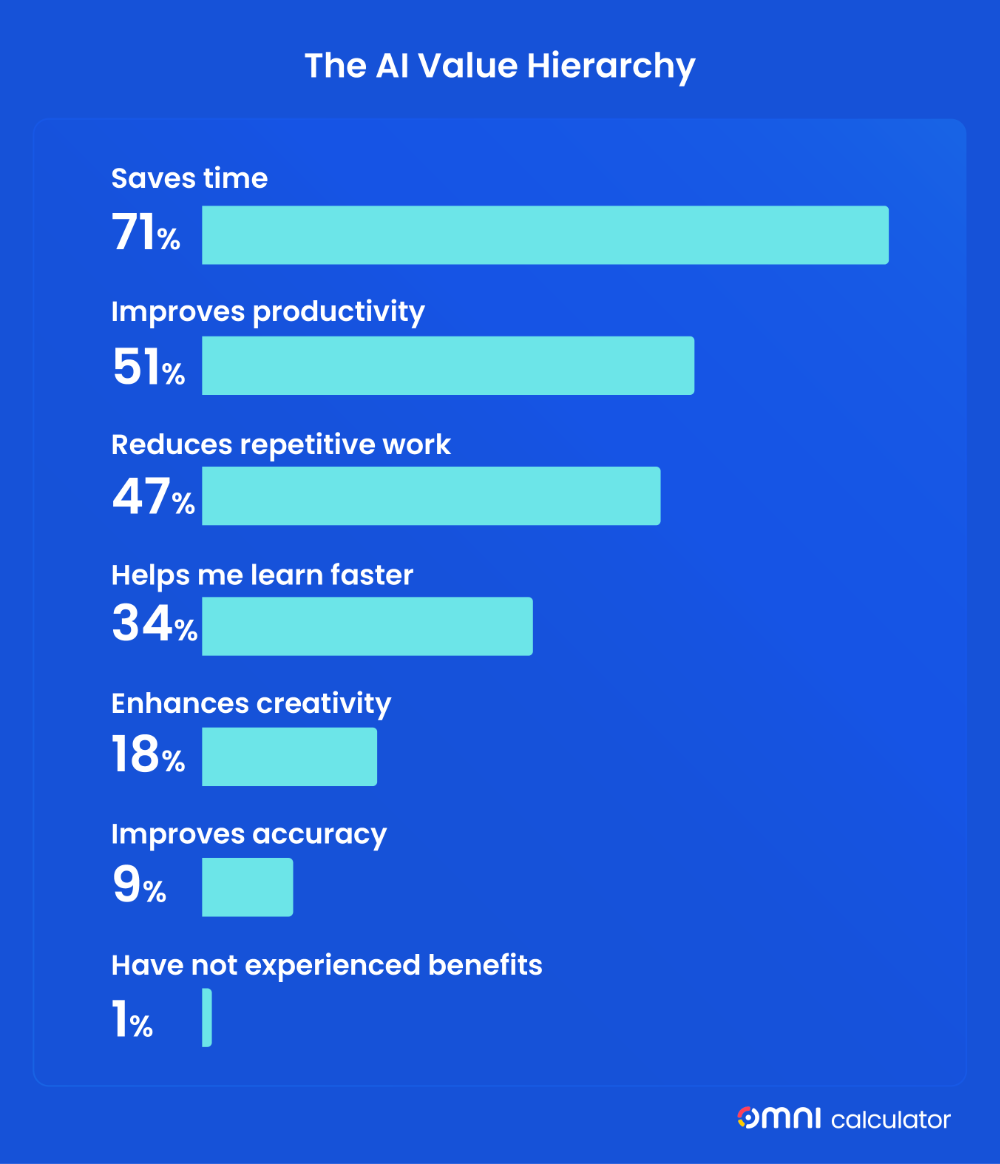
We have identified an “AI Value Hierarchy.” Right now, engineers see AI as a way to increase productivity and handle routine tasks, but not as a replacement for careful technical work.
The main finding is that 71% of engineers say AI "Saves Time," but only 9% believe it "Improves Accuracy."
“Trust, but Verify” is the New Creed. This careful approach is important for engineers. While 86% use AI tools, 89% only trust the results after checking them by hand.
Only:
- 6% trust AI results without hesitation; and
- 14% trust AI reasoning itself.
That 14% represents the real “danger zone.” AI can produce reasoning that appears logical but is factually incorrect. Encouragingly, most engineers recognize this risk.
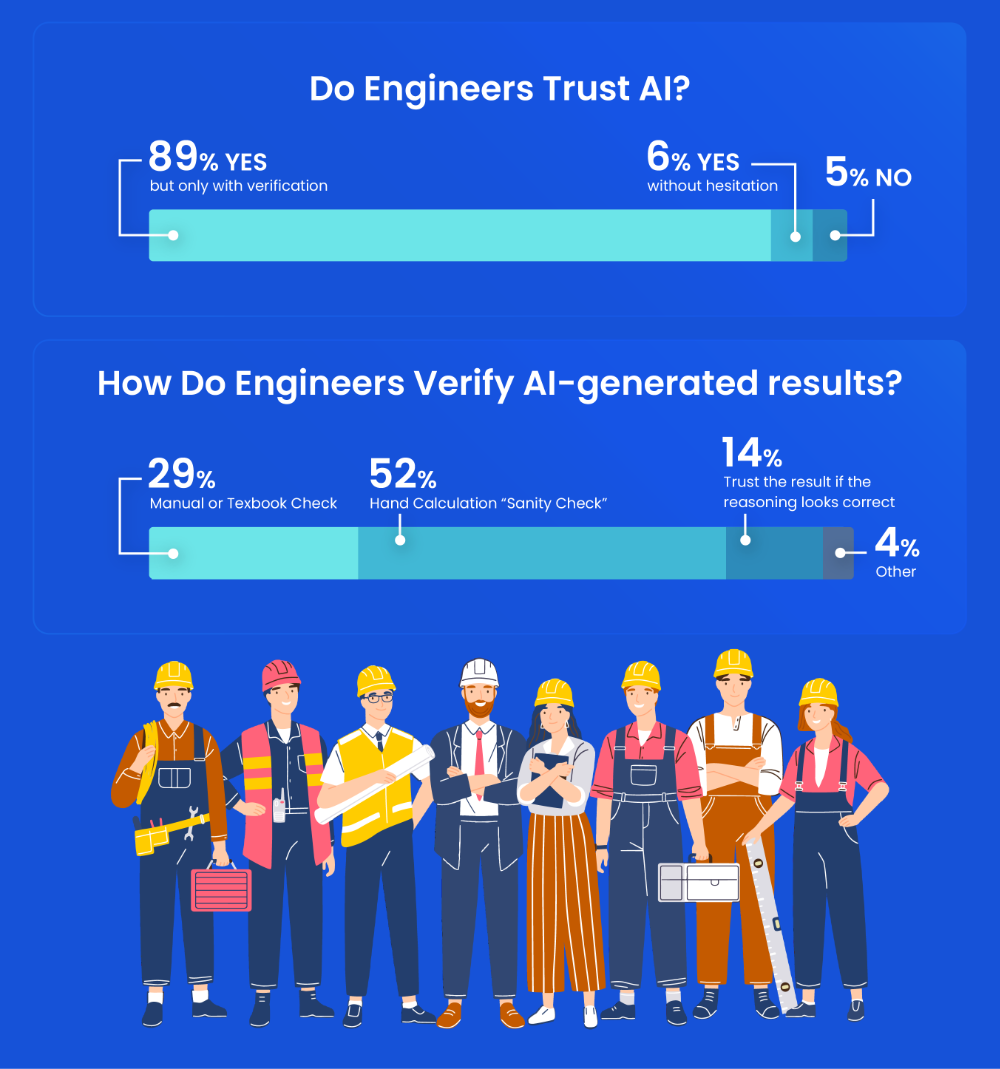
When AI provides a technical result, engineers verify by:
- Performing a quick “back-of-the-envelope” calculation by hand (52%); and
- Checking textbooks and industry manuals to confirm the logic is correct (29%).
Only 6% of engineers trust AI results without hesitation. In an industry where even a small error can be disastrous, the “black box” nature of AI remains its biggest challenge.
Engineers are not broadly afraid of using AI. Instead, they foresee a collaborative future where:
- AI handles data-heavy, repetitive, or exploratory tasks; and
- Humans retain final authority over safety, ethics, and design decisions.
Top Future Concerns
- Accuracy & Reliability (85%);
- Data Privacy (59%); and
- Ethical/Safety Risks (53%).
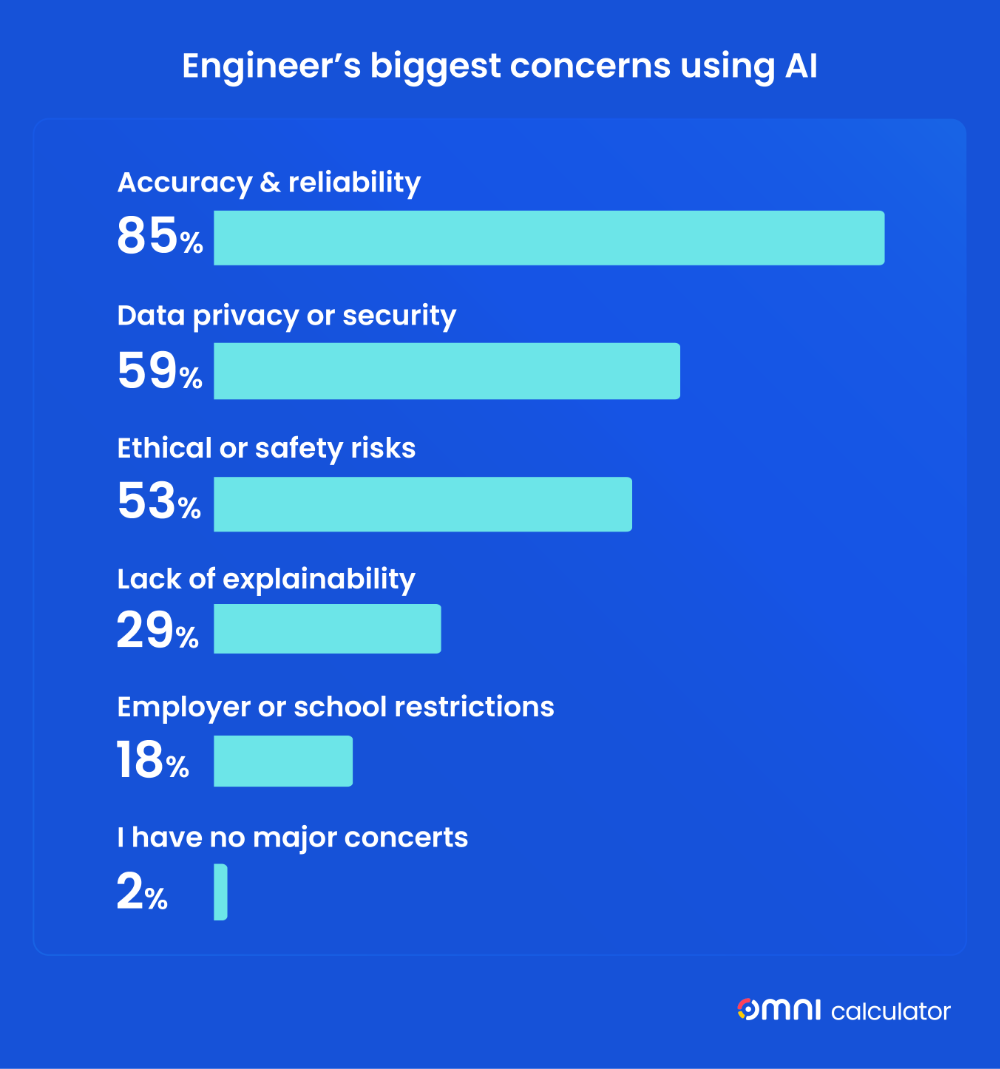
Accuracy dominates all other concerns. The engineering community is acutely aware that AI hallucinations or subtle technical errors could cause real-world failures.
More than half also worry about privacy and professional liability. The barriers to full adoption are not only technical but also ethical and legal.
Generational Divide
- 59% of Gen Z users are optimistic about AI. They see AI as a natural part of the engineering toolkit rather than a threat.
- 25% of millennials believe AI will fundamentally change engineering.
- Nearly 50% of millennials believe the profession is heading toward total transformation (compared to ~37% of Gen Z).
Millennials, who have experienced multiple technology disruptions, appear more cautious about workforce impact.
Rather than resisting AI, the engineering profession is integrating it with a high degree of caution.
💡 AI is not replacing engineers. It is becoming a productivity layer on top of existing expertise. In a profession built on precision, that human oversight isn’t going anywhere.
The survey includes a targeted sample of 402 engineering professionals and students across the United States. To ensure data quality, the survey included multiple-choice questions with “gray area” options and multi-select fields for tool usage and engineering tasks.
The distribution of respondents was spread across the four major U.S. Census regions, with the South (33%) and West (24%) showing the highest representation, followed by the Northeast (22%) and the Midwest (21%).
The survey was designed to evaluate the practical integration of AI in technical workflows. In some cases, percentages may not total 100% due to rounding or because respondents were permitted to select up to three options for questions regarding specific tasks, benefits, and concerns. Open-ended write-in responses regarding verification methods and future outlooks were categorized thematically for analysis.
AI is useful for brainstorming and drafting, but it often struggles with the precise math needed in specialized fields. To help balance AI’s speed with engineering accuracy, we have listed the key tools for your area:
Mechanical & Materials Engineering
These tools are essential for designing moving parts, fluid systems, and structural integrity.
- Beam Deflection Calculator: Estimates how much a beam will bend under a specific load.
- Bernoulli's Equation Calculator: A staple for fluid dynamics and pipe flow analysis.
- Gear Ratio Calculator: Used to determine mechanical advantage in drivetrains.
- Young's Modulus Calculator: Critical for material selection and stress/strain analysis.
- Torque Calculator: Essential for motor sizing and fastening specifications.
- Reynolds Number Calculator: Used to predict flow patterns (laminar vs. turbulent).
Civil & Structural Engineering
These tools are most used for site preparation, material estimation, and structural safety.
- Concrete Column Calculator: Determines the volume of concrete and rebar needed for supports.
- Rebar Calculator: Helps in estimating shipping costs and structural weight.
- Retaining Wall Calculator: Calculates the lateral earth pressure and material needs.
- Metal Weight Calculator: A quick way to find the weight of steel beams, plates, and pipes.
- Slope Calculator: Essential for drainage and grading calculations on-site.
Electrical Engineering
- Ohm’s Law Calculator: The fundamental tool for basic circuit analysis.
- Wire Gauge (AWG) Calculator: Determines the correct wire size for a given current to prevent overheating.
- Voltage Drop Calculator: Used for sizing cables in long-distance power runs.
- Resistor Color Code Calculator: Quickly identifies component values (common for students and bench techs).
- Capacitor Energy Calculator: Calculates the energy stored in a capacitor field.
Chemical & Process Engineering
Used for mass balances, heat transfer, and lab work.
- Molarity Calculator: The go-to tool for preparing solutions and chemical concentrations.
- Heat Transfer Calculator: Used to design heat exchangers and insulation.
- Ideal Gas Law Calculator: A fundamental tool for calculating pressure, volume, or temperature.
- Diffusion Coefficient Calculator: Used in mass transfer and process kinetics.
General Engineering Math & Conversion
Tools used by all engineers, regardless of their specific branch.
- Engineering Notation Calculator: Converts standard decimals into SI-prefix-friendly numbers (kilo, mega, micro).
- Significant Figures Calculator: Essential for maintaining precision in technical reports and laboratory data.
- Scientific Notation Calculator: For handling very large or very small numbers.
Networking & Web Development
Used by DevOps, SREs, and Backend Engineers to manage infrastructure and data transmission.
- IP Subnet Calculator: It calculates CIDR notation, subnet masks, and the range of usable IP addresses.
- Data Transfer Calculator: Estimates how long it will take to move a specific payload (e.g., a 50GB database) over a specific bandwidth (e.g., a 100Mbps connection).
- Bandwidth Calculator: Converts between Mbps (megabits) and MB/s (megabytes)—a constant source of confusion when comparing internet speeds to file sizes.
- Aspect Ratio Calculator: Used by Frontend devs and UI/UX designers to ensure images and video containers scale correctly across different screen resolutions.