The same $300,000 mortgage now costs about $850 a month more than it did in 2021
• Finance
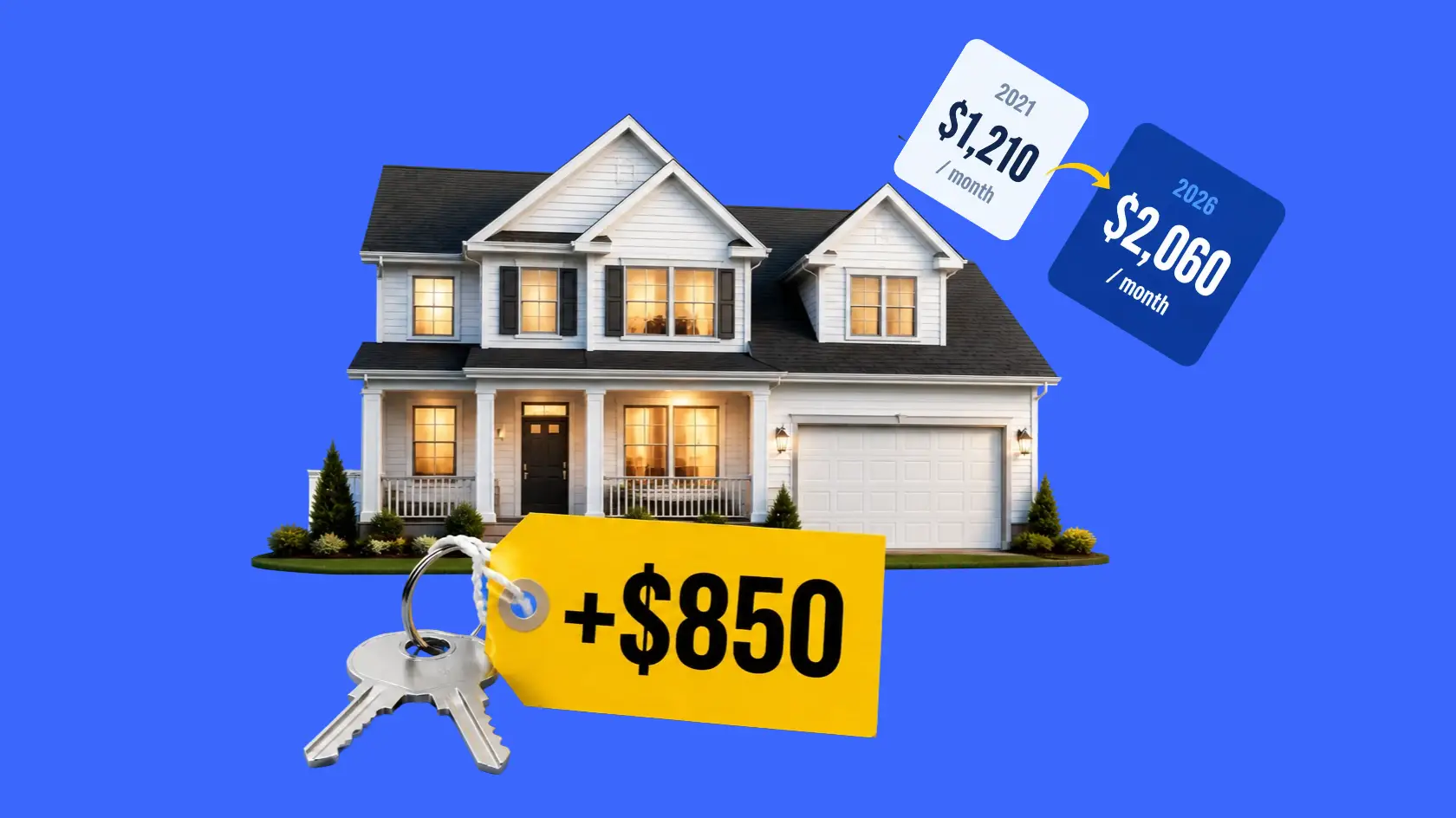
Borrow $300,000 for 30 years at this week's average mortgage rate, and you'll pay about $850 a month more than someone who locked in the record-low rate in January 2021.
Key takeaways
- Nothing about the loan changes except the rate, and the monthly bill still swings by thousands of dollars across the decades.
- Today's payment is far from the worst in history, and the 1980s were much harsher.
- The gap helps explain why moving is a hard sell for owners who borrowed when rates were low.
Same loan, very different bills
To see what the interest rate alone does, picture one loan that never changes: $300,000, a 30-year fixed rate, counting only principal and interest, without taxes or insurance.
The average 30-year rate was 7.32% on October 22, according to Freddie Mac, down slightly from 7.40% the week before and up from 6.19% a year earlier. At 7.32%, that loan costs about $2,060 a month.
In January 2021, the rate hit 2.65%, the lowest in the survey's history going back to 1971. The same loan would have cost about $1,210 a month. That's the $850 difference, every month, for 30 years.
Now go the other way. In October 1981, the 30-year rate peaked at 18.63%, the highest Freddie Mac has ever recorded. At that rate, the same $300,000 loan would cost about $4,680 a month, more than twice today's payment.

The comparison shows the effect of the rate only. A buyer in 1981 didn't borrow $300,000, because homes and incomes were much smaller then. And Freddie Mac's average describes borrowers with strong credit and a 20% down payment, so many people are quoted higher rates.
Why so many owners stay put
For someone who locked in a mortgage at 3% or less, selling and buying another home means giving up that rate and taking on today's. On a $300,000 loan, that can add hundreds of dollars to the monthly payment, even for a house that costs the same.
It also means that when rates move, the people who feel it most are new buyers. Owners with a fixed-rate loan keep paying the rate they locked in.
Methodology
Mortgage rates come from Freddie Mac's Primary Mortgage Market Survey for October 22, 2026, its January 7, 2021 release for the record low, and its weekly history, which shows the record high of 18.63% in October 1981. Monthly payments are our calculation for a $300,000, 30-year fixed loan, principal and interest only, using the standard mortgage formula, the same one behind our mortgage calculator. Payments are rounded to the nearest $10. Freddie Mac's rates describe borrowers with good or excellent credit and a 20% down payment, according to its survey methodology.
loading
Loading