One AI data center can use as much electricity as 100,000 homes
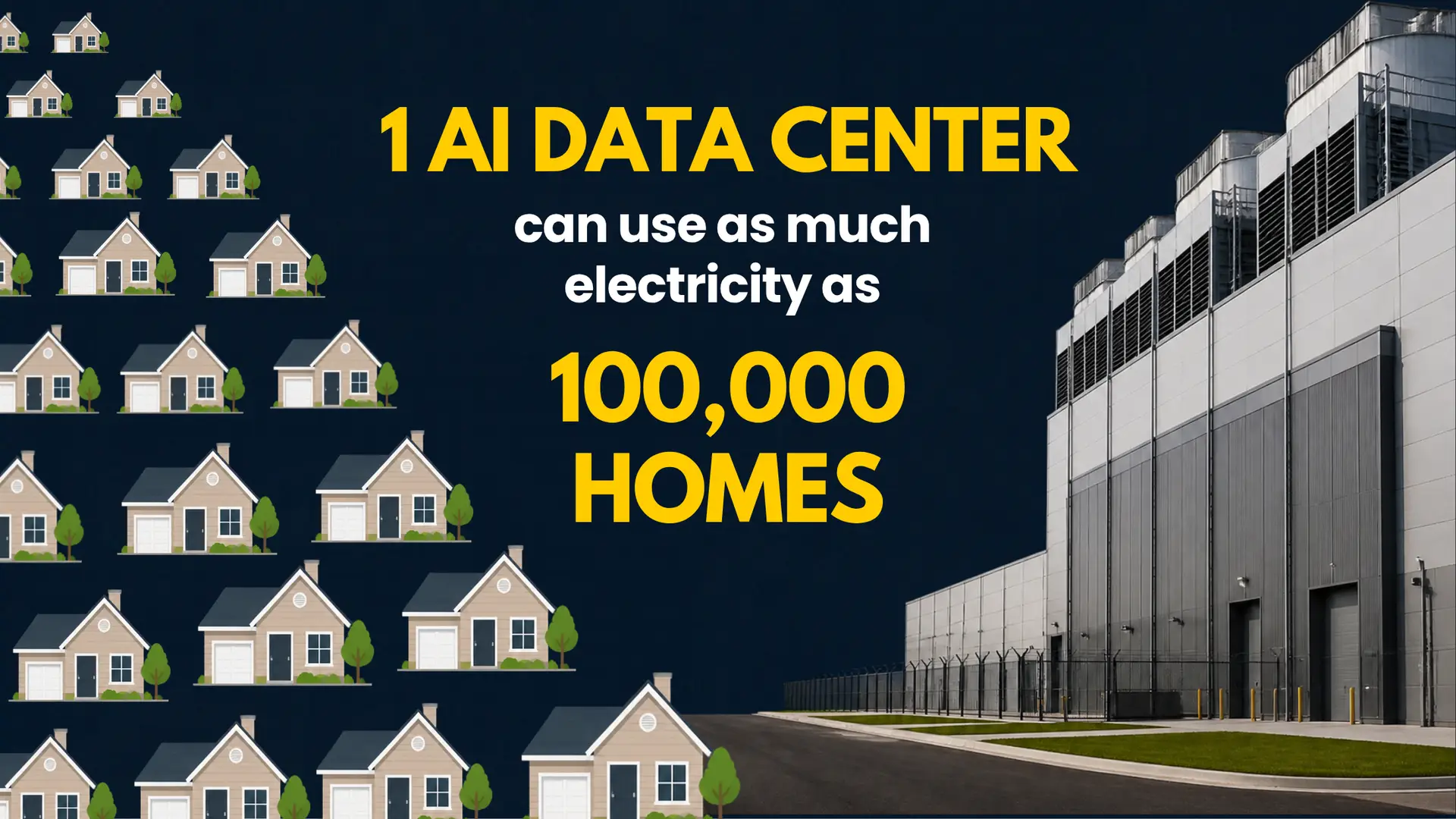
A single data center built for artificial intelligence can use as much electricity as 100,000 homes, and towns like San Antonio are now deciding whether they want one next door.
Key takeaways
- AI data centers run power-hungry chips around the clock, and the biggest new ones will dwarf today's.
- Many also use water to stay cool, and some of it evaporates instead of returning to local supplies.
- San Antonio votes on new data center rules on October 29, and the debate there shows both sides of the trade-off.
Why AI needs so much power
Every time someone asks a chatbot a question or generates an image, the work happens on thousands of specialized chips in a data center somewhere. Those chips run day and night, and they produce a lot of heat, so the building also needs powerful cooling systems running alongside them.
Add it up, and a typical AI-focused data center uses as much electricity as 100,000 homes, according to the International Energy Agency. That's the size of a small city's demand, concentrated in one windowless building. And the IEA says the largest data centers now under construction will use about 20 times as much.
The water question
Keeping those chips cool often takes water. Many data centers use cooling systems where some of the water evaporates, so it's used up rather than returned to rivers or the local supply.
US data centers used up about 17 billion gallons of water this way in 2023, according to Lawrence Berkeley National Laboratory. That's roughly what 155,000 American families use at home in a year. It doesn't include the water used by the power plants that supply the electricity, so the full footprint is bigger.
In a dry region, that's where the worry comes from: a data center and the town around it may draw on the same aquifer.
A growing slice of the grid
Data centers used about 4% of all US electricity in 2023, according to the Department of Energy. Its projection for 2028 is a range, from about 7% to 12%, depending on how quickly demand grows. The IEA expects data centers to account for nearly half of the growth in US electricity demand through 2030.
That's why utilities and local officials are paying attention. A large new data center can require new power lines and generation, which raises the question of who pays for them.
Why San Antonio is debating the rules
In August, San Antonio Councilman Ric Galvan called for a temporary pause on new data centers, as residents raised concerns about power and water use, noise and air quality. City staff recommended permanent zoning rules instead, such as keeping data centers 500 feet from homes and schools and away from the Edwards Aquifer recharge zone, which supplies much of the city's water. The council is scheduled to vote on October 29.
Not everyone wants to slow them down. Data centers bring construction, tax revenue and jobs, and Councilwoman Misty Spears opposed a pause, saying the city "should work to bring investment and good-paying jobs to our community".
Many Americans think the tech industry should carry the cost. In Omni Calculator's survey of 703 US adults, 43% said tech companies should be mainly responsible for AI's water footprint. Read more in Who Should Pay for AI's Water Bill?
Methodology
Sources: IEA, Energy and AI (2025), Department of Energy, summary of Lawrence Berkeley National Laboratory's 2024 data center report (4.4% in 2023, 6.7% to 12% projected for 2028), water use from the same Berkeley Lab report, as reported by Pew Research Center, EPA WaterSense (more than 300 gallons a day per family), KSAT (October 2026) and KSAT (August 2026) for San Antonio.


loading


Loading