
Table of contents
Who Should Pay for AI’s Water Bill? A Survey of 703 Americans (2026 Study)
Report Highlights
- 43% of Americans believe tech companies should be primarily responsible for AI’s water footprint.
- Environmental anxiety regarding AI is consistent across all U.S. regions, proving this is a national issue rather than a regional one.
- Gen Z is 24% more aware of AI’s water consumption than Gen X.
- Women are 50% more likely than men to be "very concerned" about the environmental cost of their digital habits.
- Nearly 3 out of 4 people say they would change how they use AI after learning about its water use.
As the world observes World Water Day on March 22, a new report from Omni Calculator reveals the invisible environmental water toll of Artificial Intelligence.
Millions of Americans use AI daily, yet most don't realize their prompts rely on cooling data centers that consume 1.7 billion liters of water every day in the U.S. alone. (Clean Water 4).
Omni Calculator surveyed 703 Americans to see how they view this environmental impact.
The results show that there is a generational divide in environmental literacy: Gen Z is 24% more aware of AI’s water consumption than Gen X. But as awareness grows, so does the demand for accountability, with 43% of Americans stating that tech companies (not consumers) should be primarily responsible for AI’s water footprint.
AI has quickly become a standard tool for Americans. Respondents were asked about the frequency of their use of AI, and only a small group (4% to 6%) said they never use it.
How often do you use AI tools for everyday tasks? | Response Rate | West | Midwest | Northeast | Northeast |
|---|---|---|---|---|---|
Several times a day | 34% | 40% | 27% | 35% | 34% |
Several times a week | 28% | 27% | 27% | 24% | 32% |
Occasionally | 14% | 12% | 15% | 14% | 15% |
Once a day | 13% | 9% | 18% | 16% | 10% |
Rarely | 7% | 8% | 8% | 7% | 6% |
Never | 4% | 5% | 6% | 4% | 4% |
Adoption is particularly high in the West, where 40% of residents check in with AI several times a day.
Even so, Americans haven't abandoned traditional tools. We asked which option they prefer when planning a trip (e.g., itinerary, restaurants, things to do), and 48% said they use a mix of AI and Google, while 42% still prefer to stick with search engines and manual research.
For planning a trip, which option do you usually prefer? | Response Rate |
|---|---|
A mix of both | 48% |
Using Google search and multiple websites | 42% |
Asking an AI tool | 8% |
I use friends’ recommendations | 1% |
I rely on travel agencies | 1% |
There is a sharp divide in who knows about the water used to cool data centers. Awareness drops steadily with age:
- Gen Z (83%) is the most informed.
- Millennials (68%) come next.
- Gen X (59%) is the least aware.
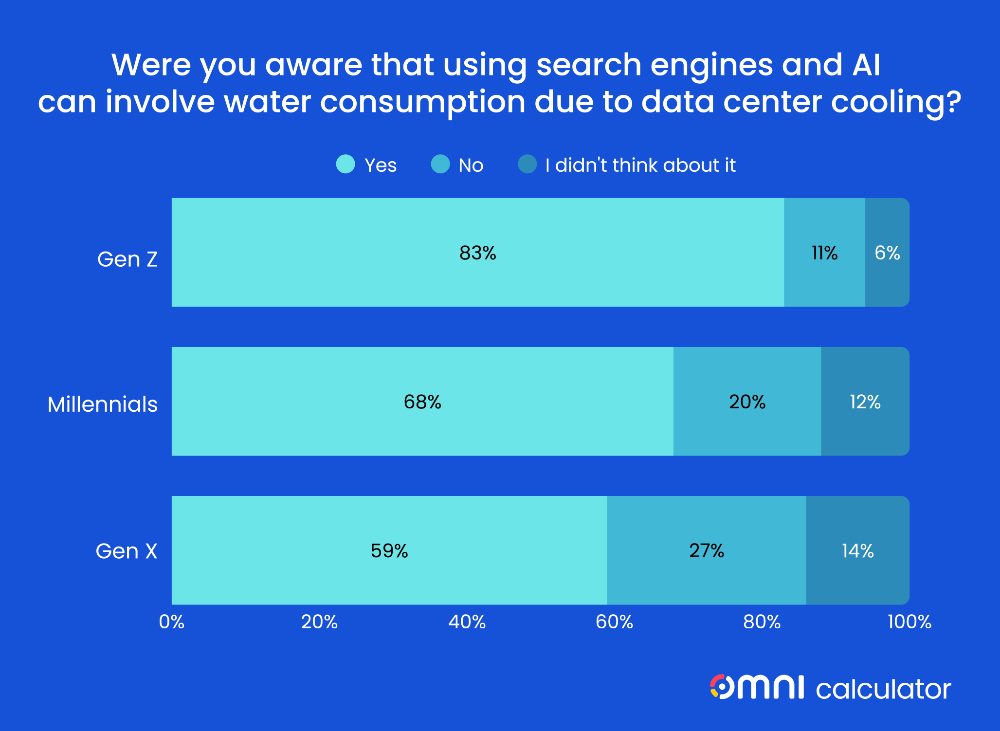
This creates a 24% awareness gap between the youngest and oldest groups in our study. Gen X users are nearly three times as likely as Gen Z to be completely unaware of the issue (27% vs 11%). The number of people who say they are "not aware" more than doubles as you move from Gen Z (11%) to Gen X (27%).
With a p-value of less than 0.001, these results represent a clear demographic trend rather than a random fluctuation in the data.
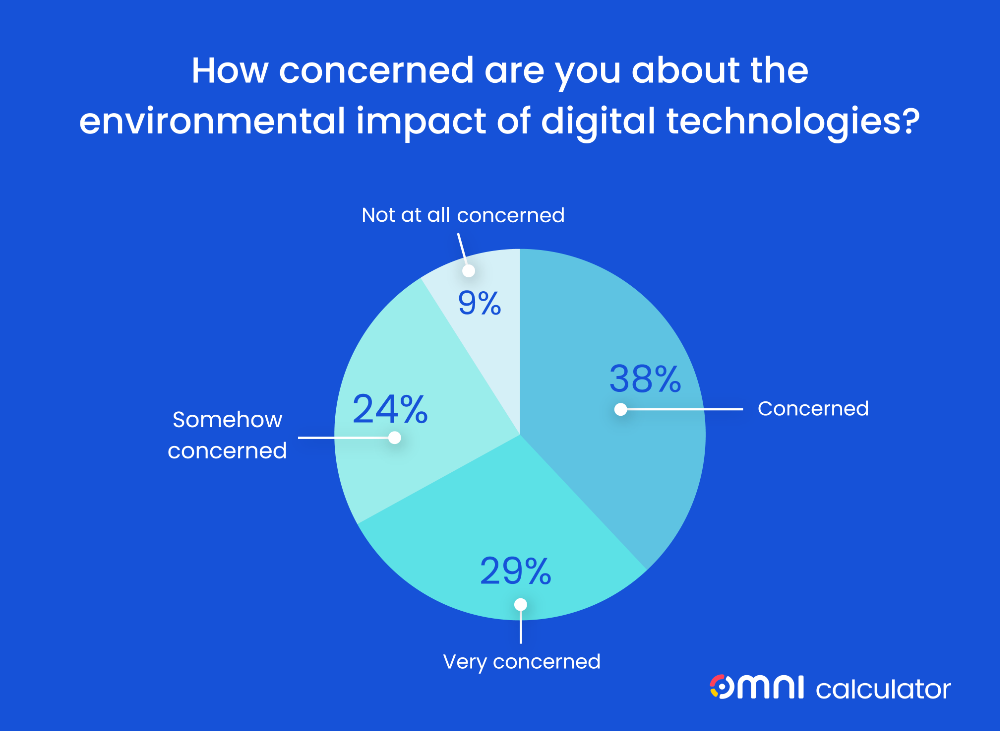
Gender is a primary driver of environmental concern regarding digital technology.
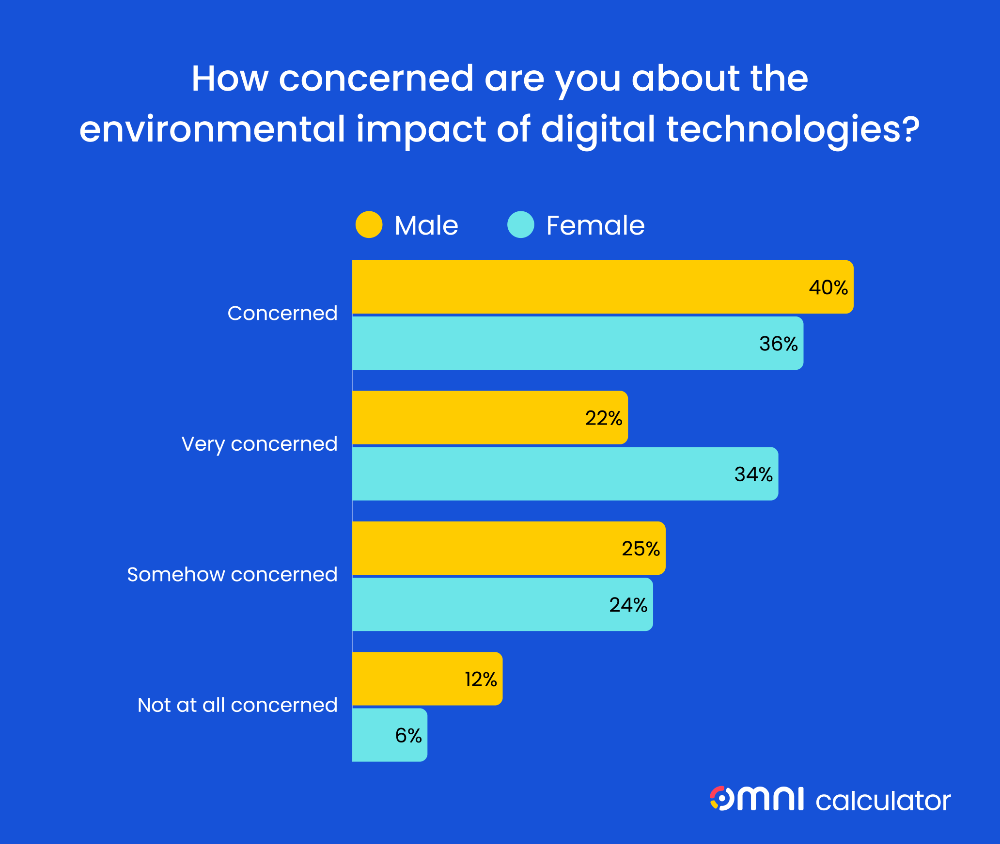
Women are 50% more likely than men to be "very concerned" about their digital water footprint (34% vs 22%). Men are twice as likely as women to dismiss the issue entirely.
Geography does not dictate anxiety levels; the concern is consistent across the West, Midwest, Northeast, and South. Whether a user lives in a drought-prone state or a water-rich one, the discomfort regarding tech’s environmental impact is a national sentiment.
How concerned are you about the environmental impact of digital technologies? | West | Midwest | Northeast | South |
|---|---|---|---|---|
Concerned | 39% | 40% | 37% | 37% |
Very concerned | 32% | 26% | 26% | 30% |
Somehow concerned | 23% | 24% | 29% | 21% |
Not at all concerned | 6% | 10% | 7% | 12% |
A single Google search uses about 6–8 mL of water (npj Clean Water)(Google 2025). Although it seems like a small amount, when multiplied across billions of searches, it adds up. U.S. data centers consume roughly 1.7 billion liters of water per day, much of it for cooling servers and generating electricity.
AI models on the other hand, are much "thirstier" because they need more computing power. To put this in perspective, we calculated the water cost of 20 daily queries over one year using the AI water footprint calculator.
Annual Water Cost (In 500 mL Bottles) for 20 Daily Queries:
Tool/Model | Water per Query | Bottles Per Year |
|---|---|---|
DeepSeek R1 | 197.73 mL | 2,889 bottles |
DeepSeek V3 | 72.11 mL | 1,054 bottles |
ChatGPT | 37.81 mL | 552 bottles |
Claude Opus | 27.83 mL | 407 bottles |
Google Search | ~7 mL | 102 bottles |
Using a model like DeepSeek R1 for just 20 queries a day "drinks" more water in a year than a human being does.
AI’s process requires more computing power, which leads to higher water use for three main reasons:
- Cooling servers: High-performance chips generate intense heat that must be managed with water-based cooling systems.
- Electricity production: Data centers use vast amounts of power, much of which is generated by thermoelectric or hydropower plants that consume water during production.
- The scale of compute: Sophisticated models like DeepSeek V3 perform millions more calculations per query than a traditional search engine.

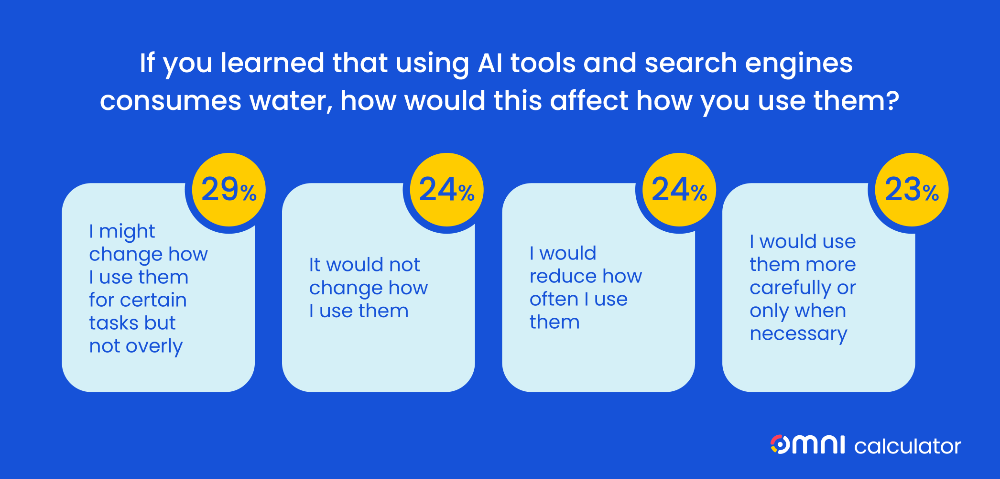
Learning these facts forces a shift in behavior. Nearly 3 out of 4 respondents say they would adjust their habits after learning about the water required for AI. Their intended changes include:
- 29% would change how they use tools for specific tasks.
- 24% would reduce their overall usage.
- 23% would only use AI when absolutely necessary.
💡 To help people see how their own habits add up, we built the AI water footprint calculator.
The tool lets you select specific AI models and enter your daily number of queries. It translates that usage into the equivalent of 500 mL water bottles, toilet flushes, or 10-minute showers. You can also switch to a global view to see how the world’s collective AI use adds up every year.
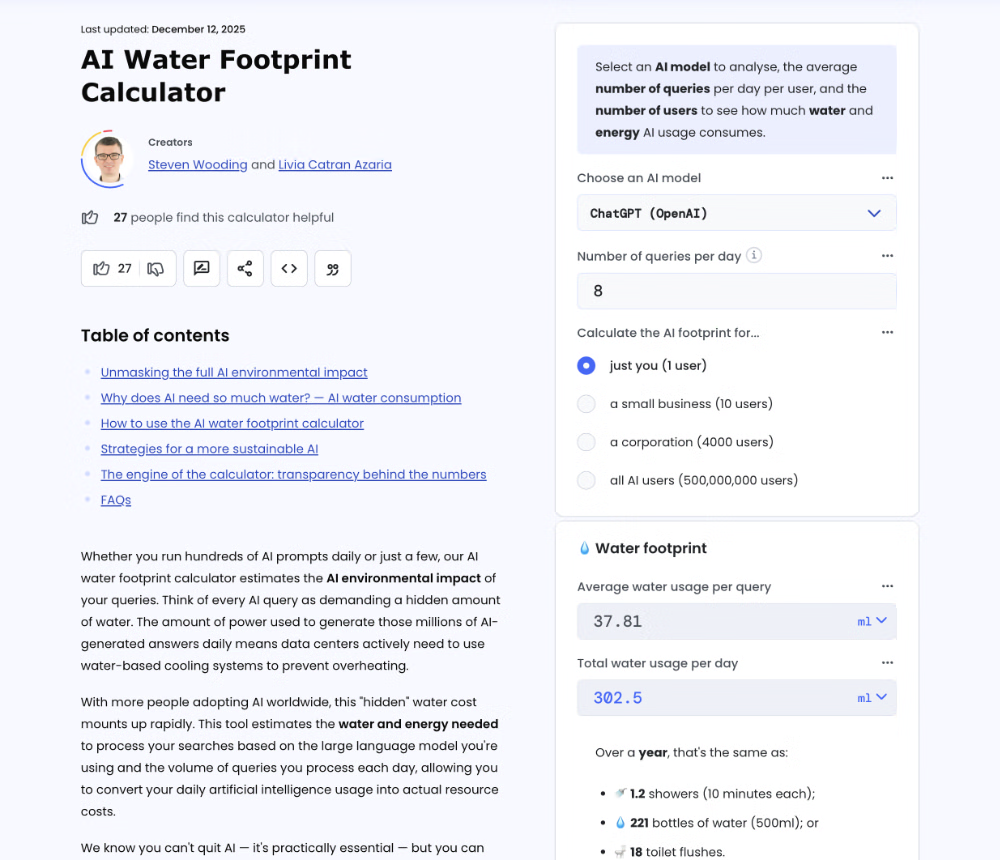
Research from (Data Centre Water Consumption, npj Clean Water) shows that finding exact numbers is difficult. Tech giants have historically treated water usage as a trade secret. In South Carolina, Google was permitted to pump 1.9 million liters of water daily from local aquifers for free, even as residents were asked to cut their own usage by 57% (npj Clean Water).
While the industry touts "Water Usage Effectiveness" (WUE) metrics, efficiency does not equal low impact. A "highly efficient" data center in a water-stressed region like Arizona still places a heavy burden on local resources compared to one in a cooler, water-rich climate.
To manage environmental impact, the tech industry requires a standardized framework for reporting resource consumption. Currently, there is no universal protocol for measuring the water and energy costs associated with AI models.
"As someone who spends my life calculating the true environmental cost of products, I find the 'cloud' to be a big misnomer," says sustainability engineer Rangsimatiti Binda Saichompoo.
"We treat AI queries as weightless, but every prompt relies on massive, material infrastructure. We’re moving from a physical economy where we measured the water footprint of a plastic bottle to a digital one where we forget to measure the water footprint of a chatbot. We need a full-scale LCA for every model, and not just for the energy it consumes, but for the local water systems it depletes to stay cool."

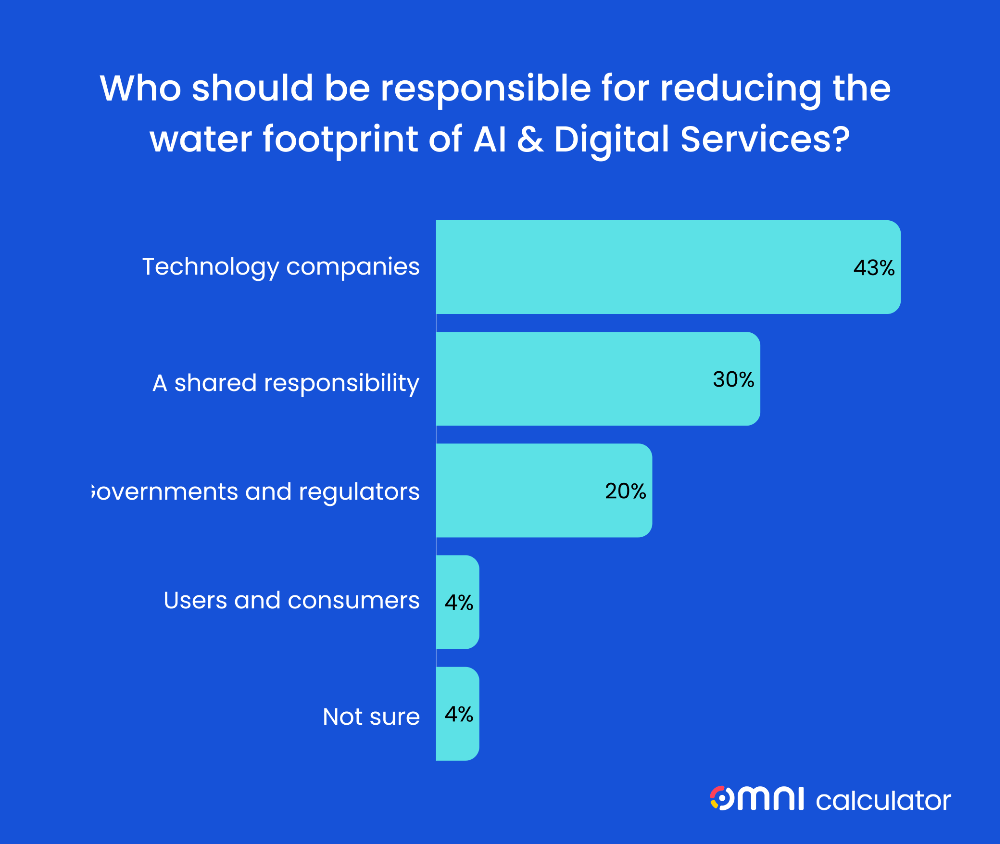
When it comes to fixing the problem, Americans look to the industry rather than the individual.
- 43% say Tech Companies should be primarily responsible.
- 30% believe in a shared responsibility between industry, government, and users.
- 20% want Governments and Regulators to take the lead.
Who Should Be Responsible | Gen Z | Millennials | Gen X | Male | Female |
|---|---|---|---|---|---|
Technology companies | 37% | 40% | 49% | 45% | 41% |
A shared responsibility | 28% | 29% | 34% | 25% | 33% |
Governments and regulators | 27% | 23% | 12% | 23% | 16% |
Users and consumers | 3% | 3% | 5% | 3% | 5% |
Not sure | 5% | 5% | 2% | 3% | 4% |
Very few people (4%) assign the responsibility to users. While Gen Z is the most likely to favor government intervention (27%), older generations like Gen X feel most strongly that the burden sits with the corporations (49%).
Most Americans already perceive AI as more water-intensive than traditional search. However, 1 in 5 people are still "not sure," suggesting a major opportunity for public education.
For a long time, the "cloud" was marketed as an abstract, weightless utility. Our data proves that narrative is dead. We are now entering a phase where the public understands that every digital interaction has a physical cost.
Tech companies have operated in the shadows regarding their resource consumption, but they can no longer treat our water supply as an infinite, free resource for proprietary gain.
If the industry continues to scale without transparency, the backlash from water-stressed communities will likely move from public surveys to legislative chambers. The era of the "invisible" data center is ending; the era of corporate water accountability is just beginning.
We surveyed 703 Americans to understand their AI habits and awareness. Participants were roughly balanced by gender and included adults from all major U.S. regions and age groups, enabling generational comparisons.
The survey included questions on AI usage habits, awareness of AI’s water footprint, and opinions on who is responsible for managing its environmental impact. Responses were collected using multiple-choice and rating-scale questions.
Our footprint algorithm is based on the research paper How Hungry is AI? Benchmarking Energy, Water, and Carbon Footprint of LLM Inference by researchers at the University of Rhode Island. This framework measures the impact of "inferences" (running queries) by analyzing performance metrics, hardware configurations, and location-specific water usage effectiveness (WUE).