Mapped: How Much Netflix Costs Around the World in 2026
• Finance
Want more stories like this?
Follow Omni on Google.


Americans pay almost seven times as much for Netflix as subscribers in Pakistan.
Key Takeaways
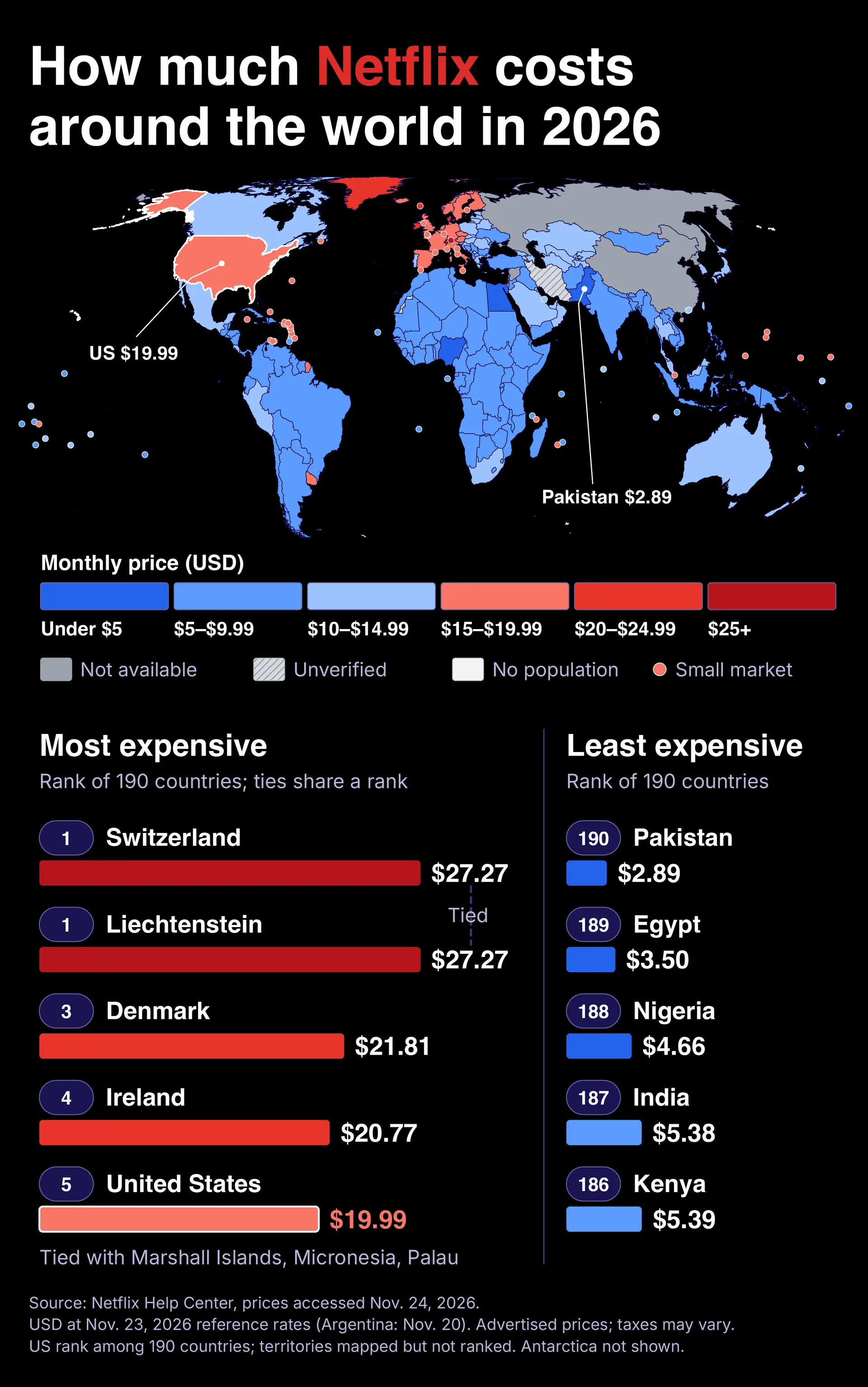
- Americans pay more for Netflix than subscribers in 182 of the 190 countries analyzed.
- Switzerland and Liechtenstein have the highest monthly subscription price at $27.27, while Pakistan has the lowest at $2.89.
- The monthly cost of Netflix's Standard plan in the US has increased by 29.1% since October 2023.
We mapped the monthly cost of Netflix's Standard ad-free subscription across 236 countries and territories to see how US prices compare with the rest of the world in 2026.
Where Netflix costs the most and least in 2026
A year of ad-free Netflix costs an American subscriber nearly $240 before any additional taxes. In Pakistan, the same subscription costs less than $35 at current exchange rates.
Switzerland and Liechtenstein top the global rankings, followed by Denmark and Ireland. The United States shares fifth place with three Pacific island nations: Marshall Islands, Micronesia, and Palau.
At the other end of the ranking, three countries offer the Standard plan for less than $5 per month: Pakistan, Egypt, and Nigeria. India and Kenya round out the five cheapest countries, with just one cent separating their prices.
The table below shows the cost of Netflix's Standard plan in each country and territory.
| Country / territory | Billing price |
|---|
How much have Netflix prices increased in the US?
In 2023, American subscribers paid $15.49 per month for Netflix's Standard ad-free plan. The same subscription now costs $19.99, an increase of 29.1% in less than three years.
For someone who subscribes year-round, the annual cost has risen from $185.88 to $239.88, an extra $54 before any applicable taxes.
Curious how much your other streaming subscriptions have gone up? You can compare your old and current bills using our percentage increase calculator.
Higher subscription prices are helping Netflix grow
According to its shareholder letter, Netflix earned $12.9 billion in revenue in the third quarter of 2026, up 12% from a year earlier. Higher subscription prices and a growing subscriber base have helped drive this increase.
While subscription revenue growth exceeded Netflix's expectations, the company lowered its 2026 advertising revenue forecast from approximately $3 billion to $2.7 billion.
Why does Netflix charge different prices around the world?
Netflix sets different subscription prices across markets. Local economic conditions, currency values, competition, and taxes can all affect how much customers pay.
Exchange rates also influence the global rankings. A country's Netflix subscription may become cheaper in US dollar terms even if Netflix has increased its price in the local currency.
And can Americans simply subscribe at another country's lower price? According to Netflix, customers are billed at the price and in the currency of the country where they signed up. The country associated with an account can only be changed when the subscriber moves to another country.
Research methodology
We collected monthly Standard subscription prices without ads from Netflix's official pricing pages on November 24, 2026. Promotional offers, bundled subscriptions, and additional member fees were excluded.
Prices were converted to US dollars using November 23, 2026 exchange rates, sourced primarily from the International Monetary Fund, Banque de France, and national central banks. Secondary sources reporting central bank rates were used where direct figures were unavailable. Argentina's November 20 rate was used because of a local bank holiday.
The map covers 236 countries and territories, while country rankings and historical summary statistics are based on 190 countries. Uninhabited territories and markets where Netflix is unavailable or local access could not be confirmed were excluded from the rankings. Subscription and payment availability was not tested locally.
All prices are as advertised by Netflix. Differences in local taxes, inflation, purchasing power, and payment fees have not been adjusted for. The historical analysis compares prices on two dates and does not capture price changes that may have occurred between them.
Most Read



loading