

Table of contents
How to Travel with a Dog: The Guide to Planes, Cars, and Trains
Report Highlights
Whether you’re visiting family on the other side of the country or exploring a new destination abroad, the question of how to travel with a dog is likely at the top of your vacation checklist. Traveling with your dog sounds simple in theory, but it’s just that: a theory. In reality, it goes way beyond just booking a ticket, packing a bag, scooping the dog, and heading to the airport. From paperwork deadlines and airline rules to crate sizing and your dog’s biological needs, bringing your best friend along is, let’s be honest, a bit more complicated than you might expect. But if you’re here, it’s because staying home is not an option.
Key takeaways: Important things to have in mind when travelling with a pet
- 💉 Traveling with dogs requires preparation, including updated vaccines, ID tags, and travel documents.
- 🧳 Dogs should always be secured in a dog car seat or crate and travel in-cabin on planes whenever possible.
- ✈️ Airline and 🚂 train policies vary; always confirm the Amtrak pet policy or airline rules before booking.
- 💧Pack food, dog car sick meds, water, and medical records with you.
We’ve built this guide to break down for you exactly how to travel with a dog by plane, car, and train and to answer many of your questions, such as “can I bring my dog into Canada by car?” If you’re ready for a vacation that’s actually stress-free, read on; we’ve got every proof-checked detail you need for a successful trip.
🚨 Coming soon: Build your own pet travel calculator
Soon, Omni Calculator registered users will be able to build, edit, and share custom calculators for your dog (and more!). Register for an to get early access to these expert tools!
Before you can figure out how to travel with a dog on a plane or hit the road, you need to know more about health and safety.
1. Preparation: vaccines, microchips, and the USDA window
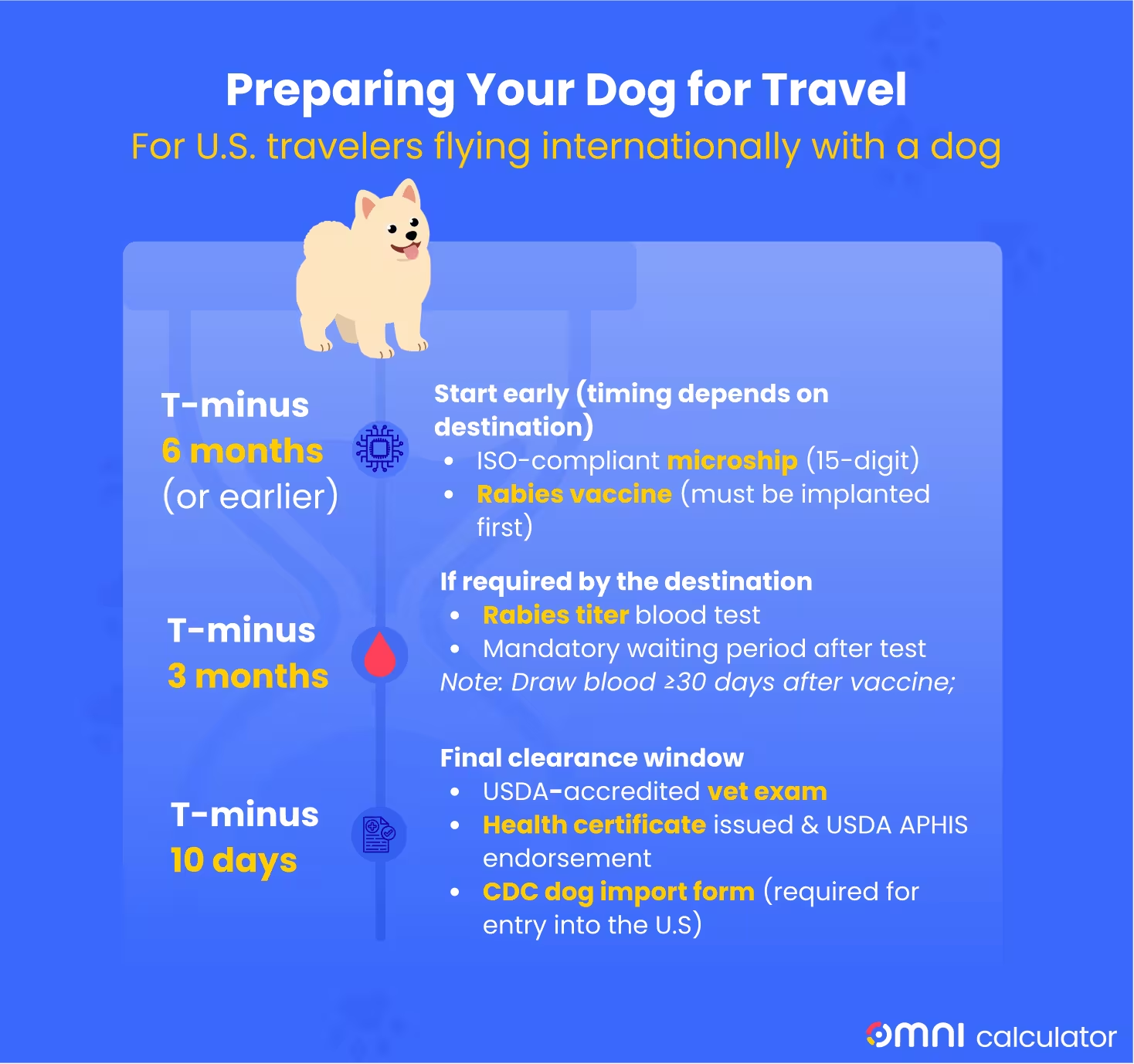
First, regarding microchip and vaccines, for international destinations like the EU, the order of operations is non-negotiable: your dog must have an ISO-compliant (15-digit) microchip implanted before their rabies vaccine is administered. If the vaccine comes first, the paperwork is considered invalid, and you will likely be denied entry or forced into quarantine.
Another thing to bear in mind is that you usually have to wait at least 21 days after a rabies vaccination before entering or returning to the EU/UK.
❗ Beyond rabies, keep an eye on destination-specific rules, such as the UK’s 5-day tapeworm treatment window or the DHPP core trio required for most global entries.
Another important thing is that most international pet health certificates for international travel are only valid if they are issued by a USDA-accredited veterinarian (United States Department of Agriculture) and endorsed by USDA APHIS (Animal and Plant Health Inspection Service) within a strict 10-day window of your arrival. It’s not enough to just have a standard vet signature; you need to ensure your vet is USDA-accredited so they can submit your forms through the VEHCS (Veterinary Export Health Certification System) for an official government stamp.
Finally, while you might be tempted to use a Benadryl dosage for dogs calculator for car rides to keep your dog calm, remember that sedating a dog for air travel is dangerous and often strictly prohibited by airlines like Delta and Air France. High-altitude pressure changes can make sedatives deadly; instead, ask your vet for non-sedating anti-anxiety options (if necessary).
To ensure you know how to travel with a dog without being rejected at the border, you must understand the legal timeline. Use this checklist to manage your USDA and CDC deadlines before you head to the airport.
2. Border specifics: Mexico, Canada, and returning to the USA
The first thing you need to know is that entry requirements change based on where you are headed and also where you’ve been.
If you’re planning a classic road trip across the northern border and wondering “Can I bring my dog into Canada by car?”, you’ll be glad to know that you indeed can and that it’s pretty straightforward (provided you have a valid rabies certificate in hand). Similarly, driving to Mexico no longer requires a full international health certificate for U.S.-resident dogs; a visual health check at the border is standard, though a valid rabies certificate remains a non-negotiable requirement for the trip.
The real complexity begins when it’s time to come home. As of 2026, the CDC (Centers for Disease Control and Prevention) requires a mandatory CDC Dog Import Form for all dogs entering the United States, including those returning from short vacations in Canada or Mexico. You must complete this form before you reach the border, and you must be prepared to show the digital or printed receipt to agents upon re-entry.
🙋 For those traveling from countries designated as high-risk for rabies, the rules intensify with additional paperwork required. In these cases, your dog must be at least six months old and may be required to pass a rabies titer test to prove immunity. Without this, your dog could face a mandatory 28-day quarantine at a CDC-registered animal care facility upon arrival.
3. Packing and documentation essentials
The golden rule for documentation is simple: never pack your pet’s medical records in checked luggage. Keep your dog’s Rabies vaccination certificate and endorsed health certificate in your carry-on.
Beyond paper, you also need to think about your dog’s health. Air travel is notoriously dehydrating for animals due to the dry, pressurized cabin air.
💡 Use a dog water intake calculator to know exactly how much your pup needs before and after the journey.
Finally, if you are flying, your crate choice is very important if you don’t want to be turned away at the gate.
- For in-cabin travel: you need a ventilated, leak-proof carrier that fits the specific under-seat dimensions of your aircraft (which can vary even within the same airline).
- For cargo: the rules are even stricter; the dog travel crate, airline-approved, must be a rigid shell with metal hardware and ventilation on all four sides.
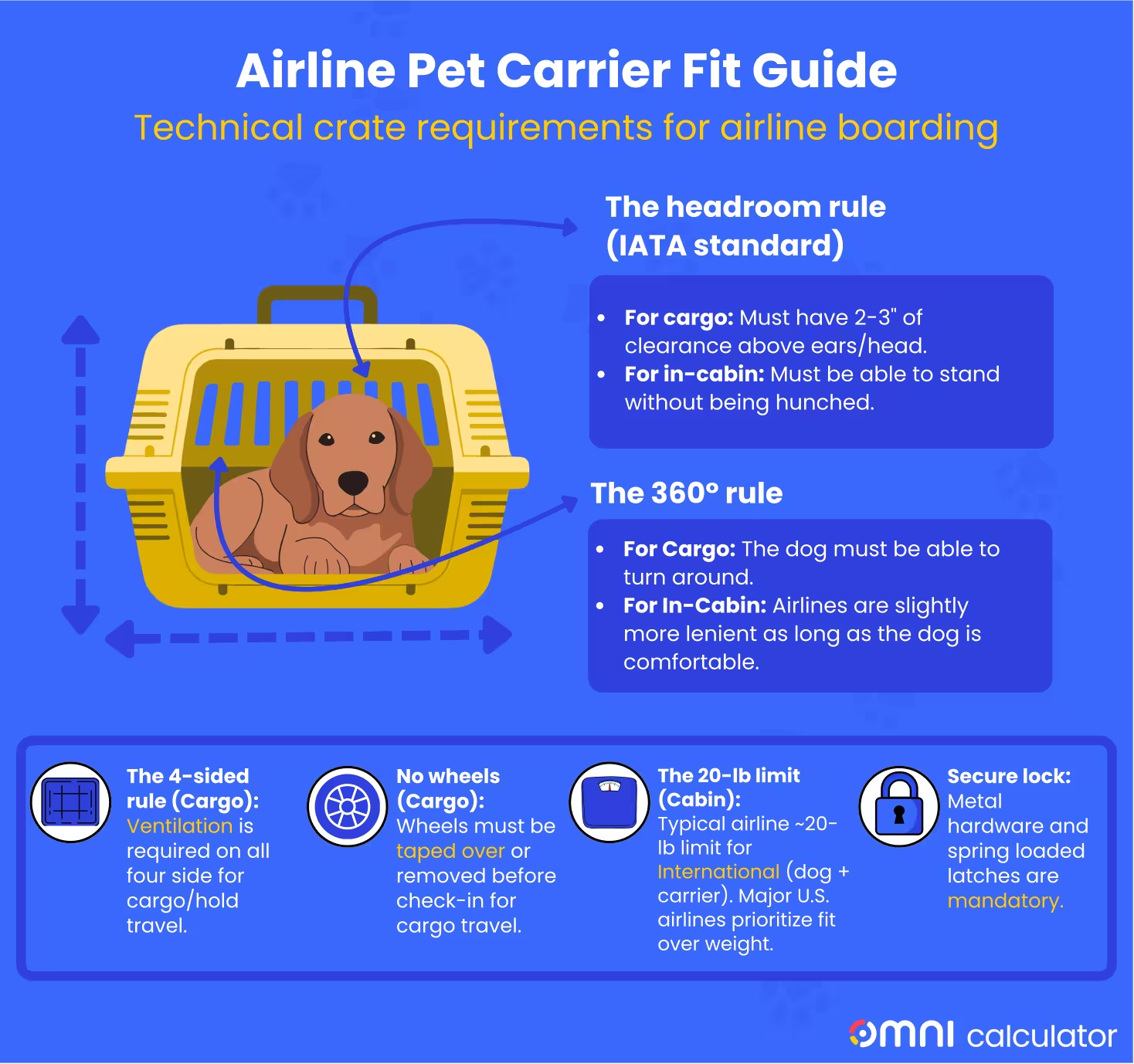
💡 Use a crate size calculator and a dog size calculator to confirm your dog can stand up, turn around, and lie down in a natural position.
Knowing how to travel by air with a dog involves navigating complex, ever-changing policies. In 2026, air travel has become more restrictive, focusing on precise dimensions rather than just weight.
Is my dog allowed on the plane with me?
Knowing how to travel by air with a dog starts with a simple question: Does my dog fit?
Most major airlines allow small dogs in the cabin, provided they stay in an approved carrier under the seat in front of you. While a 20 lb limit used to be the industry standard, carriers like United and Delta have largely moved away from it. Instead, they now focus on dimensions and comfort. However, remember that the 20 lb limit is still in effect for Amtrak and many international airlines.
🔎 Need a refresher about crate requirements? Check out our !
The American Airlines pet policy allows small pets in the cabin for a one-way fee of around $150; United and Delta charge similar fees. But note that a pet carrier may count as your one carry-on or personal item.
Under American’s updated 2024 policy, you can bring a pet carrier in the cabin and also bring either a regular carry‑on bag or a personal item, but not both, so you still need to plan your luggage carefully.
Cargo embargoes, breed bans, and navigating TSA
If your dog is too large for the cabin or of a specific breed, you face different challenges.
-
Cargo embargoes: Many U.S. carriers now have permanent or seasonal embargoes on shipping pets as cargo (checked baggage) due to extreme temperature risks. If a dog is too large for the cabin, you may need a professional IPATA (International Pet and Animal Transportation Association) pet shipper, which can cost $2,000 or more.
-
Banned breeds: Snub-nosed breeds like Pugs and French Bulldogs are now almost completely banned from cargo holds by major airlines. Their anatomy makes breathing difficult at high altitudes, increasing their risk of respiratory failure.
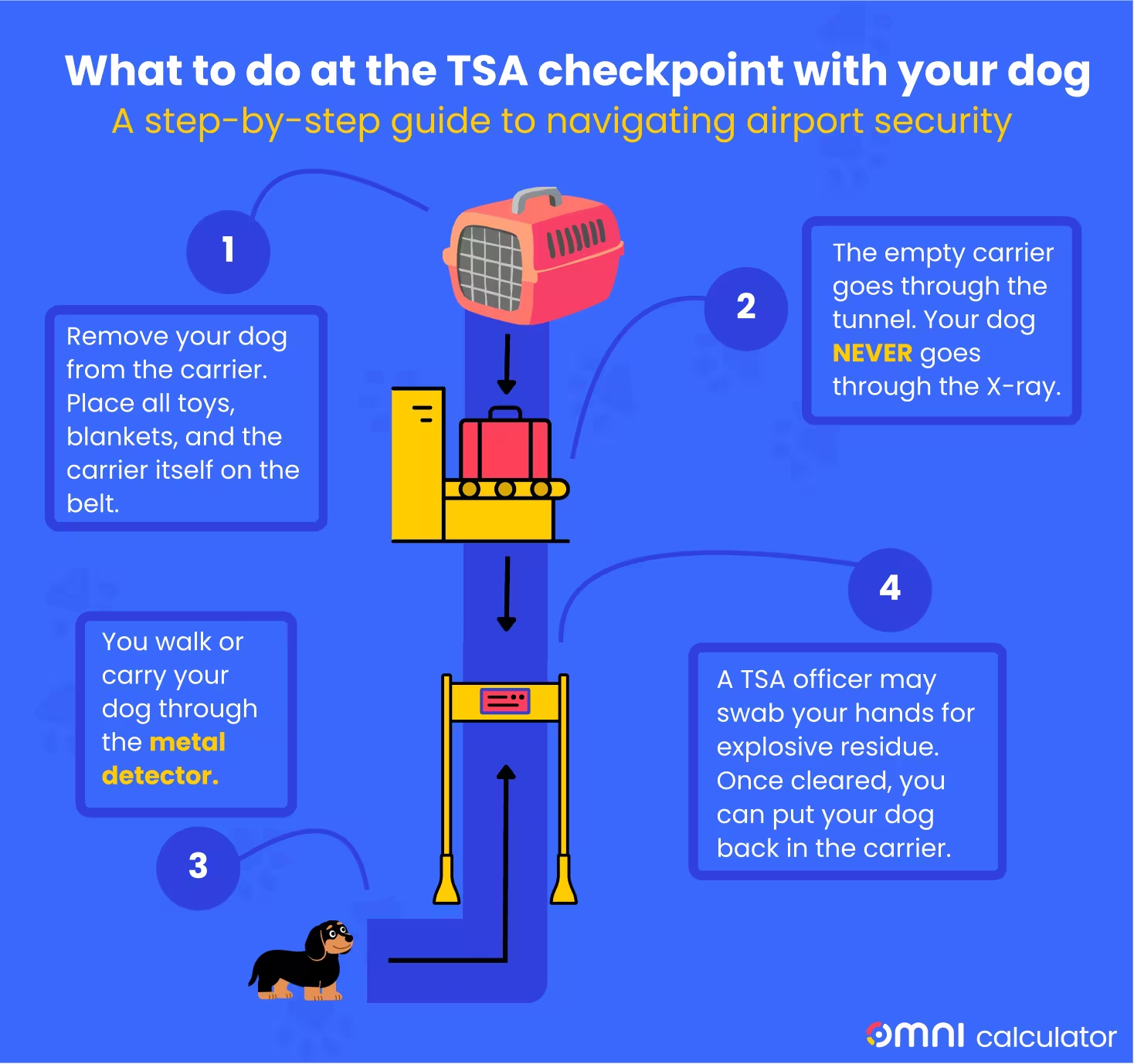
Navigating the airport itself is the next major milestone. To take the stress out of the security line, follow our TSA checkpoint guide below.
Medication: Why you shouldn’t sedate your dog
It’s the most common question people ask: “Can I give my dog something to sleep?” The answer from the AVMA (American Veterinary Medical Association) and major airlines is a strict no.
You need to be aware that sedatives slow the heart rate and breathing, and combined with high-altitude pressure changes, this can be fatal. Airlines may refuse boarding if a pet appears lethargic or sedated.
🙋 Instead of over-the-counter Benadryl, ask your vet about Gabapentin or Trazodone. These target anxiety directly without the dangerous cardiovascular suppression of heavy sedatives. Always do a test run at home days before the flight.
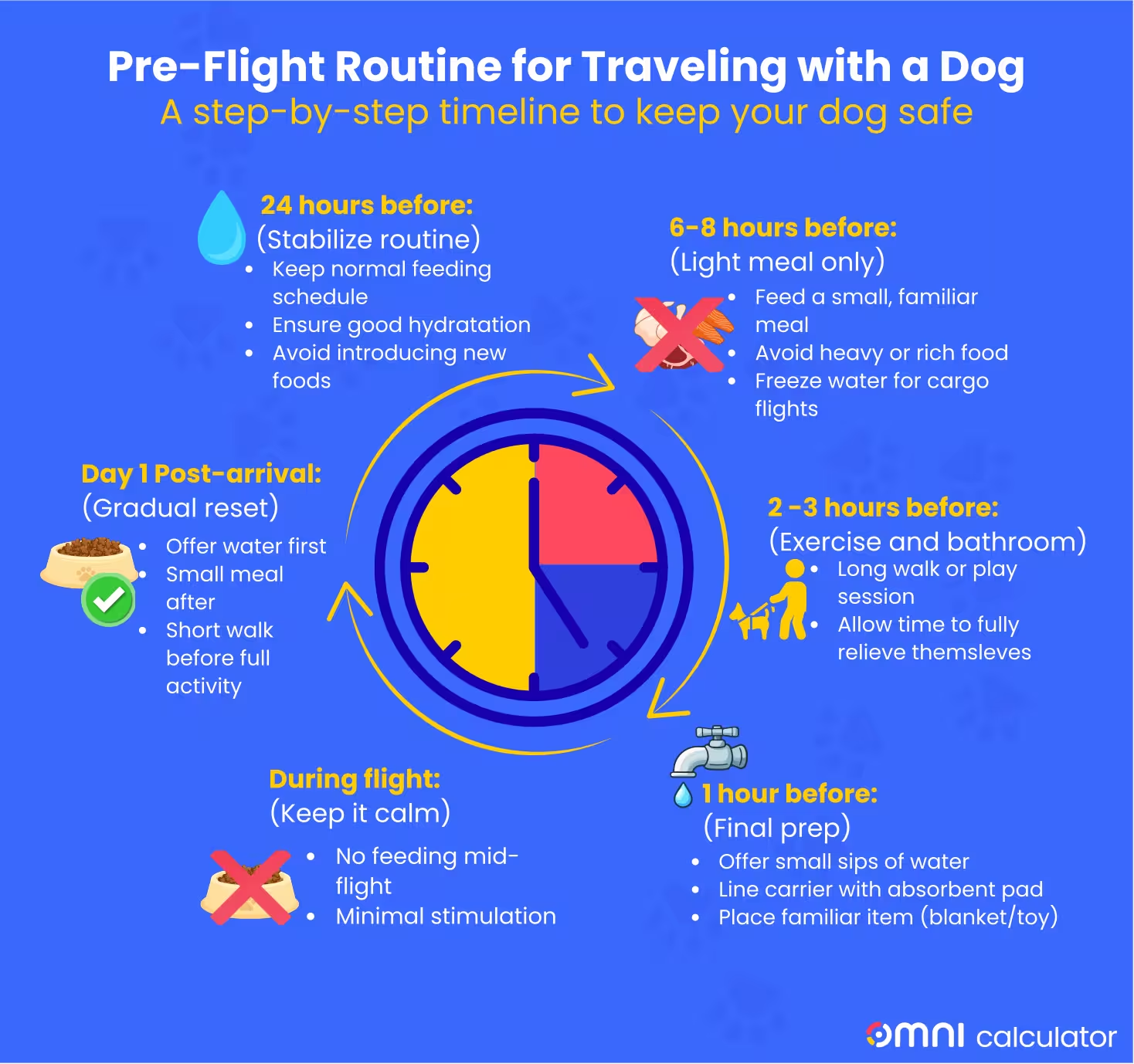
As you can see, knowing how to travel by air with your dog isn’t just about logistics; it’s also about timing and safety. This 24-hour plan helps you adjust your dog’s food, water, and routine so your dog stays calm and comfortable during the flight.
Service dogs vs. emotional support animals (ESAs)
Since 2021, emotional Support Animals (ESAs) have no longer been recognized as service animals by the DOT (Department of Transportation). They are treated as pets and must follow all pet fees and carrier rules.
However, psychiatric service dogs (PSDs) are still recognized as service animals. Like any other service dog, they fly for free and can stay out of a carrier if they are individually trained to perform a task. You must submit the DOT service animal air travel form 48 hours in advance.
🔎 To know more about ESA and PTSD service dogs, read “The Mental Health Benefits of Having a Dog: A Guide for Humans”.