
Table of contents
The Expected Lifespan of Dogs by Breed and Size: The Senior Dog Manifesto
Report Highlights
The expected lifespan of dogs typically ranges from about 7 to 16 years, depending on their size, breed, and overall health. Although this is shorter than a human lifespan, dogs age more rapidly, especially in their early years, and do not follow a simple year-to-year comparison with humans. However, like us, dogs go through different life stages: puppy, young adult, mature adult, senior, and geriatric.
💡 To get a precise estimate for your specific pet, you can use a dog life expectancy calculator.
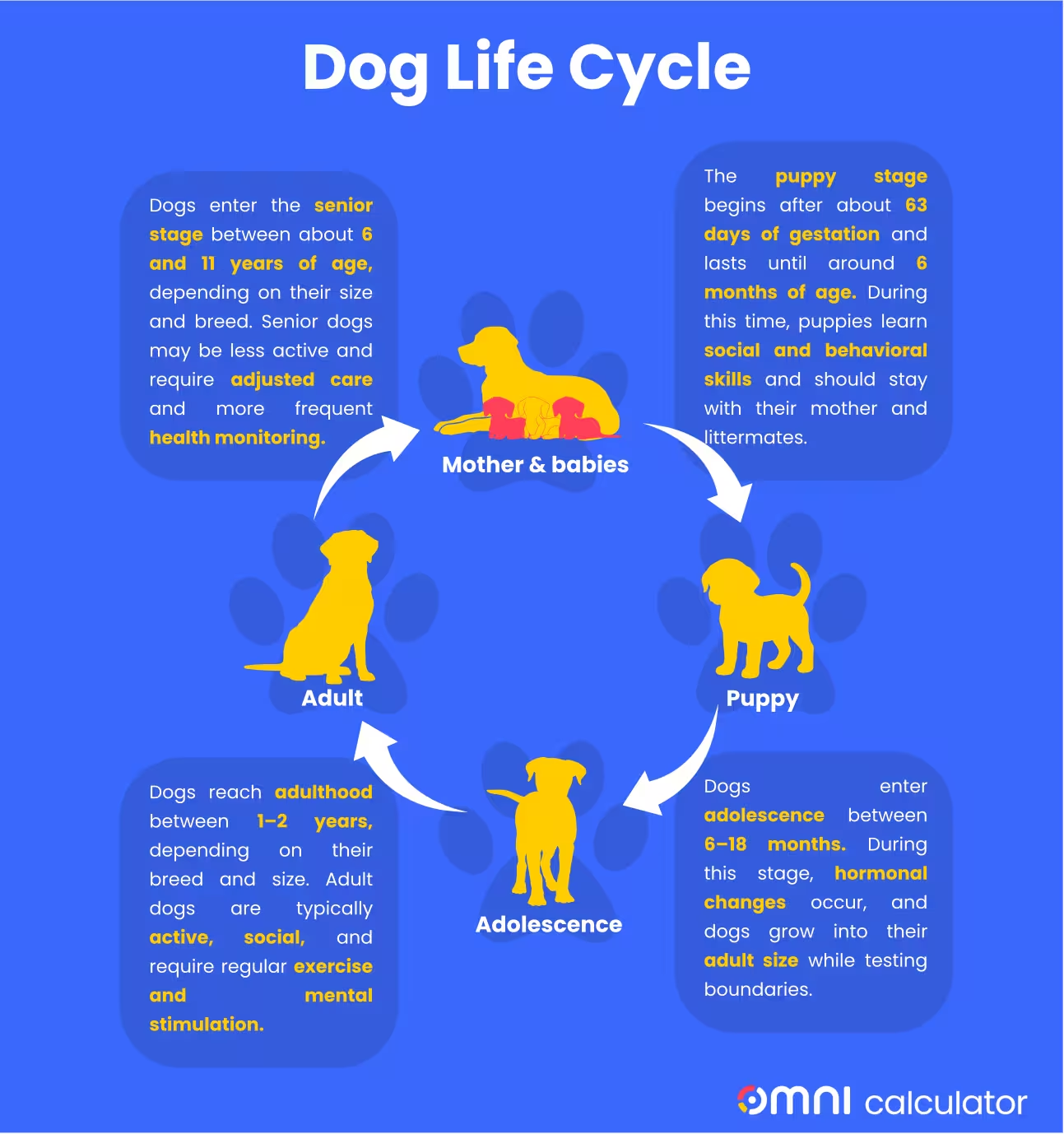
Understanding specific senior dog age milestones is the first step in ensuring your pet stays healthy, whether you are tracking:
- The life expectancy of Great Dane dogs: Typically 7-10 years;
- The Australian Cattle Dog life expectancy: Between 10 and 13 years; or
- The life expectancy of Labrador dog companions: Usually 10-12 years.
The first important thing to know about dog aging is that the rate of aging and the likelihood of developing certain health problems vary significantly by breed and size. Generally, large breeds (over 50 lbs) tend to age more quickly than small breeds (under 20 lbs). For example, the life expectancy of Great Dane dogs is naturally shorter than that of a small Terrier. While a small-breed dog is considered senior between 8 and 10 years old, a large-breed dog often reaches senior dog age as early as 6 to 8 years old.
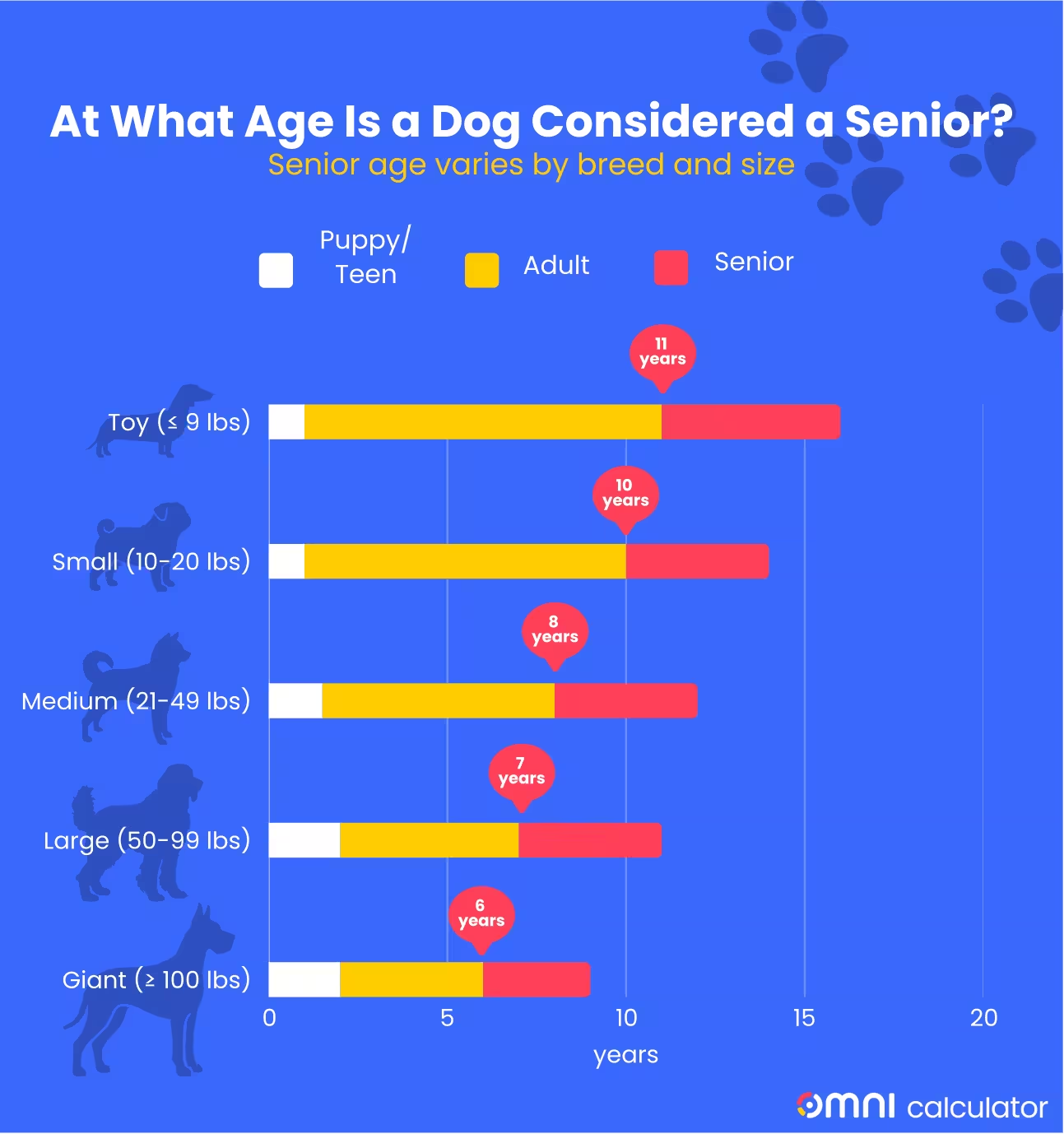
We hope that seeing these stages side by side helps you answer the question every owner asks themselves: “At what age is a dog considered a senior?” To find out exactly where your four-legged friend fits in, check out our more detailed chart below, organized by size and breed. Don't forget that you can also use our dog life expectancy calculator mentioned in the introduction.
Dog size | Begins to slow down | Considered senior | Breed examples |
|---|---|---|---|
Toy | 9-11 years | 11-12 years | Chihuahua, Yorkshire Terrier |
Small | 8-10 years | 10-12 years | Shih Tzu, Dachshund |
Medium | 7-8 years | 8-10 years | Border Collie, Bulldog |
Large | 6-7 years | 7-9 years | Labrador, Boxer |
Giant | 5-6 years | 6-7 years | Great Dane, Mastiff |
Generally speaking, dogs are considered seniors when they reach two-thirds or three-quarters of their life expectancy. As you can see from the table above, on average, the expected lifespan of dogs is around 10 years, and the senior transition usually occurs between 7 and 9 years.
🔎 To ensure they started on the right track, you might review our guide: “How Big Will My Puppy Get? The Hidden Science of Your Dog's Journey to Maturity”.
In addition to knowing the expected lifespan of your dog, it is always helpful to understand the physical and emotional changes that occur as they get older.
💡 Common age-related changes include:
- Pain associated with movement (e.g., jumping, climbing stairs);
- Decreased ability to absorb nutrients and increased protein requirements; and
- Changes in vision, hearing, and sleep patterns.
If you’ve ever wondered whether your dog is still a rebellious teenager or a respectable senior, understanding how to convert dog years to human years is exactly what you need. For decades, we’ve relied on the “multiply by seven” rule, but modern research has proven that it’s a myth.
One year in your dog’s life is NOT equivalent to seven human years!
🙋 With our dog age calculator, you'll be able to convert dog years to human years in a flash.
How to count dog years?
Unfortunately, there is no one simple formula for quickly converting between dog age and human years. The first reason is that dogs develop more quickly when young and age more gradually after reaching maturity. The second one is that size matters: small breeds tend to live longer and age more slowly in the big picture. Generally, dogs are divided into three types that age at different speeds:
- Small: 20 lbs or less;
- Medium: 21-50 lbs; and
- Large: Above 50 lbs.
Our dog age calculator accounts for these variations, providing a result that reflects your dog's true biological age.
The life expectancy of Labrador dog: The 16 ln(age) + 31 formula
 |
While we don’t yet have a specific mathematical formula to calculate the expected lifespan of dogs for every single breed, we do have one for the most popular companion in the world: the Labrador Retriever.
A research team at the University of California, San Diego, led by Trey Ideker, conducted an in-depth study of 104 Labradors to create a more accurate aging model. Published in 2019, their work provides a scientifically proven formula for the life expectancy of Labrador dogs compared to humans. This breakthrough allows us to convert Labrador dog years to human years as follows:
This formula confirms that dogs mature incredibly fast in their first two years before the aging process stabilizes.
As dogs age, their metabolism slows down, and their digestive system may not absorb nutrients as efficiently as it once did. While many owners believe a slower metabolism means they should simply feed less, senior dogs actually require a change in their diet. To prevent sarcopenia (i.e., age-related muscle wasting), senior dogs often need more high-quality protein than younger adults to maintain their strength and mobility.
More than half of all dogs are overweight, and weight gain often occurs with age. Because obesity exacerbates joint pain and heart issues, maintaining a healthy dog BMI is essential. A diet tailored to improve the expected lifespan of your dog focuses on maintaining muscle mass, improving digestion, and supporting joint health while remaining lower in calories to prevent excessive weight gain.
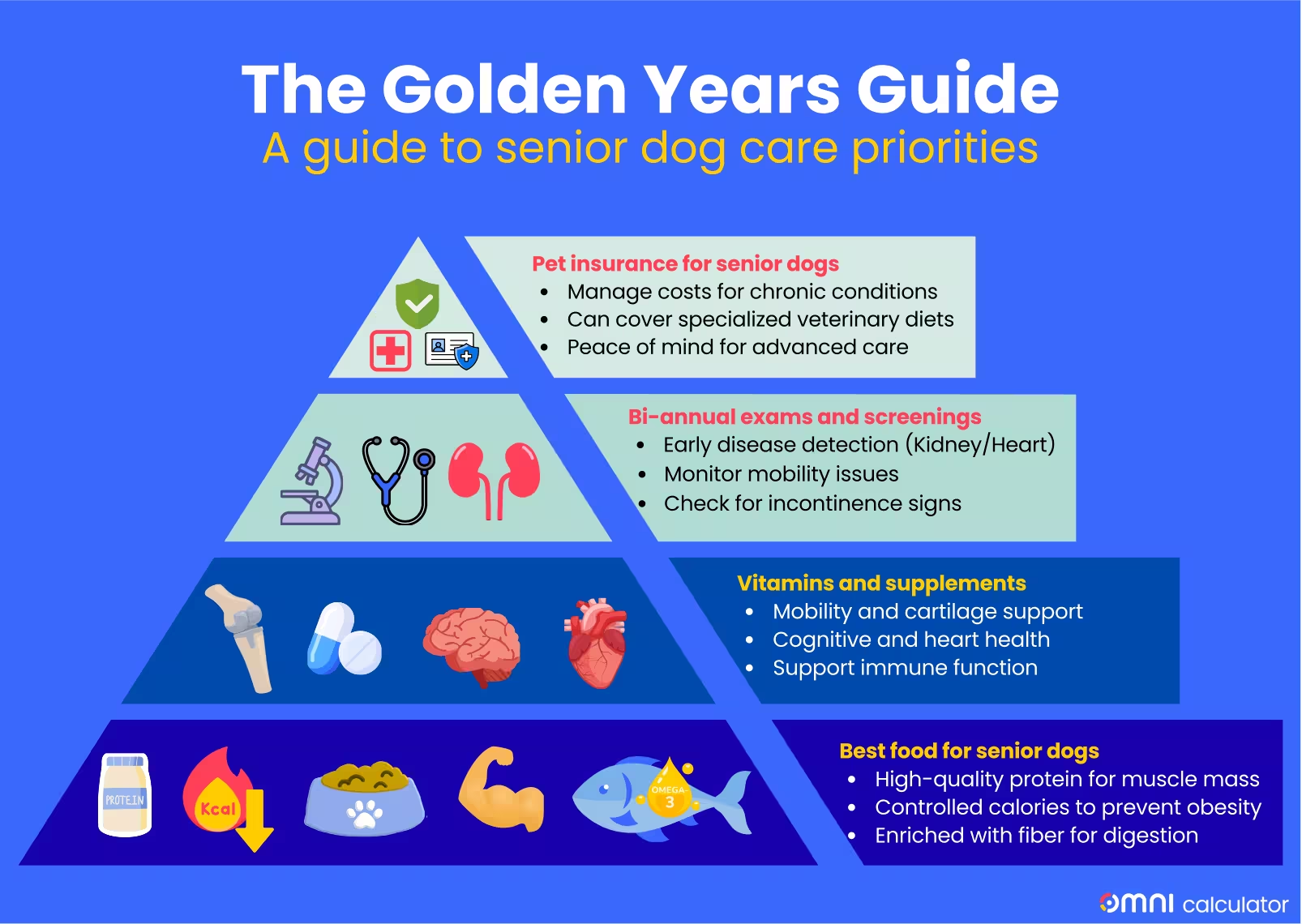
Important nutrients for their golden years
When selecting the best dog food for senior dogs, look for formulas enriched with these essential components:
- High-quality protein: Vital for fighting sarcopenia and maintaining muscle mass. Look for lean sources like chicken, turkey, or fish.
- Healthy fatty acids: Omega-3 and omega-6 (found in fish oils) reduce inflammation and support cognitive function. You can calculate dosages with our omega-3 for dogs calculator.
- Fiber: Natural sources like pumpkin or brown rice regulate digestion and promote satiety.
- Joint support: Glucosamine and chondroitin are critical, especially for a life expectancy of Labrador dog or other large breeds prone to mobility issues.
- Antioxidants: Vitamins C and E protect the body from oxidative stress and boost the immune system.