
How Big Will My Puppy Get? The Hidden Science of Your Dog’s Journey to Maturity
🐾 Welcoming a new puppy is an exciting time, but it often comes with an important question: “How big will my puppy get?” While their oversized paws may give a clue (but it’s more of a myth than anything else), the real answer lies in a complex interplay between skeletal biology and metabolic science.
In this article, we’ll dive into the “hidden” world of canine growth, from the delicate growth plates in dogs that determine their final size to the neurological mystery behind their late-night zoomies.
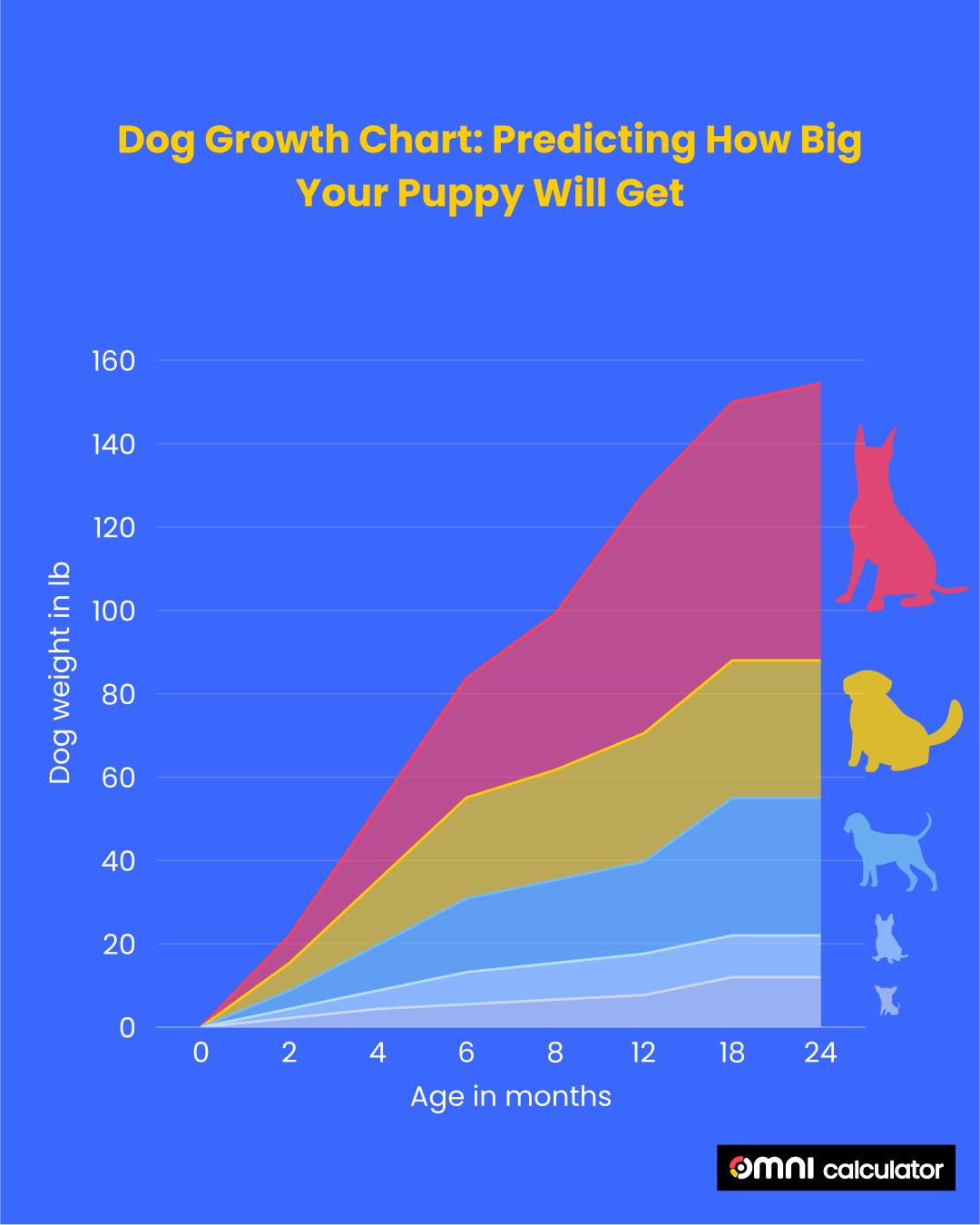
For those who want a glimpse into their puppy’s future based on concrete data, our dog’s growth chart below provides a visual roadmap of key weight milestones for different breed sizes. If you’re ready to discover your dog’s breed-specific weight and timeline on which this chart is based, feel free to skip ahead to our section on Predicting the Peak: When Does a Dog Reach Its Adult Size?
 |
Puppies are metabolic powerhouses with specific nutritional needs depending on their breed and expected adult size. It is essential to predict your dog’s weight, as this determines their caloric “safety margin”.
Managing the metabolic shift to maturity
 |
Building a mature skeleton requires considerable energy. As puppies develop their bones, muscles, and organ tissues simultaneously, they need nearly twice as many calories per pound of body weight as an adult dog.
-
The puppy multiplier: A 4-month-old puppy often needs a multiplier of
3 × their resting energy requirement (RER)to support its explosive growth. -
The maintenance change: Once they reach their target weight, this multiplier drops to
1.8 × RERor1.6 × RERif neutered. -
The risk of overfeeding: If you don’t adjust their food intake as their growth slows, your dog can become obese; obesity can shorten a dog’s life by up to 2 years and put dangerous pressure on vulnerable growth cartilage in dogs.
- Do you want to know if your dog is obese? Check your dog’s BMI with our dog BMI calculator!
💡 Use our dry matter calculator to eliminate moisture and find out the actual protein and fat percentage your dog is getting.
Nutrients for cognitive and physical health
High-quality puppy foods should be formulated to provide a precise balance of macronutrients and minerals, such as calcium and phosphorus. For large breeds, this balance is essential to prevent developmental bone diseases caused by “forced growth”. Also look for:
-
DHA (docosahexaenoic acid): Essential for brain development, improved immunity, and healthy eye development; and
-
Immature digestive support: A puppy’s digestive tract is still developing; formulas containing prebiotics can promote beneficial gut microorganisms.
🙋 You can also use our how big will my puppy get calculator (the dog size tool) alongside our dog calorie and dog food calculators to ensure your pup grows into a lean, healthy adult.
Once you’ve got physical growth under control, you need to deal with behavior. Specifically, the “zoomies”. One morning, you might find a chewed-up shoe or realize that your once docile puppy has suddenly “forgotten” all the commands they learned. It’s the canine version of a turbulent adolescence.
Officially known as , the zoomies are a physiological and healthy “system reboot”. But why do dogs get the zoomies in the first place?
Well, as your dog grows, their sensory stimuli (everything they see, smell, and hear) often exceed their brain’s ability to process them. Between 6 months and 2 years of age, your dog goes through canine puberty, a period during which hormones such as testosterone and estrogen cause their brain to evolve rapidly. The “zoomies” are a massive release of pent-up neurological energy. When owners ask, “Why do dogs get the zoomies?”, the answer is usually homeostasis, a way for their nervous system to regain a sense of basic mental balance.
Adolescence: The bridge to maturity 🐕
This transition from puppyhood to adulthood (usually between 6 months and 2 years) is marked by many physiological changes. Your dog is not being “naughty”; they are simply experiencing a surge of independence and new instincts.
-
Hormonal changes: During this phase, your dog’s body is changing rapidly. Hormonal changes can lead to unpredictable behavior, such as testing boundaries or a sudden loss of ability to “listen”.
-
Energy management: As their brains develop along with their muscles, they need healthy outlets to channel this intensity. Activities such as scent work or food puzzles help channel this energy.
-
Signs to watch for: While most “teenage” blunders are normal, watch for ongoing restlessness, marked aggression, or sudden phobias, which may require veterinary attention.
The post-bath mystery: Why do dogs get the zoomies after a bath?
 |
A common question for any pet owner is, “Why do dogs want to run around after a bath?” It seems counterintuitive that a dog would want to run at full speed when it is soaking wet. Scientifically, answers to “Why do dogs get the zoomies after a bath?” come down to three things:
-
Scent restoration: Shampoo can feel like a loss of identity; running helps them regain their “dog smell”.
-
Drying reflex: Rapid movement wicks moisture away to prevent a drop in core body temperature.
-
The adrenaline spike: These bursts trigger a release of feel-good neurotransmitters and a halving in cortisol (the stress hormone) after the restriction of the tub.