
Omni Calculator logo

Table of contents

1. Best dog harness 101: What you need to know

Dog Harness Size Guide: How to Measure Your Dog for the Perfect Fit

Report Highlights

Did you know that finding the best dog harness for your pet can completely transform your short and long walks? Indeed, although collars are traditional, many veterinarians and dog trainers agree that a dog harness is often the better choice (and you’ll see why in a brief moment). This advice is especially true for brachycephalic breeds (a.k.a dogs with flat faces, such as pugs or French bulldogs), who already have a hard time breathing, or for reactive dogs that tend to pull suddenly.

🚨 Exciting new feature: The Omni Calculator Builder!
We’ll soon be launching a new feature called the Builder that lets you build, edit, and share your own personalized tools. This feature is only for signed-up users. So, register for an Omni Account today to be the first to access the Omni Calculator Builder!

For instance, a well-fitting, no-pull dog harness is safer and helps your best friend avoid injury to their sensitive hyoid bone and thyroid gland, areas that the pressure of a collar can easily damage.

Whether you’re looking for a small dog harness for a puppy or heavy-duty dog harness recommendations for a large breed, this dog harness size guide covers everything you need to know. If you’re wondering how to measure a dog for a harness to ensure maximum comfort and safety, we’ve listed the steps below.

🙋 If you’re unsure about the measurements, you can always use our dog harness size calculator to verify your results.

While we would love to give our dogs total freedom to roam, they need harnesses and collars for their safety. However, the benefits of a dog harness, particularly the best harness for dogs that pull, often outweigh a standard collar. Indeed, the best dog harnesses distribute this force across the chest instead of putting pressure on the dog’s neck.

Why use a dog harness?

  • To prevent injury: A no-pull dog harness helps your dog avoid neck and spine injuries. Since pulling is a behavior 24% of dog owners want to change, using a harness is a safe way to manage your walks.
  • To avoid escape: It is much easier for a dog to slip their head out of a collar than out of a dog harness, especially if their neck is nearly as wide as their head (common in Pugs, Greyhounds, or Bulldogs).
  • To have more control: A dog harness with a handle is a game-changer for high-traffic areas or reactive dogs. It allows you to quickly stabilize or lift your pet without the choking sensation that can cause a dog to panic or become more reactive toward other dogs.
  • To maximize health benefits: Harnesses help prevent ocular proptosis (eyeball protrusion). This condition is often caused by high blood pressure in the neck when a dog strains against a collar.

🔎 Before deciding to get a dog, it is also wise to consider the long-term costs of pet parenting. You can find a full breakdown in our guide: “How Much Does a Dog Cost? A Breakdown of Upfront and Hidden Expenses”.

Finding the right fit can be difficult because dogs come in so many different body shapes. This dog harness size guide is based on weight and girth (the measurement around the widest part of the ribs) as the two most important factors.

While the dog harness size chart by breed below is a good starting point, be sure also to consider your dog’s specific build. For example, breeds with a broad chest, such as French Bulldogs or Dachshunds, often need a larger size than their weight alone would suggest. If your dog falls between two sizes, it’s usually safer to choose the larger size for comfort, or you can use a dog size calculator to see where they fall on the growth curve.

Breed

Size

Weight

Girth

Leash

Chihuahua, Teacup Yorkshire Terrier

XX-Small

Up to 5 lbs

8 - 10"

5/16"

Dachshund (miniature), Maltese, Pomeranian, Toy Poodle, Yorkshire Terrier

X-Small

5-10 lbs

9-15"

3/8"

Cavalier King Charles, Pekingese, Miniature Schnauzer, Pug, Scottish Terrier

Small

10-25 lb

13-23"

5/8"

Beagle, Border Collie, Boston Terrier, English Bulldog, French Bulldog

Medium

Up to 55 lbs

18-29"

3/4"

Boxer, Dalmatian, Golden Retriever, Labrador Retriever, Weimaraner

Large

Up to 75 lbs

22-39"

1" width, two-ply for strong pullers

Bernese Mountain Dog, Great Dane, Mastiff, Rottweiler, Saint Bernard

X-Large

75+ lbs

28-48"

1.25" width, two-ply for strong pullers

🙋 For very large or powerful breeds, always look for “two-ply” nylon or reinforced stitching on the leash and harness for extra security.

Whether you are buying a small dog harness for a puppy or a specialized dog seat belt harness for travel, getting the dimensions right is non-negotiable for your dog’s comfort. A harness that is too loose will cause chafing, while one that is too tight can restrict their shoulder movement and change their natural walking gait.

To determine the right fit, you must know how to measure a dog for a harness by finding their chest girth and weight.

🔎 Aside from their walking gear, ensuring they have a properly sized resting space is just as important; you can use a dog crate size calculator to find the right one.

How to measure your dog’s chest girth

  1. Use a flexible tailor’s tape or a long piece of string.

  2. Wrap the tape around the widest part of your dog’s ribcage, which is usually about two inches behind their front legs.

  3. Ensure your dog is standing up straight while you measure, as sitting or lying down can change their chest dimensions.

  4. If you are using a string, mark the point where it overlaps and then measure that length against a flat ruler.

  5. Make sure the tape is snug against the fur but not pressing into the skin.
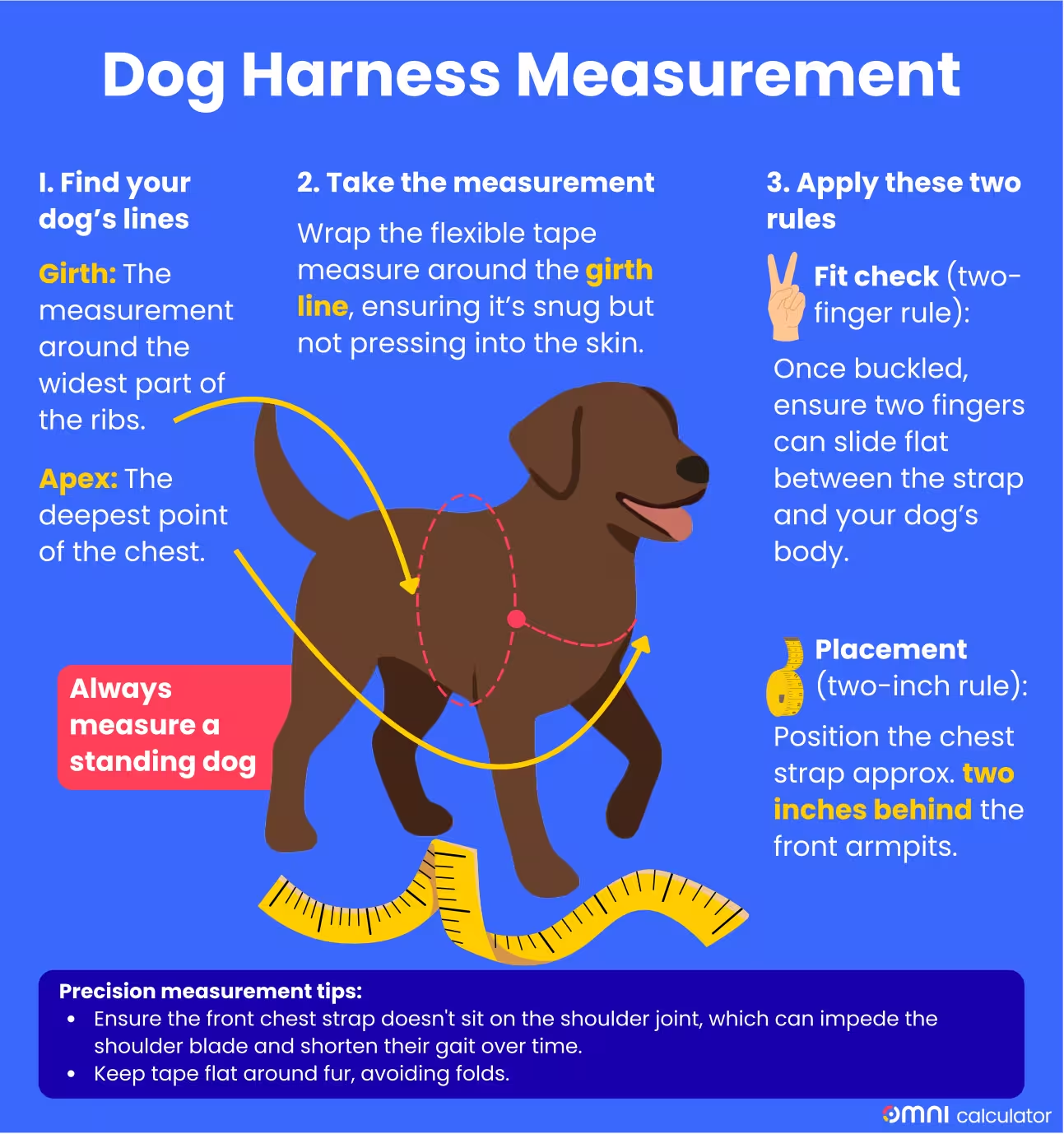
A dog with highlighted girth and apex lines and a step-by-step measurement guide.

How to determine your dog’s weight

  1. Step on a standard home scale and record your own weight.

  2. Carefully pick up your dog and step onto the scale again to get a combined weight.

  3. Subtract your individual weight from the total to find your dog’s weight.

  4. If your dog is too large to carry, many local pet stores or vet clinics have walk-on scales available for public use.

Safety is a priority, especially when traveling. A dog harness for car use is specifically designed to withstand the force of a sudden stop, which standard walking gear cannot. Do you want to know more about travel tips? Check out our related article: “How to Travel with a Dog: The Guide to Planes, Cars, and Trains”.

The best dog harnesses are those that match your dog’s specific energy level and behavior. Choosing the right design can transform a difficult walk into a manageable one.

  • For pullers: The best harness for dogs that pull is usually a dog harness, no-pull front-clip style. Unlike a back-clip, the front attachment uses leverage to redirect your dog’s momentum back toward you whenever they strain against the lead.

  • For travelers: For car trips, you need a specialized harness for car use. A crash-tested dog seat belt harness is built to handle high-impact forces, keeping your pet secure and preventing them from moving around the vehicle.

💡 If your pet gets anxious during travel and requires medication, always check the benadryl dosage for dogs calculator before your trip.

  • For working dogs: A service dog harness is designed for extreme durability and visibility. These typically feature heavy-duty padding for dogs that need to stay in gear for several hours at a time.

  • For seniors or hikers: A dog harness with a handle is a great mobility aid. It allows you to assist older dogs with hip issues or help your pet over obstacles on a trail.

🔎 A well-fitted harness doesn't just benefit your dog; it changes the entire energy of your walk. To learn more about how walks can improve your own well-being, check out our guide on “The Mental Health Benefits of Having a Dog: A Guide for Humans”.

Learning how to put on a dog harness depends on the harness’s style. For a standard version, slip the loop over the head and buckle the chest. For a small dog harness in step-in style, lay it flat, have the dog step in with both front paws, and pull the straps up to buckle.

To put on a dog harness with a front clip, ensure the D-ring is centered on the chest. For an easy walk dog harness, the fit should be snug but comfortable.

Whether it’s an easy walk dog harness or a service dog harness, you should always be able to fit two fingers between the harness and your dog’s skin. This practice ensures it’s not too tight while preventing them from escaping.

Since puppies grow quickly, look for a highly adjustable small-dog harness. Regularly check the fit using the how to measure your dog’s chest girth method every few weeks.

A dog harness with a handle is excellent for helping senior dogs over obstacles or for maintaining tight control in crowded areas. It is a top feature in most recommendations for dog harnesses for large breeds.

A dog harness with a no-pull design works by redirecting the dog’s momentum. The best dog harnesses for this purpose often feature a front clip to guide the dog back toward you.

This article was written by Claudia Herambourg and reviewed by Steven Wooding.

Authors of the report

Ask the authors for a quote

Copyrights