
Omni Calculator logo

Table of contents

1. Loft types — Low, mid and high-loft batting

Best Batting for Quilts: Tips on Selecting the Correct Batting

Report Highlights

The best batting for quilts is something almost every quilter gets wrong at least once. You might reach for cotton batting for quilts, wool batting for quilts, polyester batting for quilts, or even bamboo batting for quilts, and still end up with unexpected results. The batting itself is rarely the problem. The match between the batting and your project usually is.

The best batting for quilts comes down to two things: loft (how thick it is) and fiber type (what it is made of). In this article, we’ll cover both.

Loft is one of the key decisions that’s often put off until last. When thinking about how to compare cotton vs polyester batting, first ask yourself, what kind of quilting do I plan on doing?

From there, it helps to understand the three types of loft to better match your batting to your project:

Low-loft batting

Low-loft batting is ideal for machine quilting. It’s also a great option for creating wall hangings, table runners, and clothing. It feeds easily through a sewing machine and lies flat. Most cotton fabrics can be considered either low or medium loft.

Mid-loft batting

The most versatile option. Mid-loft works for both machine and hand quilting. This is a great choice for bed quilts and lap quilts if you need some extra warmth but don’t want a lot of thickness.
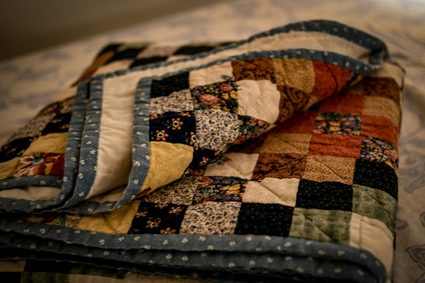
Mid-loft folded quilt
Photo by Nathan Bang on Unsplash.

High-loft batting

High-loft batting gives you a thick, comforter-like feel. It works well for hand quilting. Because of the extra bulk, it can be tricky on small home machines. It’s often associated with tied quilts, though tying actually works at any loft level.

❗ Before you go high-loft
High-loft is great for comforters, tied quilts, and simple stitching patterns. Keep in mind it can be tricky when using a small home machine and is not suited for dense quilting. On the ongarm machines, it handles much better.

Here’s how the three loft levels compare at a glance:

Thickness

Machine quilting

Hand quilting

Tying

Low-loft

Under 1/4"

Best

Works

Works

Mid-loft

1/4" to 1/2"

Good

Best

Works

High-loft

Over 1/2"

Difficult

Works

Best

When in doubt, mid-loft is the safest starting point, it handles both machine and hand quilting well.

Once you know your loft, fiber is about matching the batting to how the finished quilt will be used and washed.

Material

Warmth

Breathability

Shrinkage

Weight

Washing

Price

Best for

100% Cotton

Medium

High

3%-5%

Medium

Easy

Mid

Everyday quilts, heirlooms, machine quilting

Polyester

Medium-high

Low

None

Light

Easy

Low

Tied quilts, budget projects

Cotton-poly blend

Medium

Medium

Minimal

Medium

Easy

Mid

Versatile, hand and machine quilting

Wool

High

High

Yes (prewash)

Light

Delicate

High

Warmth, hand quilting, texture

Bamboo

Medium

High

Minimal

Very light

Easy

High

Summer quilts, baby quilts, garments

Silk

Low

High

Minimal

Very light

Delicate

Very high

Fine garments, art quilts

🧺 Cotton vs. polyester batting
Both are solid choices, but for different reasons. Cotton batting for quilts breathes well, gives a more traditional finish, and shrinks slightly to create that crinkled texture many quilters love. On the other hand, polyester batting for quilts doesn’t shrink, stays fluffier over time, and costs less. If you are not sure which to choose, an 80/20 cotton-poly blend gives you a bit of both and works well for machine and hand quilting.

🌿 What “all natural” actually means
Not everything marketed as “all natural” or “natural cotton” is 100% cotton. An 87/13 cotton-poly blend is 87% cotton and 13% polyester. Polyester is synthetic, so despite the natural-sounding name, it’s not an all-natural product. If fiber content matters for your project, read the label carefully to confirm the percentage.

🧶 Will it shrink?
As a rule of thumb, natural fabrics shrink when washed. Cotton and wool shrink about 3%-5%. In most cases, shrinkage is a good thing. It is precisely the property of shrinkage that creates that wrinkled look that quilters seek. When you need your quilt batting to be smooth, wash it first.

👀 Also on the label: needle punch, scrim, and fusible
Here are additional terms you may find on packaging:

  • Needle punch: This is a manufacturing process, not a fiber type. Needle punching helps hold the batting fibers together, making handling the batting easier during basting.
  • Scrim: This is an internal stabilizing layer woven into the batting. It keeps the batting from shifting or stretching, making it great for machine quilting. Too dense for hand quilting.
  • Fusible: This batting includes an adhesive that activates when heated. Handy for small projects, samples, and clothing where you want the layers to stay put without pinning. Not ideal for bed quilts as the adhesive can affect drape and breathability.

Choosing the best batting for quilts also depends on what you’re making. Use this as a quick reference to help you match your project to the right loft and fiber combination:

Project

Loft

Fiber

Baby quilt

Low

100% cotton or cotton-poly blend

Bed quilt

Mid

Cotton, wool, or 80/20 blend

Lap / throw quilt

Mid

Cotton-poly blend or polyester

Wall hanging

Low

Cotton or 80/20 blend

Table runner

Low

Cotton

Quilted jacket / coat

Low

Bamboo, cotton, or cotton-poly blend. Depends on season

Tied quilt

Any

High-loft polyester for plush feel; low or mid for a thinner tied quilt

🧵 Tied quilts
High-loft polyester is the most popular choice because it creates that thick, comforter feel. But hand-tying works at any loft level. For a thinner tied quilt, like a summer throw or a wall hanging, you want more drape; low or mid-loft works perfectly well.

🧥 Quilted jackets
Keep the loft low either way. In garments, drape matters more than thickness. For fiber, the season guides the choice. Spring and summer jackets benefit from bamboo batting for quilts: it’s breathable, lightweight, and stays soft when quilted densely. For fall and winter, cotton, wool batting for quilts, or even flannel adds structure and the warmth you need.

✅ Once you’ve chosen your batting, the next step is finishing the quilt properly, especially the edges. Take a look at our dedicated quilt binding page to learn more.

Batting problems usually come down to four things: choosing the wrong loft, ignoring your quilting method, misunderstanding fiber content, or buying the wrong amount.

Choosing loft based on how the package looks, not the project. Thick and cozy in the store doesn’t mean it’ll work for your machine or your quilting style. For most machine quilting, a low- or mid-loft batting is the safer call.

Ignoring how you’ll actually quilt it. Your quilting method affects the batting more than most beginners expect. Machine quilting usually works best with low- or mid-loft because it’s easier to control, while high-loft can get bulky. Hand quilting tends to favor cotton or wool for better needle feel, and tying a quilt gives you more flexibility with loft and fiber.

Assuming “all natural” means 100% cotton. An 87/13 cotton-poly blend is mostly cotton, but that 13% is synthetic polyester. It’s not all-natural, and it’s not 100% cotton. If the percentage matters for your project, check the label.

Guessing your yardage. Batting needs to extend at least 2 to 4 inches beyond your quilt top on all sides to allow for shifting during quilting. Use the quilt calculator or the quilt binding calculator to get the right amounts before you buy.

Using the calculator to plan your quilt?
Create a free account to find it again quickly next time, along with any other Omni Calculators you’ve used 😎

📝 Not sure where to start?
Before choosing batting, ask yourself these simple questions:

  1. What’s your quilting method: machine, hand, or tying?
  2. What’s the quilt for: daily use, display, baby, or garment?
  3. Does fiber content matter for your project?
  4. Do you know how much batting you need?
  5. What’s your budget per yard?

Your answers will make the decision much easier and help you choose the best batting for quilts without wasting time or money on the wrong option.

If you’re working with leftovers or small cuts, it’s worth thinking ahead about how to use fabric scraps before you buy.


This article was written by Gabriela Diaz and reviewed by Steven Wooding.

Authors of the report

Ask the authors for a quote

Copyrights