Omni Calculator logo

Table of contents

1. What to do with fabric scraps

Fabric Scraps: What to Do with Every Size and Type

Report Highlights

Fabric scraps have a way of multiplying. A strip of cotton from one project, a triangle of linen from another, and before long, you have a bin you keep meaning to sort through.

If you’re wondering what to do with fabric scraps, the options can feel overwhelming. You can try quilting with fabric scraps, explore crafts using fabric scraps, or donate them. Where you start depends on what you have: size, fabric type, and how much time you want to spend.

This guide walks you through what to do with fabric scraps at every size, from the tiniest crumbs to large leftover pieces with a full project in them.

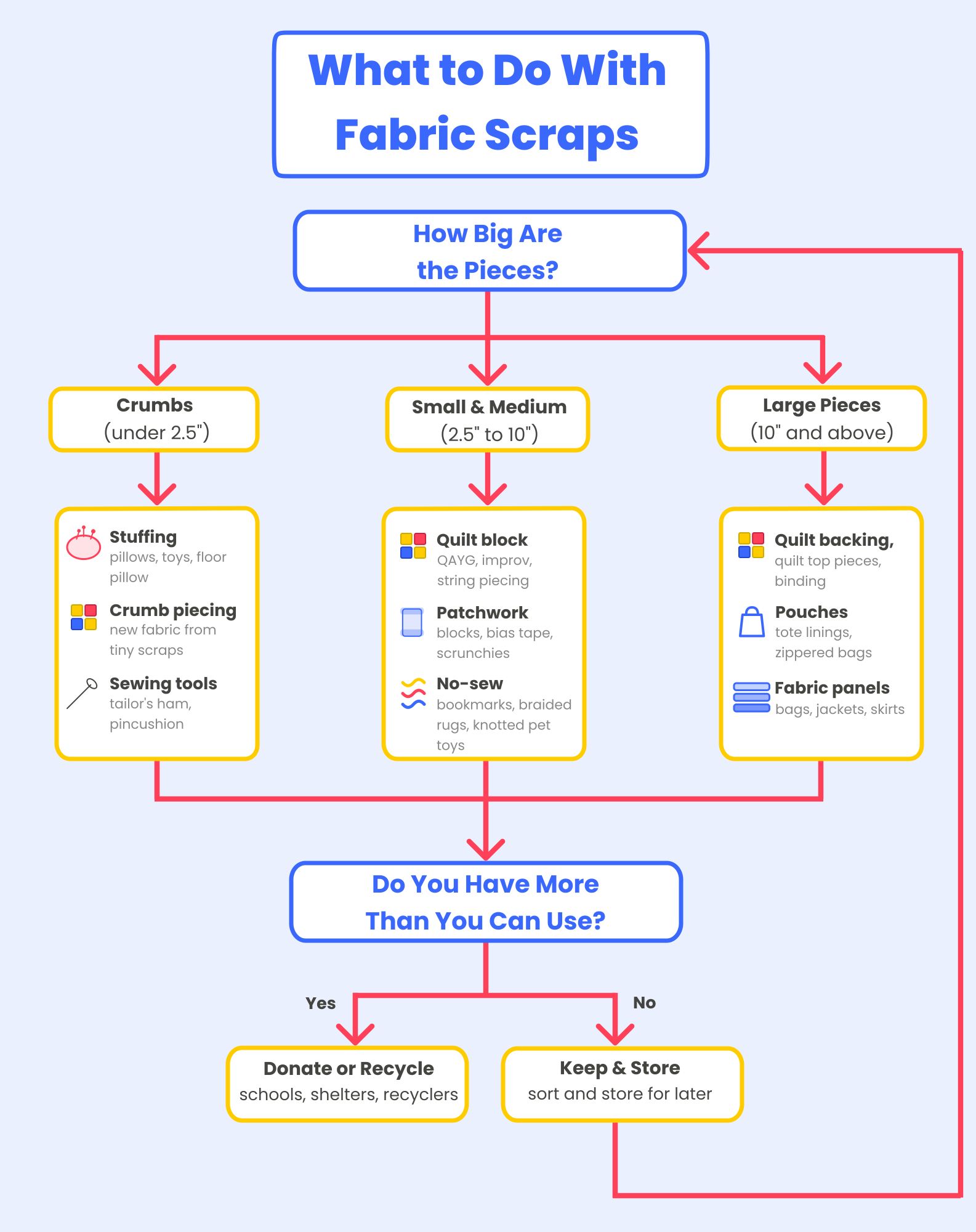
Not sure where to begin? Use this flowchart to find possible projects for your pile.

Flowchart showing project ideas for fabric scraps.

Size is a good starting point. The fabric type and the time you have can also help you narrow your choice.

A good place to start is to sort your fabric scraps into three bins:

  • Crumbs are the smallest pieces, under 2.5 inches.
  • Small and medium scraps cover roughly 2.5 to 10 inches.
  • Large pieces, anything above 10 inches.

From there, the sorting system depends on what you make. Quilters often sort by size, since blocks have specific measurements and a 2.5-inch square behaves very differently from a 10-inch chunk. Garment makers tend to sort by color or fabric type, so a red silk scrap ends up with other lightweight reds. Neither approach is wrong, and most people end up using a mix of both.

Crumbs (under 2.5")

Crumbs are too small for most sewing projects, but you can still put them to good use. Some common uses are:

  • Stuffing: pincushions, plush toys, throw pillows, floor pillows, all work well with mixed fabric crumbs.
  • Crumb piecing: a quilting technique that stitches these tiny scraps onto a foundation to create new fabric. You can then cut that fabric into blocks or use it as backing.
  • Sewing tools: a tailor's ham or a pincushion does not need pretty fabric, just dense, varied filling. Crumbs are ideal for these.

Small and medium scraps (2.5" to 10")

This size range has the most options, and the fabric type starts to shape what makes sense.

Cotton and linen scraps are natural candidates for patchwork and quilting blocks. Even irregular shapes work: string piecing and improv blocks are built around the idea that scraps do not need to be perfect squares to be useful. Bias tape is another good use.

For no-sew crafts using fabric scraps, this size range works well for fabric bookmarks with fusible web, braided rag rugs, and knotted pet toys. Knit scraps are especially good here because the edges do not fray, making them forgiving for beginners.

Delicate fabrics like silk, chiffon, or embroidered pieces need a little more thought. A 6-inch-square piece of embroidered fabric can serve as an embellishment on a garment or a pair of shoes. A few coordinating silk pieces can make an old pouch worth keeping.

Large pieces (10" and above)

Large scraps are the most straightforward to work with, as they have enough fabric to complete a full project.

Cotton and linen pieces in this range are ideal for zippered pouches, totes, and small bags. If you have several large scraps in compatible colors, they can be sewn into panels and then cut to a pattern, which works especially well with denim. A few denim panels stitched together can yield enough fabric for a bag, a patchwork jacket, or a simple skirt.

Large pieces also make good quilt backing sections, borders, and binding strips, and are often the starting point for creative scrap quilt ideas.

Quilting is where scraps find their most natural home. Scrap quilt ideas range from the most structured to the completely improvisational: squares and rectangles for traditional blocks, narrow strips for string piecing, odd shapes for improv blocks. Even crumbs have a place through crumb piecing, which turns the smallest leftovers into new fabric that can be cut and used like any other piece.

Quilt-as-you-go (QAYG) is a beginner-friendly scrap quilt idea. Instead of assembling a full quilt top and then quilting it, you quilt each block individually and join them at the end. It’s a lower-commitment way to work through a scrap pile without needing a fully planned quilt from the start, which makes it a good match for mixed or unpredictable scraps.

Binding is another place where scraps shine. Joining strips of different fabrics into a continuous length creates a scrappy binding that can work with many quilts, especially those with varied colors or patterns. If you want to go deeper on binding technique, check our dedicated page Quilt Binding: How to Get a Clean Finish on Both Sides.

For fabric, quilting works best with woven cottons, such as quilting cotton, shot cotton, chambray, linen, and similar weights. Mixing fabrics is fine and can add character, but avoid combining very different weights or textures, as it can be technically challenging.

✂️ More about quilting
If quilting caught your attention, our quilting calculator is a good starting point. Or if you’re already into your project but still figuring out your binding, our quilt binding calculator can help.

At some point, a scrap pile can shift from a resource to a source of stress. If you have reached that point, donating is a valid option and not a failure.

Schools, community theater groups, local sewing circles, and makerspaces are usually happy to accept clean, good-condition fabric. Some textile recycling programs also accept fabric scraps, including small pieces, which is worth exploring if donation is not an option.

And if your pile feels manageable but keeps growing, that is worth paying attention to. Most patterns already include some wiggle room in their yardage, so buying closer to the pattern’s yardage requirements tends to leave fewer leftovers with little sacrifice.


This article was written by Gabriela Diaz and reviewed by Steven Wooding.

Authors of the report

Ask the authors for a quote

Copyrights