
44% of American Parents Reject Every Proposed Way to Enforce a Teen Social Media Ban
Report Highlights
- 66% of US parents support a social media ban for children under 16, with no meaningful difference across age, gender, or region.
- 85% of parents express active concern about social media’s impact on their child; just 13% see it as a net positive.
- A child is nearly 6x more likely to be a heavy social media user if their parent spends more than four hours daily on the same platforms.
- 44% of parents reject every proposed age verification method.
- 94% say parents hold primary responsibility for regulating their child’s access, yet 66% also want the government to enforce a ban.
- Sleep disruption climbs from 9% to 64% as children move from light to very heavy daily social media use
- 37% of parents expect their child to bypass a state ban via VPNs or ghost accounts.
- 65% of parents cite cyberbullying as their number one concern.
Sixty-six percent of American parents support implementing a social media ban for children under 16. Eighteen percent are unsure. Only 16% oppose it.
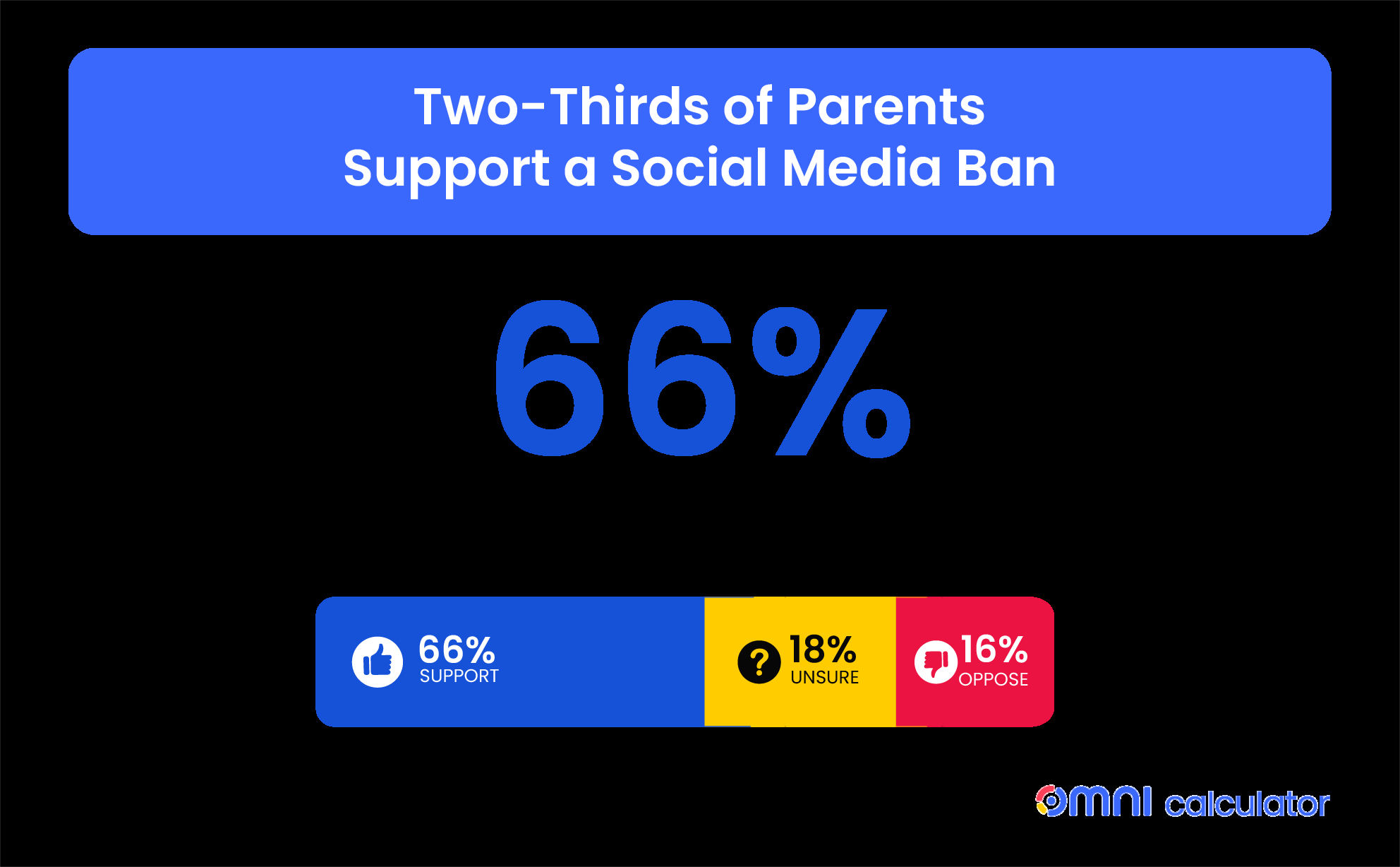
That figure is consistent with broader polling: a Fox News poll found that 64% of American voters overall support the same measure (1).
What makes these numbers remarkable is what does not change when you break them down. That consistency holds across every demographic line drawn in this survey. Chi-square testing indicates there is no statistically significant difference among the groups. Age, gender, and region are simply irrelevant to how parents feel about this question.
The most telling data point sits at the far end of the age range. Parents of 16-year-olds support the ban at 71%, the highest rate among all groups surveyed.
Before exploring what parents want regulated, the data surfaces a pattern closer to home. The strongest predictor of how much time a child spends on social media is how much time their parent spends. The mirror, it turns out, is on the wall.
For this report, children’s usage is grouped into four tiers: light users (under 1 hour daily), moderate users (1 to 2 hours), heavy users (2 to 4 hours), and very heavy users (more than 4 hours).
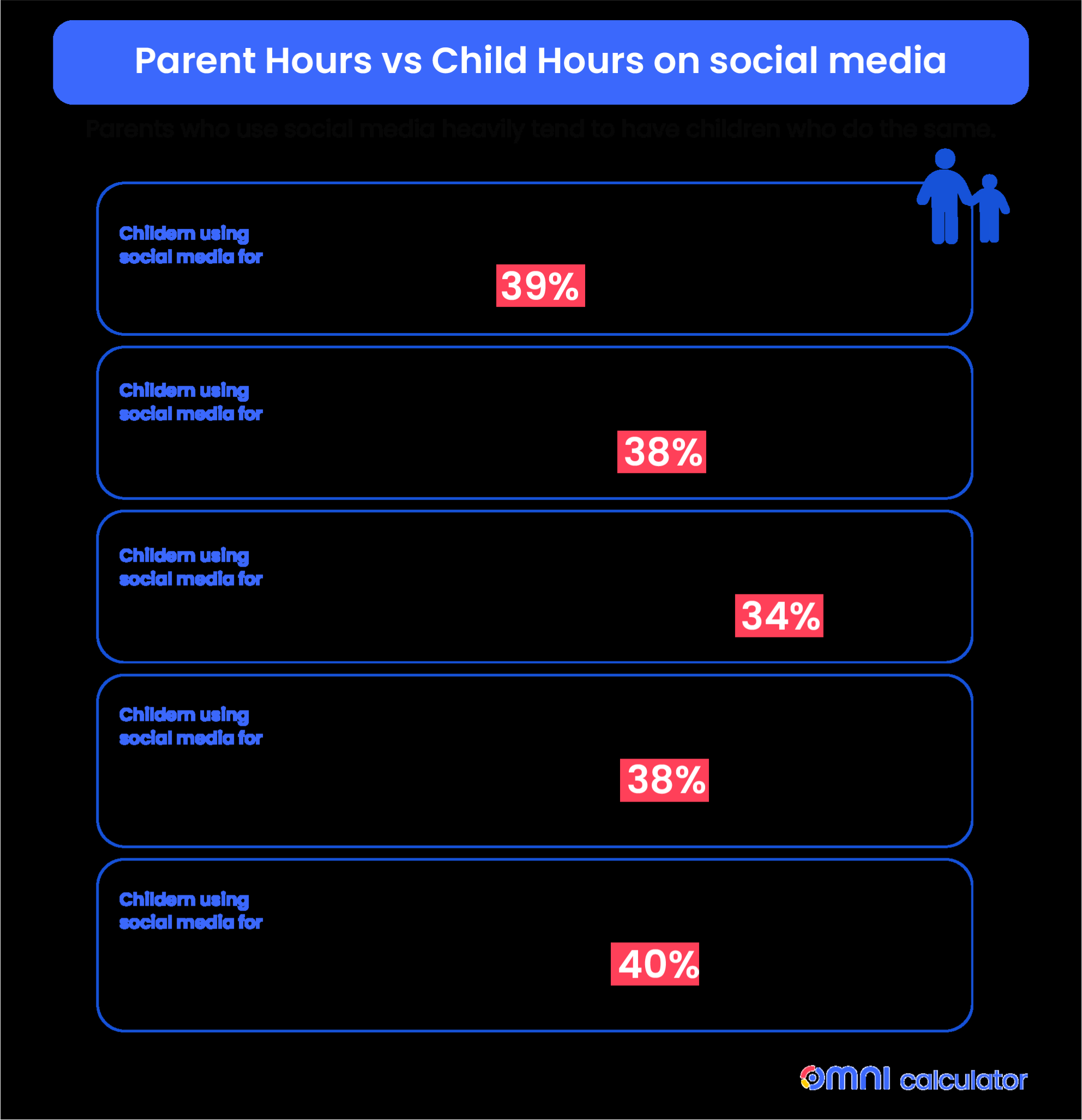
Among parents who are themselves light users, just 10% of their children fall into the heavy or very heavy category. Among parents who are very heavy users, that figure rises to 58%. A child is nearly six times more likely to be a heavy or very heavy user, depending on how much their parent scrolls.
Parents aged 35 to 44 are the most likely to be very heavy users at 13%, more than twice the rate of parents aged 45 to 60, at 6%.
Parents who view social media as a net negative outnumber those who view it as a net positive by three to one: 40% versus 13%. The largest group, 46%, lands on neutral or mixed. Mothers and fathers, younger and older parents, parents of tweens and teenagers, all report nearly identical splits.
When asked which specific behaviors they have observed in their child and linked to social media use, two symptoms clearly stand out above the rest:
- Compulsive use (difficulty putting the app down): 44%
- Sleep disruption: 41%
- Anxiety or excessive worry: 25%
- Low mood or withdrawal: 23%
- Poor body image or low self-esteem: 22%
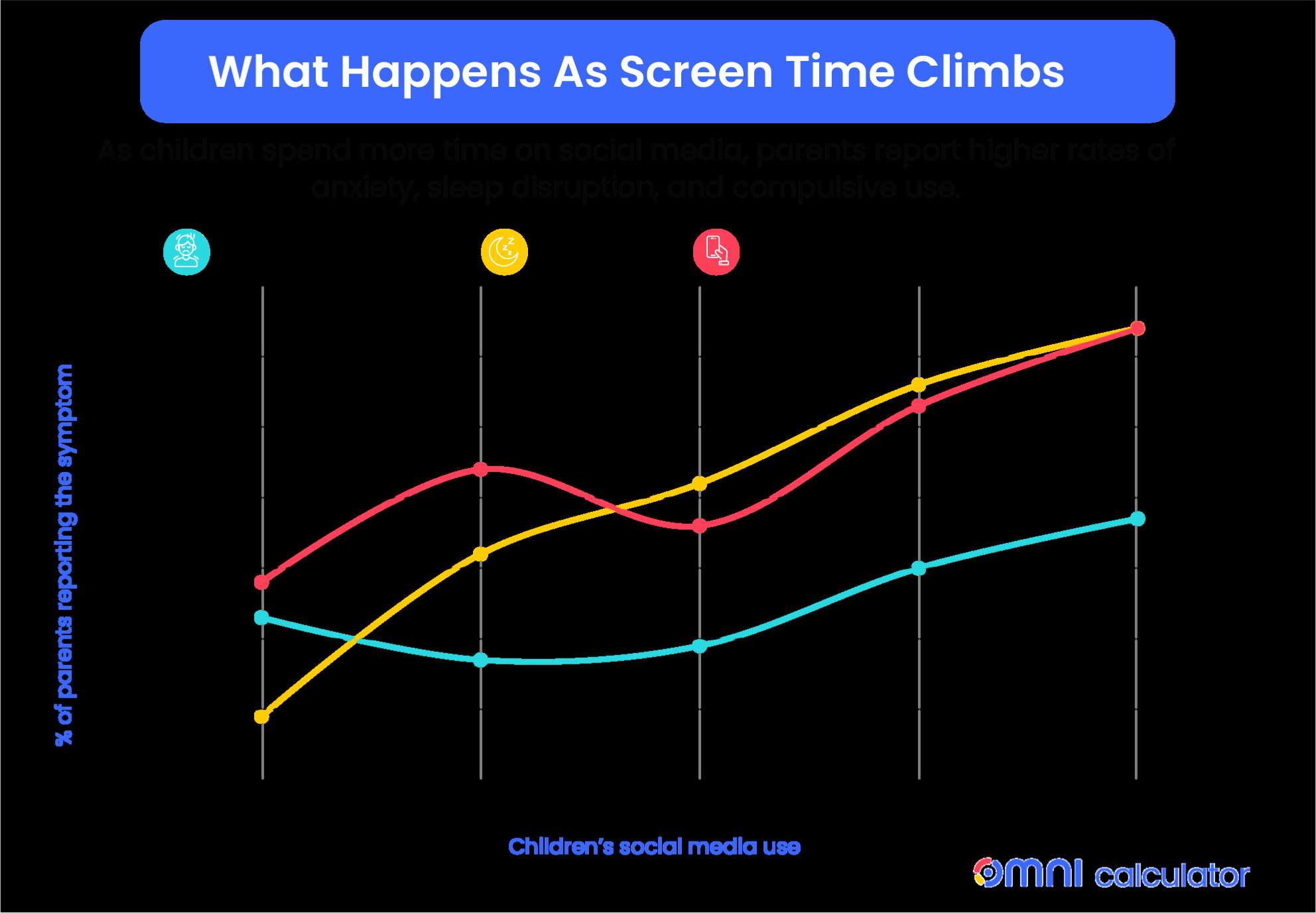
These numbers shift significantly by usage tier. Sleep disruption is reported by just 9% of parents of light users, rising to 42% among moderate users, 56% among heavy users, and 64% among very heavy users. Compulsive use and anxiety follow the same curve, climbing steadily with every additional hour on screen.
One notable gender difference emerges. Mothers are significantly more likely than fathers to observe and link poor body image or low self-esteem to their child’s social media use: 25% compared to 16%.
When asked who bears primary responsibility for regulating children’s social media access, parents are unambiguous:
- Parents and guardians: 94%
- Social media companies: 33%
- Federal government: 8%
- State government: 1%
Yet 66% of those same parents want a government ban enacted. The two positions sit side by side in the data without contradiction. Parents are not asking the government to take over; they are asking for institutional backup on a problem they feel they are losing at home.
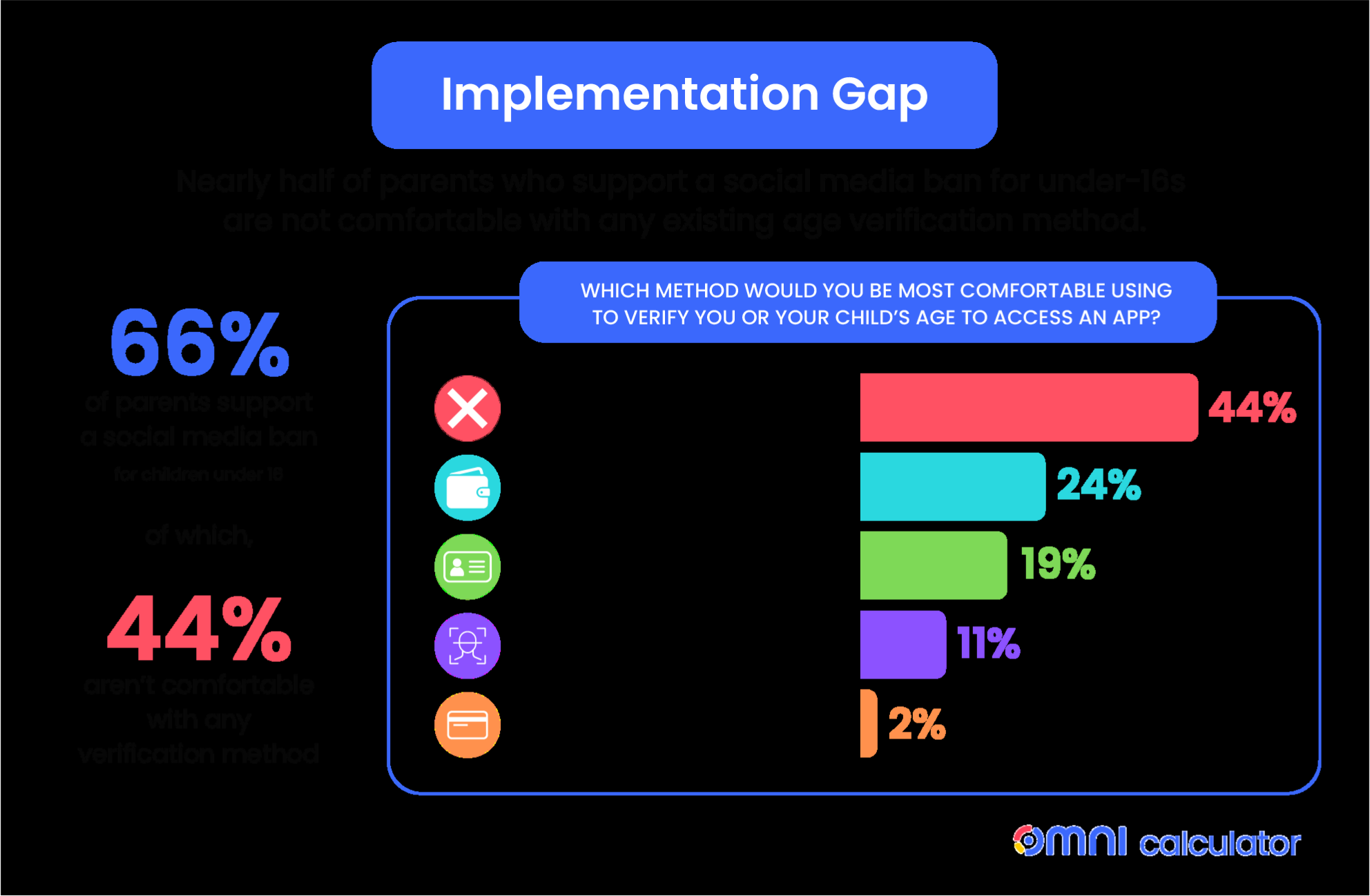
Where the picture gets more complicated is in the implementation. A ban requires a mechanism to verify a child’s age before granting access to a platform. When parents are asked which method they would be comfortable using, the most common answer, selected by 44%, is none of them. Among those who do accept a method:
- Digital wallet (verifies age without sharing personal details with the app): 24%
- Government-issued ID upload: 19%
- AI face-scanning: 11%
- Credit card number: 2%
The concern driving that resistance is consistent. When asked what worries them most about age verification systems:
- Privacy: 46%
- Data breaches: 26%
- Government surveillance: 11%
- Accuracy of systems: 8%
- Inconvenience: 3%
The privacy instinct that makes parents want platforms kept away from their children is the same one that makes them reluctant to hand over the documentation needed to enforce it.
Regional differences emerge here more than anywhere else in the survey. Northeasterners are the most likely to cite privacy as their top concern at 51%, and the most likely to worry about the accuracy of verification systems at 15%. Western parents lead on government surveillance fears at 14%, nearly three times the rate of Northeasterners at 6%. Southern and Midwestern parents are the most concerned about data breaches, at 28% and 23% respectively.
Also, there is one notable gender difference here. Fathers focus primarily on abstract privacy concerns: 52% cite it as their top worry compared to 43% of mothers. Mothers are nearly four times more likely than fathers to question whether the technology would work correctly at all: 11% versus 3%.
How far would kids go to stay on social media if a ban were enacted? According to their own parents, quite far.
The question is no longer entirely hypothetical. In North Carolina, a bill advanced through the state Senate in April 2026 that would prohibit children aged 13 and under from holding social media accounts and require parental consent for 14 and 15-year-olds. With fines of up to $50,000 per violation for platforms that fail to comply. Whether those provisions would hold in practice is exactly what parents are skeptical about (2).
Thirty-seven percent of parents believe that if a state-level ban were introduced, their child would successfully find a workaround using a VPN, a ghost account, or another bypass method. An equal 37% believe it is unlikely. The remaining 25% are unsure.
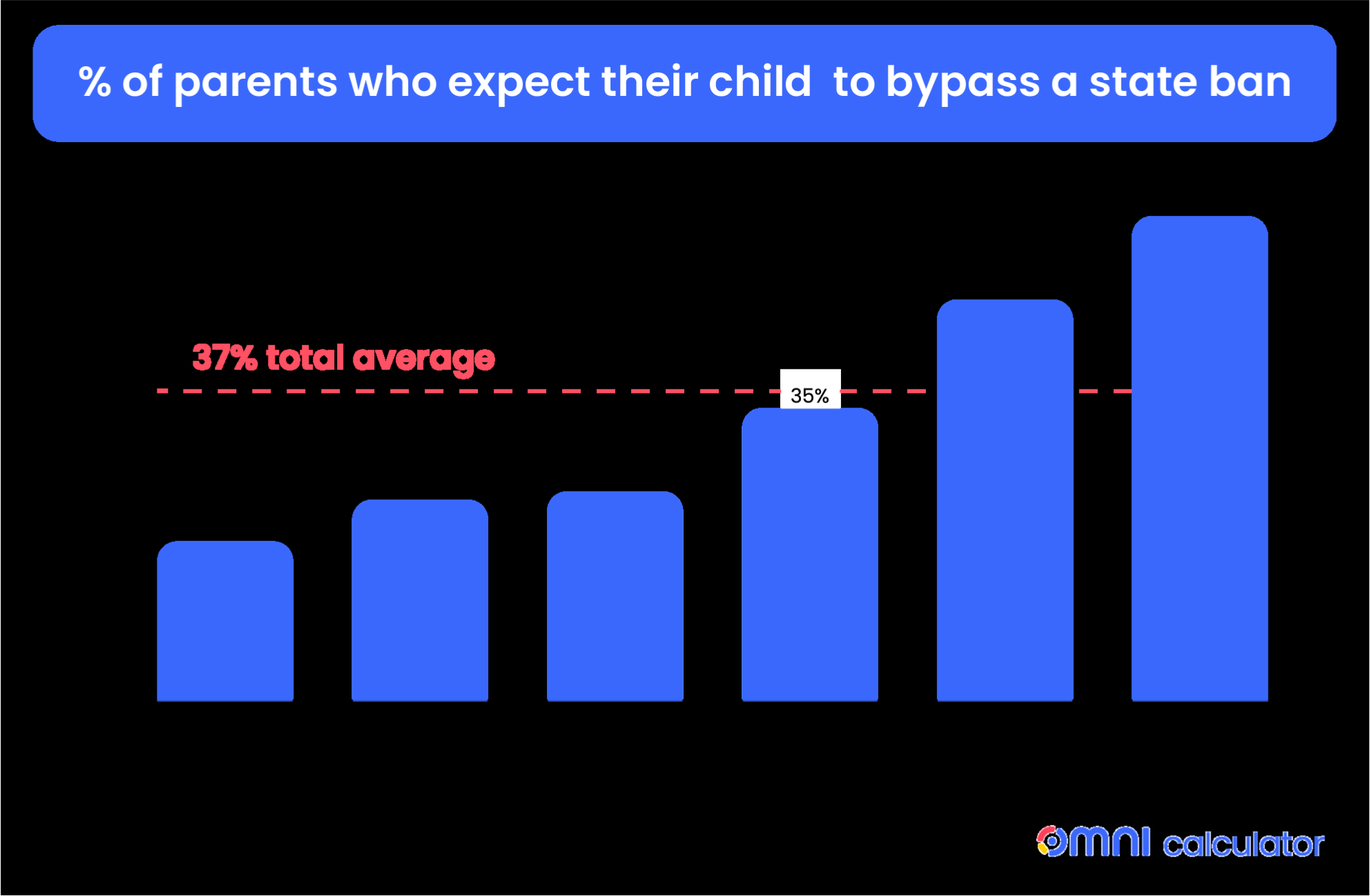
Current usage is a strong predictor. Among parents of very heavy users, 58% expect a successful workaround. Among parents of light users, only 13% share that expectation.
When asked whether they would allow their child to use their own adult account, under supervision, if a ban made independent access impossible, 64% of parents say no. Fathers are more unyielding on this point than mothers: 71% refuse, compared to 61% of mothers.