
The social media ban impact calculator is here to help you or your children understand how much time we spend on social media (and on screens). It is the perfect tool to address a recent phenomenon: banning social media for children and teenagers.
Australia adopted these measures at the end of 2025, banning social media for people under 16. Other countries, such as France, Spain, and the United Kingdom, are studying to implement similar restrictions by 2026.
So, if your kids were banned from social media, you must have been thinking about what they could do with all that extra time. For sure, they do not need to feel bored. We are here to help you understand the real amount of extra time you can gain by avoiding social media or screens. We will also show you how this additional time can enhance your children’s quality of life and be used to develop their education and new abilities.
Thus, keep reading this article, where we are going to approach the following subjects:
- How does social media affect teens and kids?
- How much time do I waste on social media?
- Why has social media been banned for under-16s?
- The social media ban impact calculator — with an example.
- Should social media be banned?
- How does social media affect sleep?
- How can I prevent cyberbullying?
- What would be the impact of the social media ban for under-16s?
- And much more.
Then, let’s take a break from likes, comments, and swiping, and explore all the potential of the social media ban impact calculator.
How does social media affect teens and kids?
Social media is broadly used by young people. Recently, revealed that 95% of teenagers aged 13-17 years old use social media in the US. It is also worth noting that more than 1/3 of these teenagers use social media almost constantly. Moreover, social media is part of the daily lives of more than 40% of children aged 8-12.
Being exposed to social media like this has several effects on the quality of life of these teens and kids. The first impact is the time these young people spend on social media platforms, which can also affect the quality of their sleep and their overall health. Moreover, the type of content they are consuming is a relevant point to raise.
Of course, social media may have some benefits for teens and kids. We can point out the possibility of connecting with several people around the world who share the same interests, identities, and abilities. Furthermore, it may provide access to a space for self-expression and the opportunity to make new friends. However, without proper regulations and controls, kids can access any content that may not be suitable for their age.
These are the main reasons why several countries are worried about the lack of regulation of social media platforms, especially given their constant use by kids and teens.
🙋 Would you like to check your sleep quality? Then visit our sleep calculator.
Why has social media been banned for under-16s?
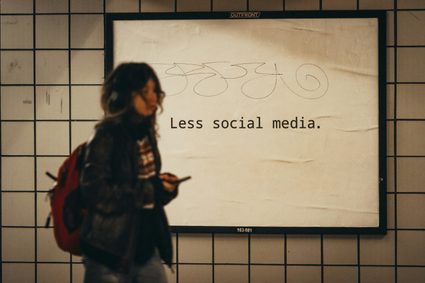
As we pointed out, Australia banned social media for kids and teenagers under 16. This regulation aims to reduce the negative impact of social media and the effects of excessive screen time among children. The decision follows government research showing that 96% of children aged 10-15 use social media, and 70% have been exposed to harmful content.
In the United States, Connecticut, Louisiana, Texas, Utah, Maryland, Tennessee, Florida, Georgia, Minnesota, Arkansas, Ohio, and California have adopted state restrictions on social media used by kids under 16. European countries are also planning to announce a social ban for kids and teenagers in 2026.
Besides the previous points, by spending so many hours on social media, you also increase the probability of facing cyberbullying. Cyberbullying is defined as bullying with the use of digital platforms. There are several forms of cyberbullying, the most common examples include:
- Sending hurtful, abusive, or threatening messages, images, or videos via digital platforms;
- Spreading lies about or posting embarrassing photos or videos of someone using social media;
- Engaging in sexual harassment or bullying using generative AI tools; and
- Impersonating someone and sending mean messages to others on their behalf or through fake accounts.
Any of these toxic interactions can cause severe trauma to kids and teenagers, providing a basis for countries to ban social media as a strategy to prevent cyberbullying among young people.
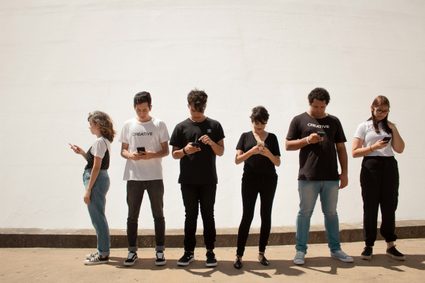
These countries consider a social media ban as a “reset button” for childhood. They believe the price children pay for constant connectivity in the virtual world is too high, costing them hours of sleep, focus, and mental well-being. By retrieving those lost hours, we are giving them back a decade of development, rather than just taking away an app. They can finally learn to play without distractions and acquire the social skills and human cues that are impossible to get from a screen or an emoji. In their teen years, they see this rule as a protection mechanism from the “compare and despair” trap. Instead of looking for approval from an algorithm, building confidence should come from the real world. When they finally reach adulthood, they will be part of a generation that knows how to distinguish and debate without the need for a screen or an AI-generated answer.
On the contrary, other parents see this ban as a way to ignore technology and the complexities of our modern world. If we completely eliminate social media during their primary years, we are essentially “unplugging” them from reality, which will have negative consequences during their teenage years. They claim that social media is a positive tool for disadvantaged communities, teens suffering from social anxiety, and people with niche interests. These platforms can offer a sense of belonging that they might not find or even know exists if they limit themselves to social interactions in their immediate neighborhood. Moreover, they argue that digital literacy and the concept of “digital resilience” should be acquired at the beginning of adolescence, around 13 years old, rather than at 16. Instead of a hard ban, they advocate for better platform regulations.
The social media ban impact calculator can serve both groups — either to turn an abstract policy into a tangible reality, showing exactly how many thousands of hours can be reinvested by kids into sports, arts and face-to-face connections or as a way for parents to negotiate with their children and find a healthy middle point ensuring that social media remains a tool for creativity and connection.
The social media ban impact calculator — example
Now we will show you how to use our tool is easy and intuitive. The first step is to select all the social media platforms that your child uses daily. Then, our calculator will show you the number of hours per year on the screen.
After that, enter your child’s age, and the calculator will show you the total time saved by banning social media. The tool will also show several activities you or your kids can carry out with this extra time.
Let us make an example. Suppose that your child is 12 years old and spends in social media. Then, the total time accumulated along one year is impressive .
Fill your kid’s age and see the magic. You will verify that the total time saved due to the social media ban is .
By opening up the section Spending the time saved, you can see that this amount of extra time means that your kid could:
- Conclude a total of 36 preparatory high school/GCSE courses,
- Read 109 books per year;
- Watch 4 interesting poadcasts per day;
- Make 10 biking trips per week; or
- Be in its final path to become a pianist.
Now it is easy to see how valuable time can be and the real impact of social media on your child’s life.
🙋 Are you looking for other tools showing alternatives to social media? Then access our TikTok time alternatives calculator and social media time alternatives calculator.
FAQs
Should social media be banned?
There is no simple answer for this question, like a “yes” or “no”. The decision to ban social media is a balancing act between public safety and civil liberties. Several studies show how social media can affect the physical and mental health of its users, especially young people. This research is the main reason several countries have imposed restrictions on kids’ and teenagers’ access to social media platforms.
How does social media affect sleep?
Scientific studies show that using social media and screens, particularly close to bedtime, can affect sleep quality. The usual effects include delayed sleep onset and reduced sleep duration, leading to poorer sleep quality. The threshold time for social media to reduce your sleeping quality is 2 hours a day. Moreover, users who spend more than 6 and 9 hours on social media are 43% and 60% more likely to have poor sleep quality, respectively.
How can I prevent cyberbullying?
You can easily prevent cyberbullying by spending less time on social media. Studies show that children who spend more than 3 hours using the internet have more than 54% chance of suffering cyberbullying. Moreover, social media platforms lack effective tools to trace online harassment. Other strategies can help you avoid cyberbullying, such as tightening your privacy settings, checking your friends list, keeping your personal details private, and thinking before you post.
What would be the impacts of the social media ban for under-16s?
After banning social media for under-16s, the Australian government expects to reduce the time young people spend on social media, thereby improving their mental and physical health and quality of life. However, there are some criticisms of the restrictions, mainly that under-16s can still access platforms that do not require facial identification or use fake accounts. Another issue is related to game platforms, which were not covered by the ban and are spaces where children could be easily exposed to cyberbullying.