
Omni Calculator logo

Table of contents

1. Two-thirds use AI for work communication every week

Is AI Killing Your Workplace Personality? (Survey)

Report Highlights

  • Among workers who use AI for work messages, 1 in 4 (25%) say their writing now sounds less like them and more generic.
  • Gen Z is the most skeptical generation: 44% think a coworker who uses AI "didn't care enough to write it themselves," double the 22% of Gen X who feel the same.
  • Half of workers (51%) would rather receive a slightly messy message written by a coworker than a polished, AI-generated one, rising to 61% among Gen Z.
  • About 52% of senior leaders and executives use AI for work communication multiple times a day, compared with 22% of individual contributors.
  • Since adopting AI, 40% of workers have dropped small typos and imperfections from their messages.
  • Nearly 1 in 3 (30%) catch themselves writing or talking in an "AI style" even when they aren’t using an AI tool.

AI now drafts, polishes, and rewrites a large share of workplace messages, and a quarter of the workers who use it say the results no longer sound like them.

This survey of 921 US workers measures how the technology is flattening individual voices at work, who notices the change in their coworkers, and why the most AI-native generation trusts it the least.

Most workers regularly reach for AI to write, rewrite, or polish their work communication.

Multiple times a day is the single most common answer at 30%, and another 24% use it a few times a week.
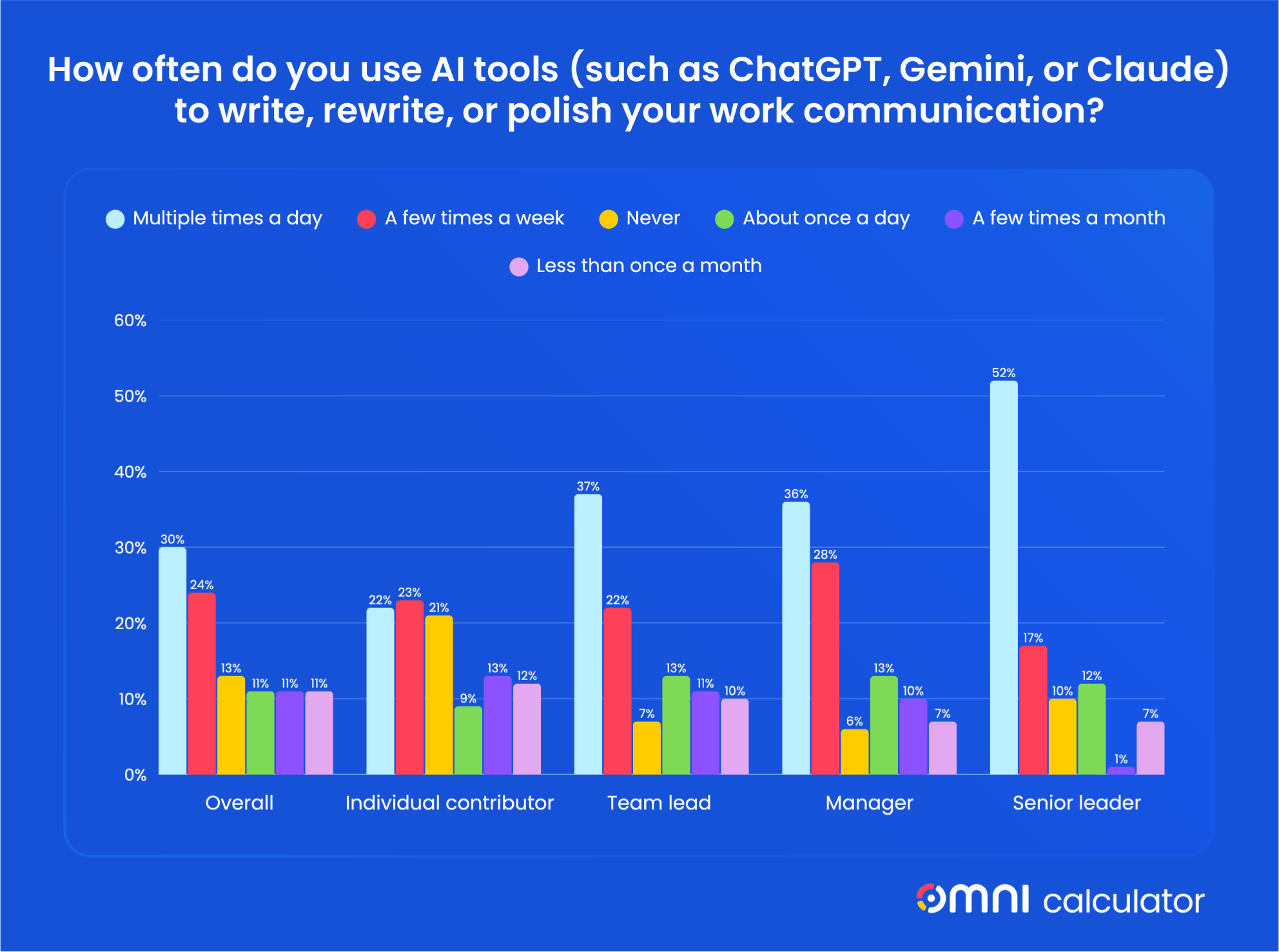
Grouped bar chart showing how often US workers use AI for work communication
How often do you use AI tools (such as ChatGPT, Gemini, or Claude) to write, rewrite, or polish your work communication?

About 13% never use AI for work communication, while the rest fall somewhere in between, splitting evenly across about once a day, a few times a month, and less than once a month at 11% each.

Interestingly, senior leaders and executives are the heaviest users, with 52% reaching for AI multiple times a day, compared with 22% of individual contributors. Individual contributors are also the most likely to never use AI at work, at 21%, compared with 6% of managers and 7% of team leads.

Running messages through AI is common but selective.

Workers are evenly split between those who run none of their last 10 messages through AI (36%) and those who run one or two (36%). Fewer push more through the tool: 18% run three to five messages, 7% run six to eight, and 4% run nine or 10.

Out of every 10 work messages you send (e.g., emails, Slack), how many do you run through an AI tool before sending?

Overall

Individual contributor

Team lead

Manager

Senior leader

0

36%

47%

25%

23%

35%

1 to 2

36%

34%

37%

40%

26%

3 to 5

18%

11%

24%

24%

22%

6 to 8

7%

5%

9%

10%

13%

9 to 10

4%

3%

5%

3%

4%

Again, volume rises with seniority.

Individual contributors are the most likely to run none of their messages through AI, at 47%, compared with 23% of managers and 25% of team leads. Managers and team leads are far more likely to run three to five messages through AI, at 24% each, compared with 11% for individual contributors.

Workers lean on AI for routine writing tasks.

Writing emails and summarizing long messages tie for first place, each cited by 47%, followed closely by fixing grammar or translating at 46%. Replying to awkward or difficult messages (38%), softening or rephrasing tone (37%), and writing reports or formal documents (35%) round out the main uses.

Just over a fifth (22%) say they don't use AI for any of these tasks.

Which of these do you use AI for at work?

Overall

Male

Female

Gen Z

Millennials

Gen X

Baby boomers

Individual contributor

Team lead

Manager

Senior leader

Writing emails

47%

44%

50%

44%

51%

46%

39%

40%

53%

51%

52%

Summarizing long messages

47%

51%

42%

42%

51%

46%

47%

35%

52%

62%

57%

Fixing grammar or translating

46%

49%

44%

44%

48%

46%

44%

36%

55%

55%

52%

Replying to awkward or difficult messages

38%

29%

45%

43%

39%

36%

31%

35%

40%

40%

42%

Softening or rephrasing my tone

37%

36%

38%

38%

40%

36%

31%

31%

42%

43%

42%

Writing reports or formal documents

35%

40%

30%

28%

38%

34%

39%

25%

40%

46%

54%

I don't use AI for any of these

22%

23%

22%

27%

17%

23%

26%

32%

16%

10%

19%

Writing Slack, Teams, or chat messages

14%

16%

13%

17%

14%

14%

14%

9%

19%

20%

23%

The data also shows that women are far more likely than men to use AI to reply to awkward or difficult messages (45% vs. 29%), while men lead in summarizing long messages (51% vs. 42%) and writing reports (40% vs. 30%).

By seniority, managers lead in summarizing long messages (62% vs. 35% among individual contributors), and senior leaders lead in writing reports (54% vs. 25%).

Gen Z is the most likely generation to opt out entirely, with 27% saying they don't use AI for any of these tasks.

AI changes how work messages sound, and not always toward authenticity.

About a third of workers (34%) say their messages sound about the same as before, and a quarter (25%) say they don't use AI for work messages.
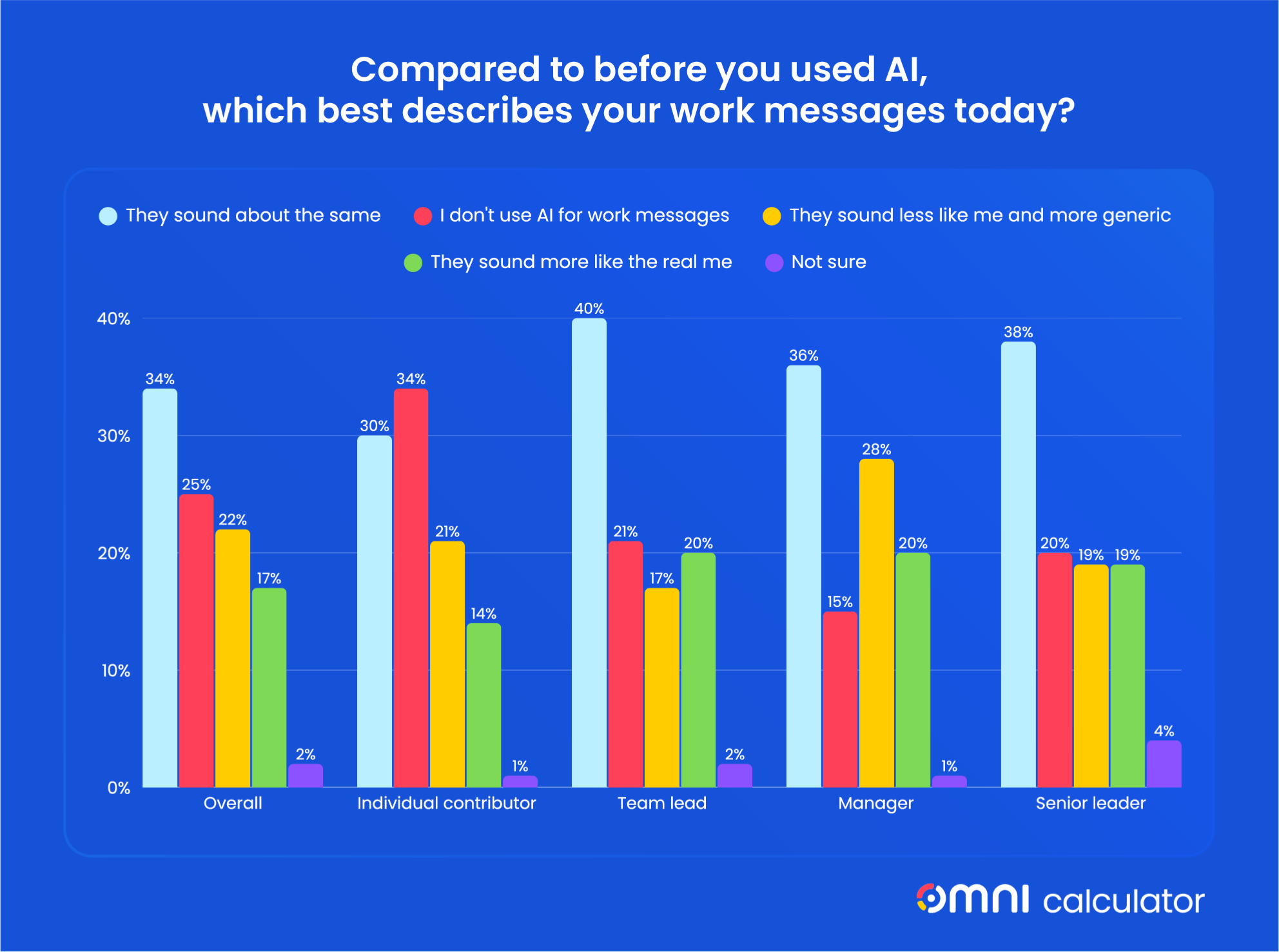
The chart showing how AI has changed the way US workers' messages sound
Compared to before you used AI, which best describes your work messages today?

Among the rest, more report a loss of voice than a gain: 22% say their messages sound less like them and more generic, while 17% say they sound more like the real them. Among only the workers who use AI for work messages, the share reporting a more generic voice rises to 1 in 4 (25%).

The shift is felt most by managers, 28% of whom say their messages sound more generic, compared with 17% of team leads. Individual contributors are the most likely to say they don't use AI for work messages, at 34%, compared with 15% of managers.

The first casualties of AI-assisted writing are small human touches.

Small typos and imperfections top the list, dropped by 40% of workers since they started using AI. Slang or casual phrasing follows at 27%, tied with the 27% who say they don't use AI for their work messages.

About 16% say nothing has changed, and smaller shares have shed emoji and strong opinions or pushback (14% each), humor or jokes and exclamation points (11% each), and personal greetings or sign-offs (7%).

Which of these have you dropped from your work messages since you started using AI?

Overall

Gen Z

Millennials

Gen X

Baby boomers

Individual contributor

Team lead

Manager

Senior leader

Small typos and imperfections

40%

35%

47%

38%

37%

33%

51%

44%

43%

Slang or casual phrasing

27%

28%

30%

22%

32%

22%

34%

32%

20%

I don't use AI for my work messages

27%

33%

23%

27%

29%

37%

20%

15%

22%

Nothing has changed

16%

16%

14%

17%

14%

17%

12%

17%

16%

Emoji

14%

9%

15%

14%

18%

10%

21%

16%

9%

Strong opinions or pushback

14%

18%

14%

14%

10%

11%

15%

18%

16%

Humor or jokes

11%

9%

13%

9%

14%

8%

10%

17%

14%

Exclamation points

11%

13%

12%

8%

14%

10%

15%

10%

16%

Personal greetings or sign-offs

7%

8%

8%

7%

7%

5%

10%

10%

12%

Millennials are the most likely to have dropped typos and imperfections, at 47%, compared with 35% of Gen Z. The same pattern holds by role: team leads lead at 51%, while individual contributors are at 33%.

AI's influence can outlast the tool itself.

A majority of workers (61%) say they have never caught themselves writing or talking in an "AI style" when not using AI. Still, 27% notice it sometimes and 3% often, meaning 30% see the pattern bleed into their own unaided writing.

Have you noticed yourself writing or talking in an "AI style" even when you are NOT using an AI tool?

Overall

Gen Z

Millennials

Gen X

Baby boomers

Individual contributor

Team lead

Manager

Senior leader

No, never

61%

54%

57%

69%

59%

66%

53%

56%

59%

Yes, sometimes

27%

30%

31%

22%

24%

22%

32%

31%

30%

Not sure

9%

10%

9%

8%

12%

10%

10%

8%

6%

Yes, often

3%

7%

3%

1%

5%

2%

5%

5%

4%

Gen X is the most insulated, with 69% saying it never happens, compared with 54% of Gen Z. Individual contributors also report it least, at 66% never, versus 53% of team leads.

That bleed-through shows up as concrete new habits in workers' own writing.

Writing in shorter, cleaner sentences is the most common new habit, cited by 43%, just ahead of the 41% who report no such changes. Beyond that, 20% use bullet points or numbered lists more, 16% structure messages the same way every time, 13% add headers or bold labels, and 11% have picked up AI-favorite words or phrases such as "delve" or "moreover."
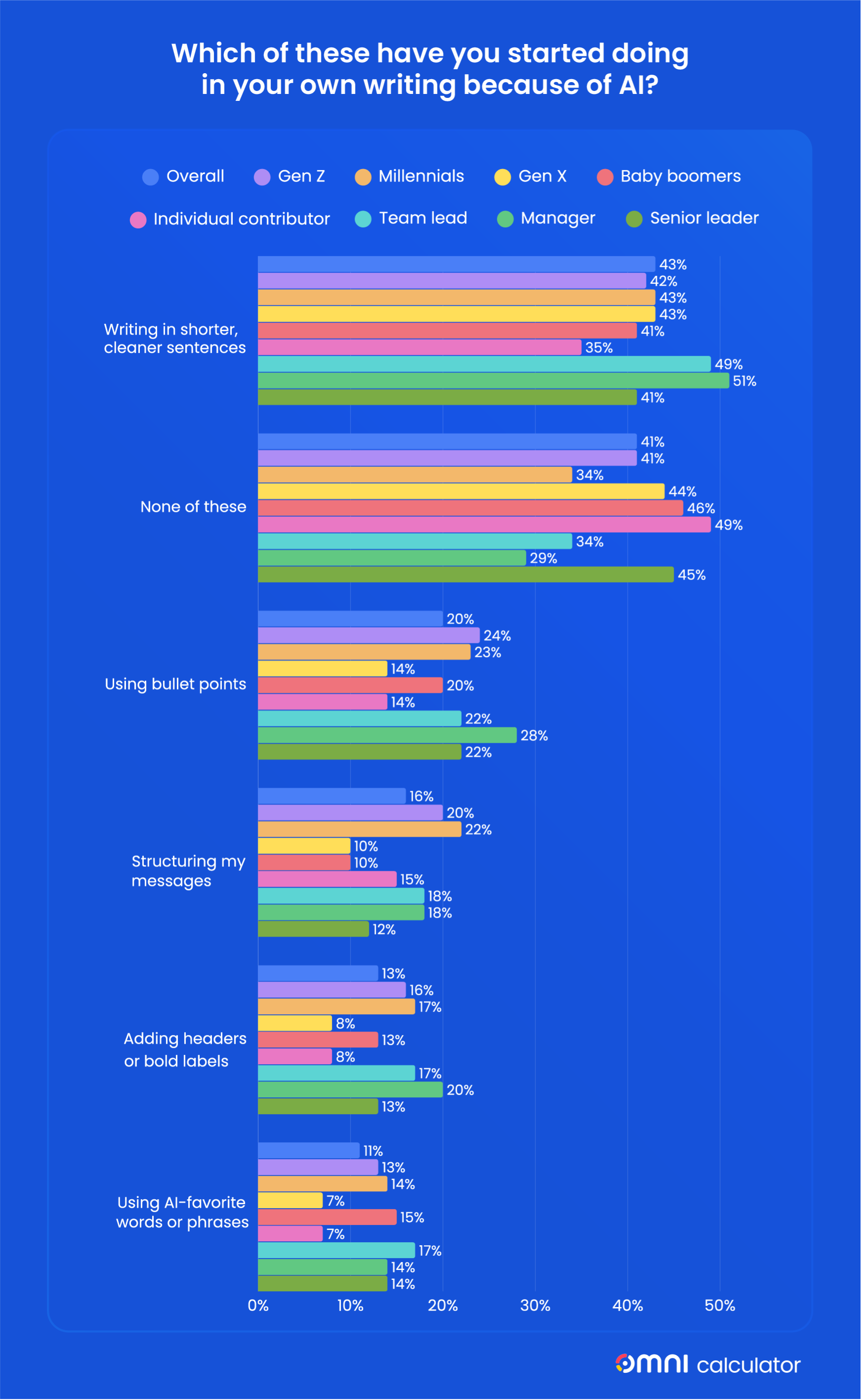
Horizontal bar chart showing new writing habits US workers have adopted because of AI
Which of these have you started doing in your own writing because of AI?

Baby boomers are the most likely to report no change, at 46%, compared with 34% of millennials. By role, managers and team leads use shorter, cleaner sentences at 51% and 49%, respectively, versus 35% among individual contributors.

Most workers think they can catch AI in a colleague's writing at least some of the time.

Sometimes is the most common answer at 45%, followed by often at 24%. Smaller groups say almost always or rarely (12% each), and just 7% say they can never tell.

How often can you tell when a coworker's message was written by AI?

Overall

Gen Z

Millennials

Gen X

Baby boomers

Sometimes

45%

38%

45%

50%

43%

Often

24%

25%

29%

18%

25%

Almost always

12%

21%

10%

10%

11%

Rarely

12%

12%

12%

13%

9%

Never

7%

4%

4%

8%

12%

Gen Z is the most confident in spotting AI outright, with 21% saying they do so almost always, double the 10% of both millennials and Gen X.

Gen X is the most likely to land on "sometimes," at 50%, compared with 38% of Gen Z.

Reactions to a coworker's use of AI are divided.

The most common response is approval: 32% think the colleague is being efficient and smart.

But nearly as many, 30%, think the person "didn't care enough to write it themselves." Beyond that, 27% trust the message a little less, 25% can't tell what the colleague really thinks, 22% don't care either way, 19% respect the person a little less, and 9% say it makes them want to use AI too.

When you can tell a coworker used AI to write something, what goes through your mind?

Overall

Gen Z

Millennials

Gen X

Baby boomers

Individual contributor

Team lead

Manager

Senior leader

They're being efficient and smart

32%

26%

33%

35%

31%

24%

38%

38%

43%

They didn't care enough to write it themselves

30%

44%

33%

22%

23%

34%

24%

29%

22%

I trust the message a little less

27%

39%

30%

20%

23%

29%

25%

25%

28%

I can't tell what they really think

25%

37%

28%

17%

23%

30%

21%

20%

19%

Nothing, I don't care

22%

15%

21%

26%

25%

23%

24%

22%

13%

I respect them a little less

19%

31%

18%

14%

15%

20%

16%

20%

16%

It makes me want to use AI too

9%

8%

9%

7%

11%

7%

13%

9%

6%

The generational split is stark:

Gen Z is more critical than older workers across every negative reaction: 44% think an AI-using coworker didn't care enough to write the message themselves, compared with 22% of Gen X. Gen Z is also the most likely to trust the message less (39% vs. 20%), to feel unsure what the colleague really thinks (37% vs. 17%), and to respect the person a little less (31% vs. 14%).

Senior leaders and managers, by contrast, are the most likely to see AI use as efficient and smart, at 43% and 38%, respectively, versus 24% among individual contributors.

Given the choice, workers favor authenticity over polish.

Half (51%) would rather receive a slightly messy message a coworker clearly wrote themselves than a flawless AI-written one. Only 25% prefer the polished AI version, and 24% have no preference.
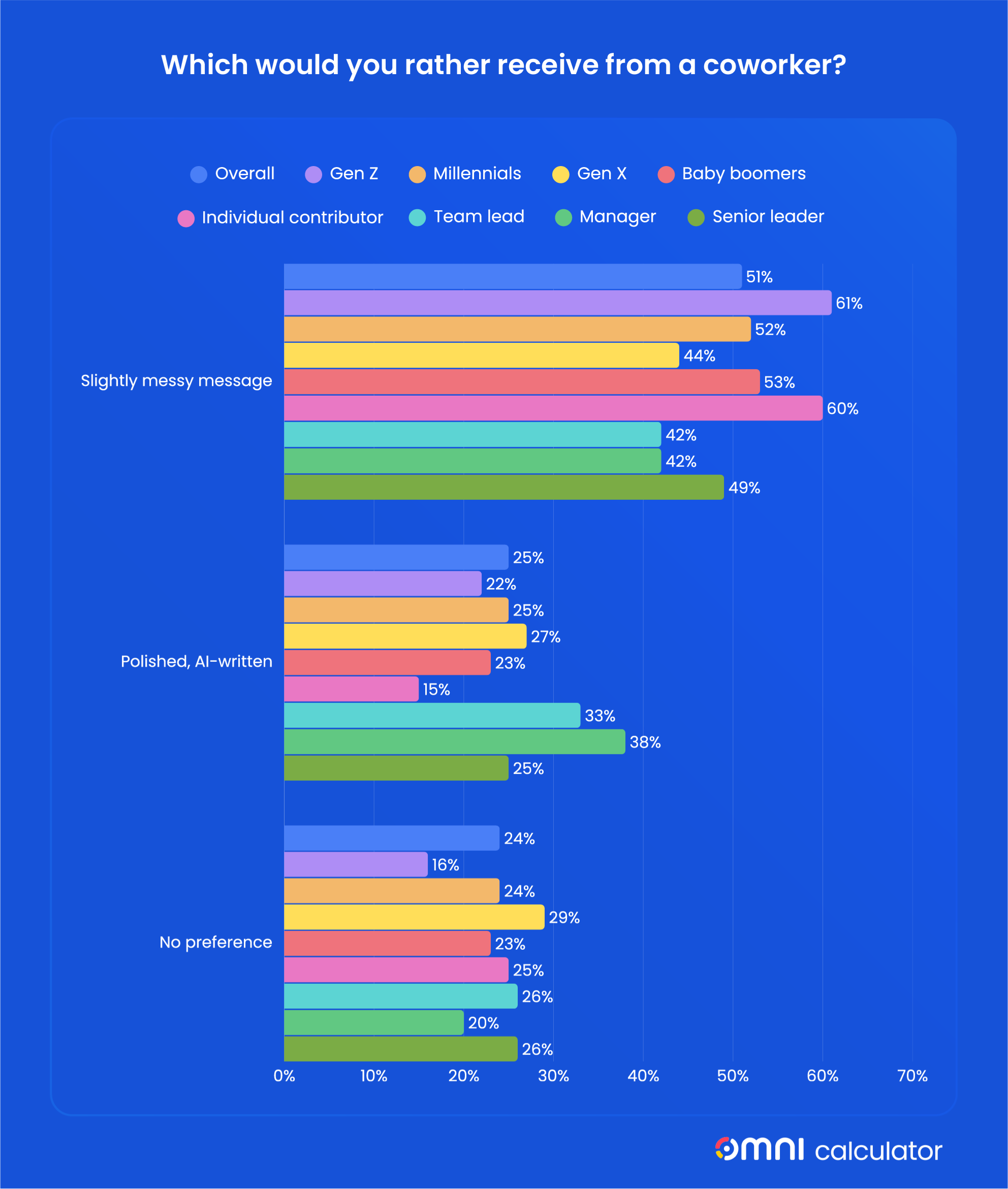
The chart showing whether US workers prefer a self-written or AI-written message from a coworker
Which would you rather receive from a coworker?

The preference for human writing is strongest among Gen Z, at 61%, compared with 44% of Gen X.

It also tracks with seniority: 60% of individual contributors prefer a self-written message, compared with 42% each for team leads and managers, who are the most likely to favor a polished AI message (33% and 38%).

The shift is widespread.

Combined, 57% have felt a coworker's real personality disappear from their messages after that person started using AI, and reactions split: 36% say the change doesn't bother them, while 21% miss the old version of the person.

About 27% notice no difference.

Have you ever felt a coworker's real personality disappear from their messages after they started using AI?

Overall

Gen Z

Millennials

Gen X

Baby boomers

Individual contributor

Team lead

Manager

Senior leader

Yes, but it doesn't bother me

36%

33%

39%

34%

40%

33%

39%

40%

39%

No, they seem the same to me

27%

22%

28%

29%

23%

23%

29%

32%

33%

Yes, and I miss the old version of them

21%

30%

21%

18%

19%

21%

20%

22%

19%

Not sure

16%

15%

12%

19%

19%

23%

12%

6%

9%

Gen Z feels the loss most acutely, with 30% saying they miss the old version of a coworker, compared with 18% of Gen X.

For most, skipping the AI check carries no stress. A plurality (40%) say they never feel nervous sending a message they didn't run through AI first, and 30% rarely do.

About 22% feel it sometimes, 7% often, and 2% always.

How often do you feel nervous sending a work message that you did not run through AI first?

Overall

Gen Z

Millennials

Gen X

Baby boomers

Individual contributor

Team lead

Manager

Senior leader

Never

40%

38%

35%

43%

48%

45%

33%

36%

46%

Rarely

30%

25%

34%

31%

29%

28%

35%

30%

28%

Sometimes

22%

24%

23%

20%

19%

21%

21%

24%

16%

Often

7%

11%

8%

5%

5%

5%

9%

8%

7%

Always

2%

3%

1%

2%

0%

1%

2%

2%

3%

Baby boomers are the most relaxed, with 48% never feeling nervous, compared with 35% of millennials.
Individual contributors and senior leaders also report never feeling nervous most often, at 45% and 46%, versus 33% of team leads.

Most workers don't feel new pressure to polish their writing.

Asked whether AI's rise has made them feel more pressure to make work messages sound perfect, the largest group disagrees (32%), and another 14% strongly disagree. About 27% agree, and 5% strongly agree, while 21% neither agree nor disagree. Combined, 46% disagree, and 32% agree.
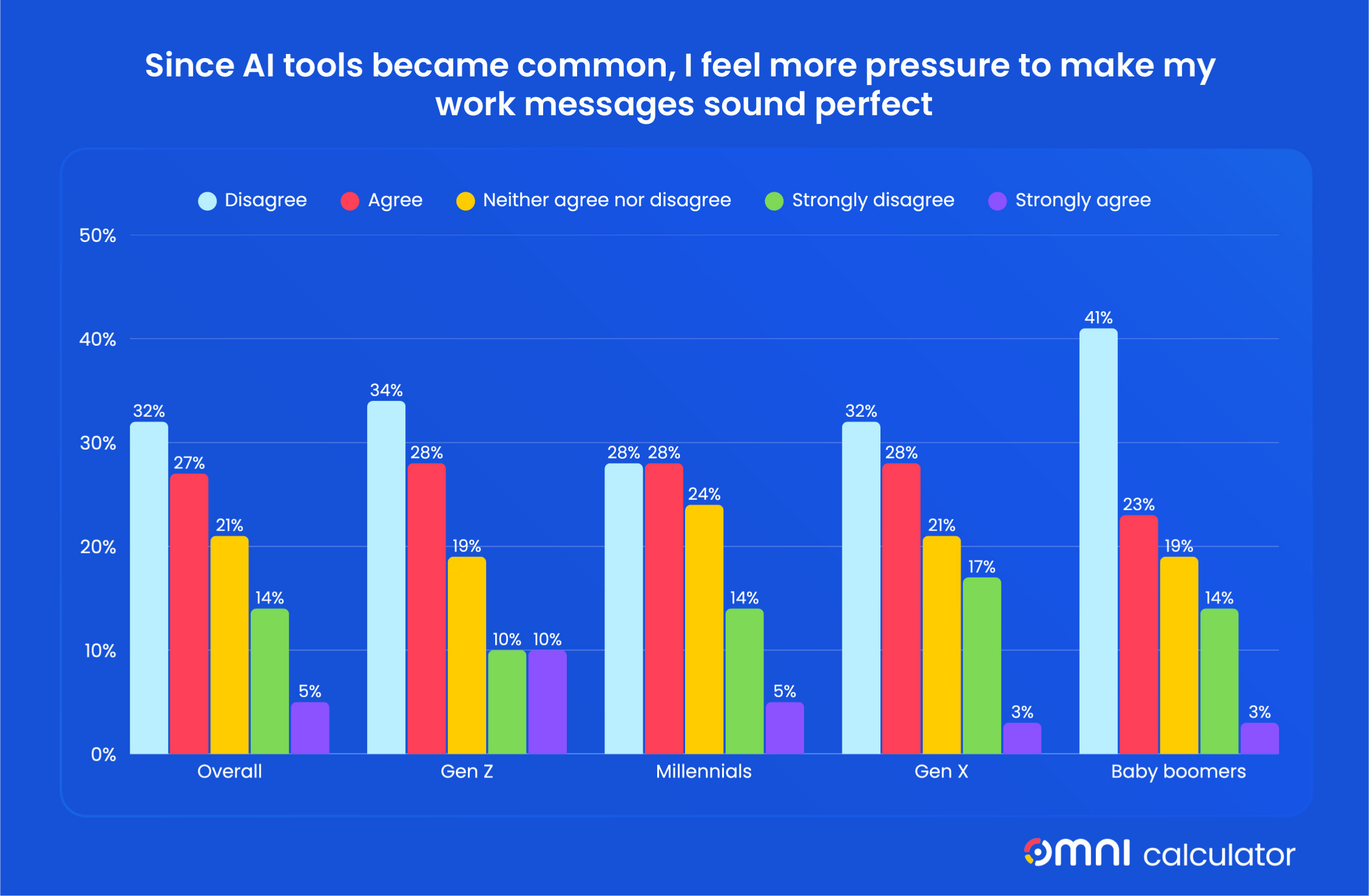
Column chart showing how much US workers agree they feel more pressure to make messages sound perfect since AI
Since AI tools became common, I feel more pressure to make my work messages sound perfect.

Baby boomers push back hardest, with 41% disagreeing, compared with 28% of millennials.

Few workers think they overdo it.

A plurality (41%) say their AI use feels about right, and another 19% say they barely use it. About 21% don't use AI for work communication at all.

Only 17% say they use it a little more than they'd like, and just 2% say they rely on it too much.

Do you think you personally rely on AI too much for work communication?

Overall

Gen Z

Millennials

Gen X

Baby boomers

Individual contributor

Team lead

Manager

Senior leader

No, my use feels about right

41%

27%

45%

43%

43%

33%

46%

49%

48%

I don't use AI for work communication

21%

24%

15%

23%

26%

30%

15%

10%

19%

No, I barely use it

19%

19%

21%

18%

18%

21%

17%

16%

14%

A little more than I'd like

17%

28%

16%

14%

11%

14%

19%

23%

13%

Yes, definitely too much

2%

3%

3%

2%

2%

2%

4%

2%

6%

Gen Z is the least settled: just 27% say their use feels about right, compared with 45% of millennials, and 28% say they use AI a little more than they'd like, against 11% of baby boomers.

By role, managers and senior leaders are the most comfortable, with 49% and 48% saying their use feels about right, versus 33% of individual contributors.

Omni Calculator surveyed 956 US adults in full-time or part-time employment between June 8 and June 15, 2026, using the Prolific online research platform. The sample was balanced to match US Census proportions. After responses that failed the attention check were removed, 921 responses remained for analysis. All respondents were screened to ensure they were based in the United States and currently employed.

The sample was 51% female, 48% male, and 1% another gender or undisclosed. By generation, 37% were Gen X (ages 46 to 61), 32% were millennials (ages 30 to 45), 19% were Gen Z (ages 18 to 29), and 12% were baby boomers (ages 62 and older). Respondents worked across a range of settings: 44% were fully in-office, 31% hybrid, and 22% fully remote. The most represented industries were healthcare or medical (15%), technology or software (14%), education (12%), and finance, banking, or insurance (11%).

Results are reported at a 95% confidence level with a 3% margin of error. Percentages are rounded to the nearest whole number and may not sum to exactly 100%. Questions that allowed more than one answer sum to more than 100%.

Omni Calculator helps over 15 million monthly users solve calculation problems through 3,800+ expert-reviewed tools.

The content in this article is for noncommercial use only. When sharing, please include a link back to Omni Calculator as the original source.

Need to run some quick numbers? Check out the calculators below for help with your pay, commute, and career moves.

Authors of the report

Ask the authors for a quote

Copyrights