Omni Calculator logo

Table of contents

1. Using AI for Everyday Calculations

1 in 3 Americans Received Wrong Calculation Results Using AI. A Study of 1014 Participants (2026)

Report Highlights

  • 1 in 3 Americans have received incorrect math results from AI, yet 38% now use it as their primary calculation tool.

  • Only 21% of users trust AI completely, with 57% citing potential mistakes as their primary reason for skepticism.

  • Gen Z is twice as likely to use AI for math as Boomers, despite 46% fearing it will erode their personal skills.

  • Users prioritize AI for explaining complex “word problem” steps and financial context over simple numerical accuracy.

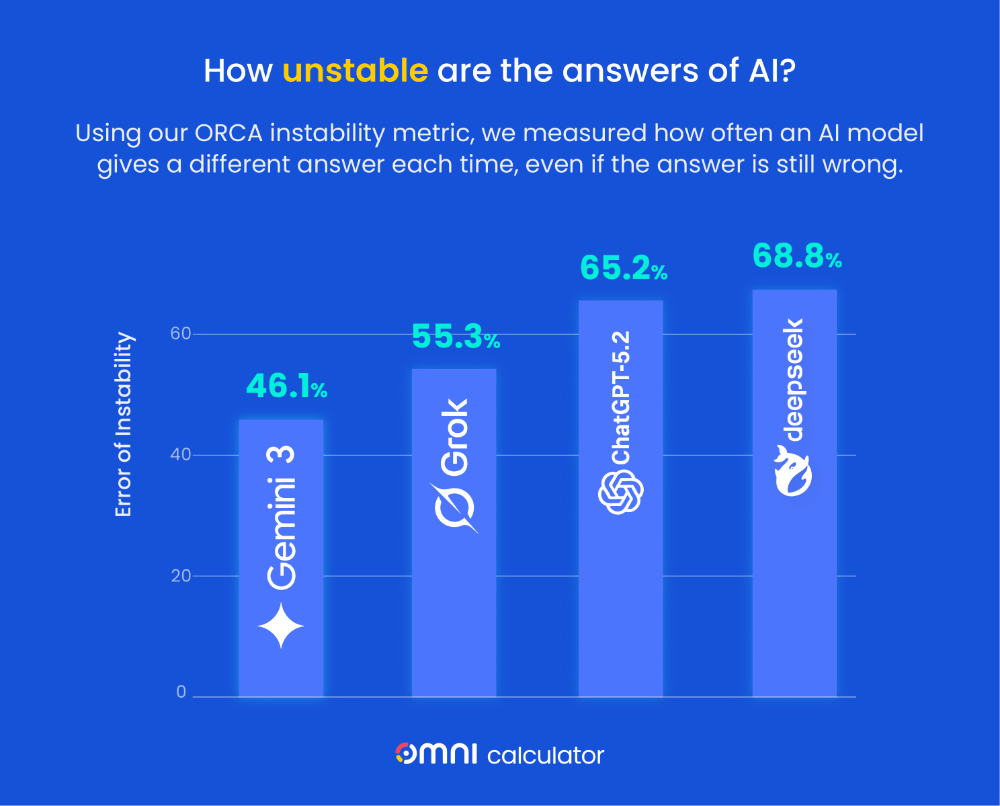
  • AI models like DeepSeek and ChatGPT show instability rates up to 69%, often replacing one error with another.

Digital habits are shifting as AI enters our work and personal routines. This trend raises a basic question: Can we actually trust these tools to do the math? We ran a survey and asked over 1000 people.
ai-adoption

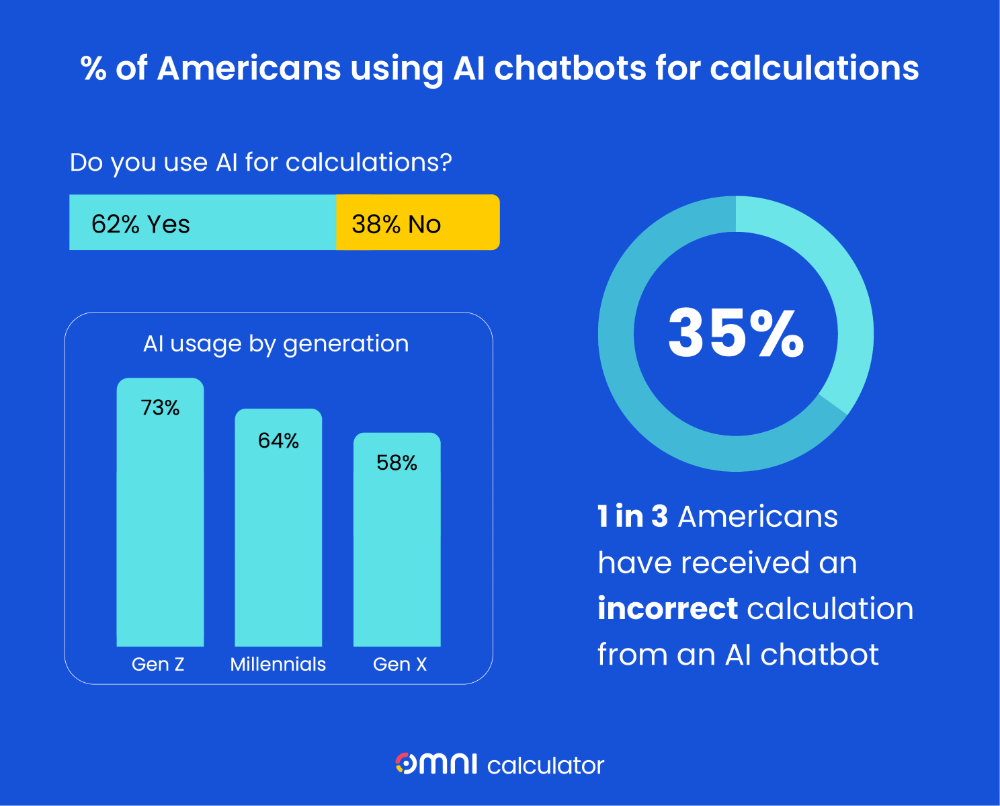
Our study found that 62% of Americans now use AI for calculations. However, even with that high adoption, about 1 in 3 users (35%) say they’ve received incorrect answers.
overall trust in ai

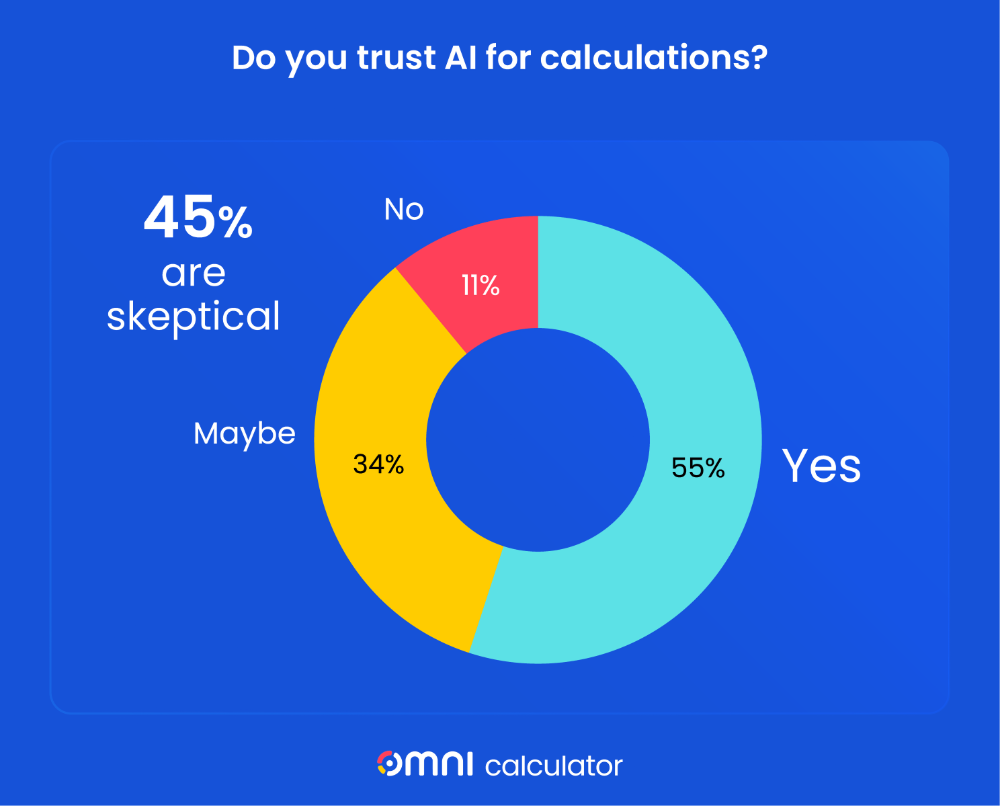
While 55% of users say they trust AI for math, 45% remain skeptical.

The trust in AI is also fairly shallow.

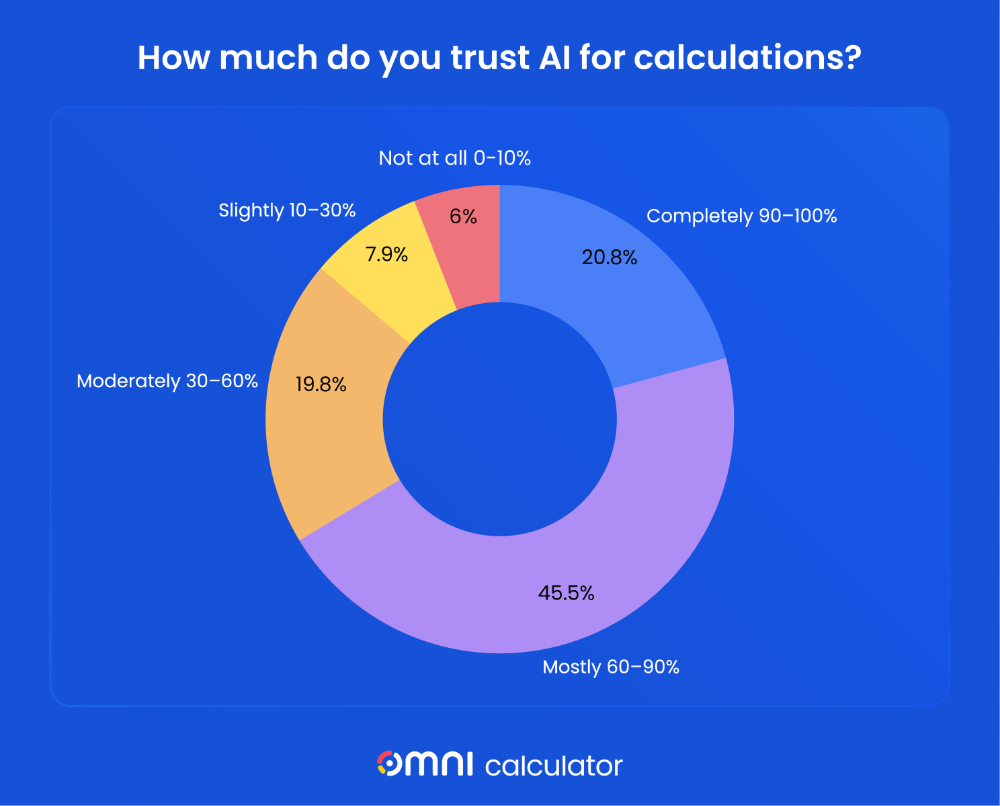
Only 21% trust AI “completely,” meaning they expect 90%-100% accuracy. Nearly half (46%) place their trust in the 60%-90% range, while 34% trust it only slightly or not at all.
percentage of trust in AI

There are regional differences in the United States, too. People in the South are 13 points more likely to “mostly” trust AI compared to those in the West.

How much do you trust AI with calculations?

Response rate

West

Midwest

Northeast

South

Completely 90%-100%

21%

28%

24%

20%

19%

Mostly 60%-90%

46%

36%

44%

47%

49%

Moderately 30%-60%

20%

17%

20%

21%

20%

Slightly 10%-30%

8%

14%

6%

8%

6%

Not at all 0%-10%

6%

5%

7%

5%

6%

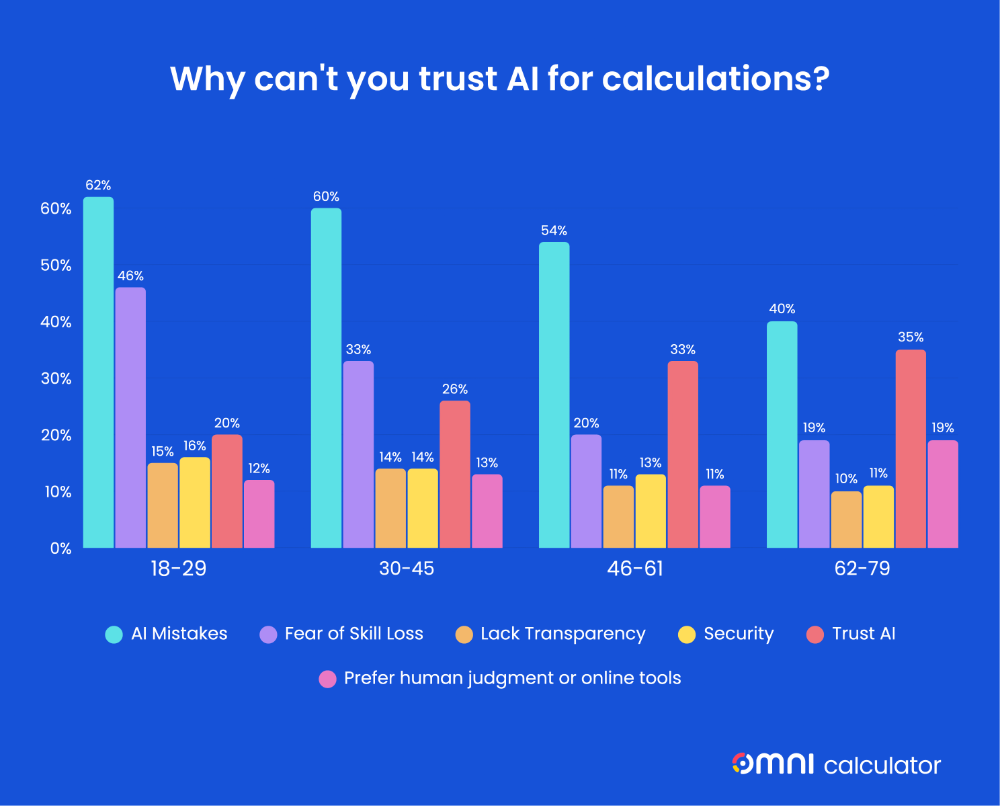
When asked what reasons they would distrust AI, respondents primarily cited the risk of AI making mistakes, with 57% citing errors as a top concern.

This baseline skepticism is fueled by a fear of losing human skills through over-reliance (30%) and a smaller but notable unease regarding privacy (14%) and the black-box nature of AI reasoning (13%).

Interestingly, a subset of the population manages this distrust by compartmentalizing AI’s role; while they remain wary of its judgment, 28% explicitly trust the technology for objective calculations.

Reason for distrusting AI

Percentage of total

AI can make mistakes

57%

Fear of over-reliance / losing skills

30%

Security/privacy concerns

14%

Lack of transparency in reasoning

13%

Prefer human judgment or online tools

13%

I trust AI for calculation

28%

generational trust comparison in ai

A paradox exists between the youngest and oldest generations. Gen Z uses AI more than any other group for learning, yet they harbor an underlying anxiety: 46% of Gen Z fears that using AI will lead to a loss of their own skills. Contrast this with Boomers (ages 62-79). Even though Boomers use AI less frequently, 35% say they trust it for calculations, compared to only 20% of Gen Z.

There is also a large 40-percentage-point gap regarding educational value. 54% of Gen Z use AI specifically because it "explains the steps," compared to just 14% of Boomers.

For the younger generation, AI is a multi-purpose mentor, while for Boomers, it remains a specialized tool they approach with surprising optimism.

Custom responses show that users value AI for its ability to check their work, provide financial context, and solve word problems that traditional calculators cannot interpret.

Using AI to Check Their Work
Several users mentioned they don’t just use AI to get an answer, but to verify their own manual calculations.

“It can check my work.”

“Check answers.”

“It can handle complex figures, but I have seen some mistakes made.”

This last point is particularly interesting: it shows that some users are “trusting but verifying,” using the AI as a second opinion while remaining skeptical of its accuracy.

Contextualizing Data
Some users use AI because it can handle narrative and financial context that a standard calculator cannot process.

“I calculate specific things... such as spending/earning, and it gives me more context on those than calculators.”

“Explains Word problems.”

“I have used it in the past to run debt analysis on a daily basis... and to calculate interest.”

These responses suggest that for some, the value of AI isn’t the calculation itself, but the ability to translate a complex life scenario (like debt or a word problem) into a mathematical structure.

Qualitative Process over Quantitative Results
While we already knew “explaining steps” was popular, these “other” responses emphasize the holistic nature of the AI’s output.

“It gives me the whole method and process.”

“I can give all the details [to the AI].”

These comments indicate a preference for a “conversational” approach to math, where the user can provide messy, detailed prompts that a calculator wouldn’t accept.

Simple Conversions
One respondent highlighted a very common but specific use case:

“I sometimes use AI instead of a calculator for simple conversions.”

For example, metric to imperial or currency, where AI is often faster than finding a specific conversion tool or typing a formula into a calculator.

Younger and older generations view these tools very differently. Users, especially younger ones, are using the tool for its speed and explanatory power, but they remain skeptical of its accuracy and wary of how it might erode their fundamental mathematical skills. The adoption is driven by convenience, but the trust is still being earned.

However, according to our study, convenience still wins out over certainty. Even with varying levels of trust, 38% of Americans use AI tools as their primary way to calculate.

Which one do you use more often for calculations?

Response rate

AI tools (e.g., ChatGPT, Copilot)

38%

Traditional calculators (physical or on your phone)

37%

Online calculators (web-based calculators)

13%

Spreadsheet software (e.g., Google Sheets, Excel)

10%

Pen and paper

2%

The tools people choose to use also depend heavily on age. Gen Z (48%) is twice as likely to use conversational tools like ChatGPT or Copilot. Boomers (30%) prefer specialized online calculators for taxes, mortgages, or retirement. They use these at a rate triple that of Millennials or Gen Z.

Preferred tool

Gen Z

Millennials

Gen X

Boomers

AI tools (e.g., ChatGPT, Copilot)

48%

41%

32%

22%

Traditional calculators (physical or on your phone)

32%

36%

42%

39%

Online calculators (web-based calculators)

12%

11%

13%

30%

Spreadsheet software (e.g., Google Sheets, Excel)

8%

10%

12%

5%

Pen and paper

0%

2%

1%

4%

The Omni Research on Calculation in AI benchmark backs up these concerns and highlights AI’s limitations when it comes to calculations.

A crucial measure of AI performance is not just whether an answer is right or wrong, but how stable those answers are. We call this the instability metric. It looks at how often a model changes its output from one attempt to the next, even when the answer remains incorrect.

This behavior can happen in three ways:

  1. A wrong answer changes to a different wrong answer;
  2. A correct answer becomes wrong; or
  3. A wrong answer becomes correct.

The first two cases highlight why AI cannot yet replace a traditional calculator. You might get an answer that looks plausible, but it could change if you ask the question again.
ORCA instability metric

AI does not have the fixed reliability of a standard calculator. Our testing found that ChatGPT corrected 65% of its repeated mistakes, but the new answers were still often incorrect. DeepSeek was the most unstable, changing its output 69% of the time. While Gemini and Grok had instability rates of 46% and 55%, respectively.

Standard calculators follow fixed rules. Large Language Models are probabilistic, meaning they predict the next likely word rather than calculating in a traditional way. This approach causes the AI to “drift,” often fixing one error only to create a new one.

Relying on AI for calculations means accepting a margin of error where the logic can literally shift mid-sentence

The study results and ORCA benchmarks show that high adoption doesn’t necessarily mean high accuracy. To navigate this trust gap, users should change how they interact with these tools.

Things to keep in mind as a user:

  • Verify, don’t just trust.
    • Treat AI as a tutor, not a calculator. Use it to understand the steps (54% of Gen Z already does this), but run the final numbers through a dedicated, rule-based calculator.
  • Check for drift.
    • If an AI corrects itself, don’t assume the second answer is right. 65% of the time, ChatGPT’s corrected answers remained incorrect.
  • Choose the right tool for the task.
    • Follow the “Boomer Method” for high-stakes math. Use specialized tools for mortgages, taxes, or retirement rather than conversational models like DeepSeek or Grok, which show instability rates as high as 69%.

The future of AI in math depends on moving past plausible-sounding answers. Until these tools offer the same 100% reliability as a standard device, they should remain a secondary reference for learning, not a primary source for results.

This article is based on a nationwide survey of 1,014 U.S. adults in 2026, representative across age groups and regions. Respondents were asked about their use of AI for calculations, trust in AI, reasons for using or avoiding it, and experiences with incorrect results. Data were analyzed by age and region, and statistical significance was assessed using the Chi-squared test. Findings were synthesized with the ORCA benchmark to contextualize AI accuracy and reliability. Also, all numbers are rounded to the nearest whole percentage

Authors of the report

Ask the authors for a quote

Copyrights