
44+ Plastic Pollution Statistics (September 2026)
Report Highlights
Curious about the state of plastic pollution today?
We’ve curated, vetted, and organized the most relevant plastic pollution statistics.
Top plastic pollution statistics
- Over the past 40 years, less than 10% of all plastic has been recycled. ()
- Every day, the equivalent of 2,000 garbage trucks of plastic enters oceans, rivers, and lakes worldwide. ()
- Global plastic production reached about 430.9M metric tons in 2024. ()
- Plastic waste is projected to reach about 615M metric tons by 2040. ()
- In 2018, about 27M tons of plastic ended up in landfills. ()
- In 2018, the US generated about 35.7M tons of plastic waste. ()
- Around 100,000 marine mammals die annually due to plastic ingestion or entanglement. ()
- Over one in three (36.5%) fish caught for human consumption contain microplastics. ()
Global plastic production has grown faster than our ability to manage the waste it creates. Most plastic is designed for short-term use, particularly in packaging, but it remains in the environment for decades, resulting in low recycling rates and a rapidly increasing global waste burden.
- Plastics used in construction and industrial machinery often last 20 to 35 years, while packaging plastics are typically used for about half a year. ()
Plastic product category | Average lifespan (years) |
|---|---|
Packaging | 0.5 |
Consumer products | 3 |
Textiles | 5 |
Electrical and electronic goods | 8 |
Transportation | 13 |
Industrial machinery | 20 |
Construction materials | 35 |
- In 2018, containers and packaging generated over 14.5M tons of plastic in the US, accounting for the largest share of all municipal solid waste. ()
- The US recycled about 3M tons of plastic in 2018, resulting in a recycling rate of 8.7%. ()
- Since 1950, around 9.2B tonnes of plastic have been produced, resulting in roughly 6.9B tonnes of plastic waste. ()
- About 360M metric tons of plastic waste were generated worldwide in 2020. ()
- In 2019, roughly 15% of global plastic waste was collected for recycling, equivalent to around 55M metric tons. ()
- In 2024, China produced approximately 34.5% of the world’s plastic materials, making it the largest plastic producer globally. ()
- By 2040, China is projected to become the world's largest consumer of plastics, using over 159M metric tons. ()
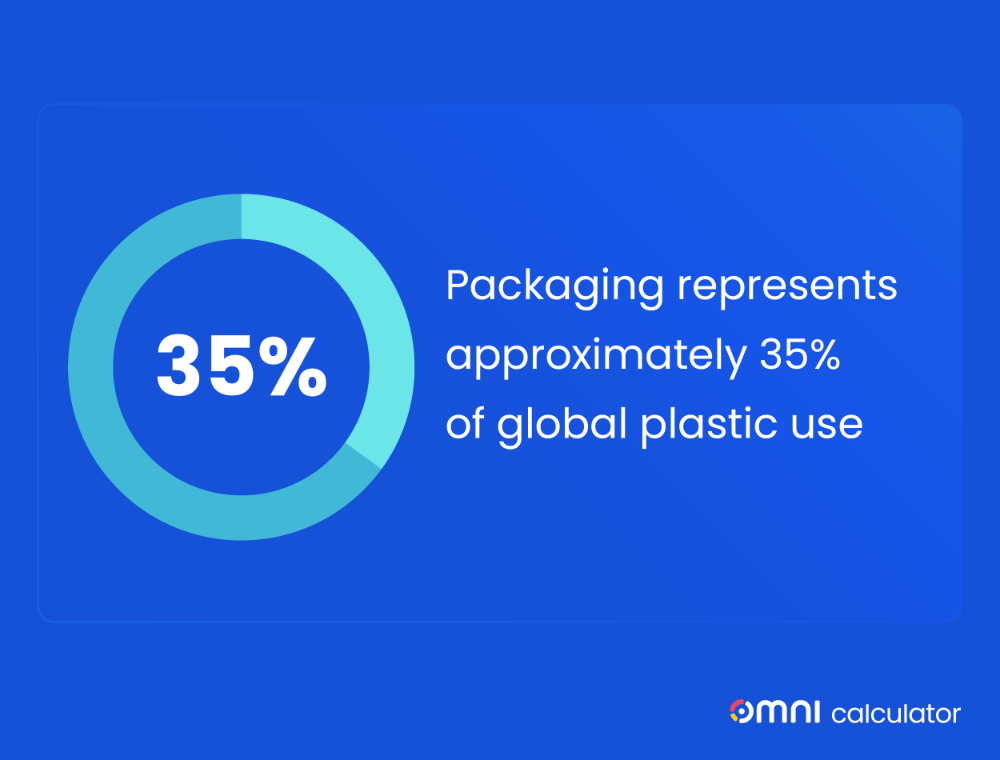
- Packaging is the largest driver of plastic use globally, accounting for approximately 35% of total plastic consumption. ()
- Plastic use in transportation is expected to more than double, rising from over 60M metric tons in 2020 to nearly 115M metric tons by 2040. ()
- About 31% of all plastics are produced for packaging, much of which is single-use, with an average lifespan of around six months. ()
- Global plastic waste is expected to nearly triple by 2060, increasing from about 460M metric tons in 2019 to roughly 1.23B metric tons. ()
- Plastic consumption in the US totals approximately 84.3M metric tons. ()
- Plastic waste in the US is projected to reach nearly 90M metric tons by 2030 and exceed 140M metric tons by 2060. ()
Plastic pollution reaches the ocean through various pathways, including rivers, fishing gear, and everyday litter.
- About 640,000 tonnes of abandoned fishing gear enter the ocean each year, where it continues to kill marine life. ()
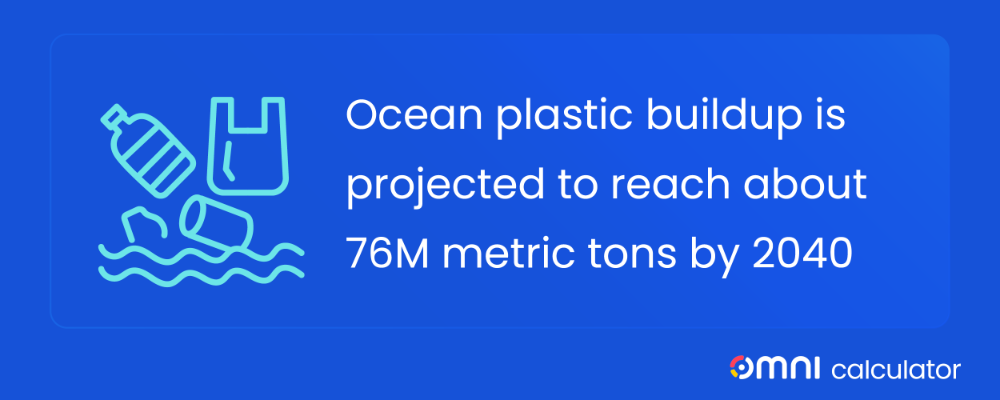
- Under current trends, plastic buildup in the ocean is projected to reach about 76M metric tons by 2040 and rise to roughly 141M metric tons by 2060. ()
- More than 145,000 tonnes of plastic leak into Australia’s environment every year, equal to roughly 550 pounds (about 250 kg) every minute. ()
- By 2020, approximately 152M metric tons of mismanaged plastic waste had accumulated in oceans and rivers, and this total is expected to double to around 300M metric tons by 2040. ()
- Around 20M metric tons of plastic leaked into the environment in 2020, a figure projected to rise by 50% to nearly 29.9M metric tons by 2040 under current policies. ()
- In 2020 alone, about 1.4M metric tons of plastic flowed from rivers into the ocean, a volume expected to more than double to 3.6M metric tons by 2060 without new controls. ()
- Between 1950 and 2020, about 32M metric tons of plastic accumulated in the ocean, equivalent to the weight of over 200,000 blue whales. ()
- Plastic breaks down into microplastics measuring under five millimeters in size, with at least 15T particles, weighing approximately 93,000 tonnes, floating on the ocean surface. ()
- Strong global action across the entire plastics lifecycle could prevent up to 61M metric tons of plastic from being added to ocean pollution by 2060. ()
Plastic waste is traded across countries, with large volumes exported and imported each year. At the same time, the plastics lifecycle contributes to greenhouse gas emissions, economic costs, and widespread human exposure to microplastics through air and drinking water.
- Litter costs American society between $400M and $1T each year. ()

- Global plastic waste exports were valued at about $3.17B in 2023. ()
- In 2024, Germany was the largest exporter of plastic waste worldwide, shipping over 0.73M metric tons, followed by Japan at approximately 0.68M metric tons. ()
- In 2024, Turkey was the top importer of plastic waste, importing roughly 0.68M metric tons, while the Netherlands imported about 0.52M metric tons. ()
- Turkey was the primary destination for EU plastic waste exports in 2024, receiving about 0.43M metric tons. ()
- Canada was the leading destination for US plastic scrap exports in 2024, with about 0.14M metric tons, followed by Mexico at over 0.09M metric tons. ()
- Even with current climate policies, the plastics lifecycle is expected to emit approximately 2.8 gigatonnes of CO₂e per year by 2040, up from 1.8 gigatonnes in 2020, and equivalent to about 5% of global emissions. ()
- Adults may inhale around 68,000 microplastic particles per day from indoor air. ()
- People who drink bottled water daily ingest about 90,000 additional microplastic particles each year. ()