
A Barrier to New Year's Resolutions: 876 Hours on Social Media
Report Highlights
-
876 hours lost a year. Americans spend 2+ hours daily on social media, totaling 36 full days of mindless scrolling per year.
-
While 45% aim for fitness and savings, "lack of time" remains the number one reason 2026 resolutions could fail.
-
Reclaiming scrolling time allows for 41 books read, 25,000+ calories burned, or a new skill mastered.
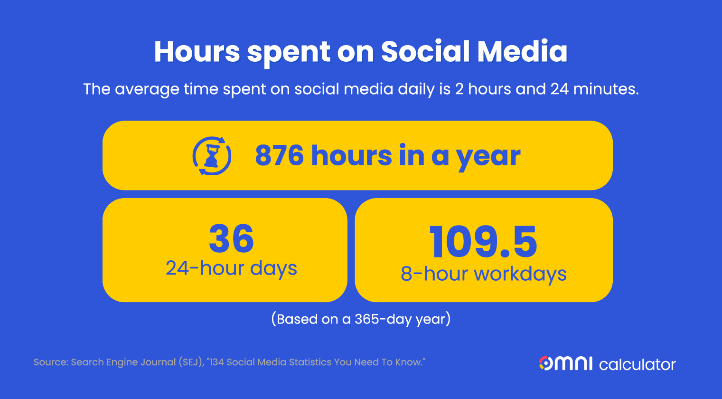
Social media fatigue is real. Across the U.S., people are talking about quitting, taking breaks, or simply reducing their scrolling and screen time. On average, Americans spend 2 hours and 24 minutes per day on social media [1].
According to our Social Media Time Alternatives Calculator, that adds up to 876 hours a year — the equivalent of 36 full 24-hour days, or 109.5 8-hour workdays. That's hundreds of hours you could use intentionally, whether it's for a side hustle, learning a new skill, or simply enjoying life.
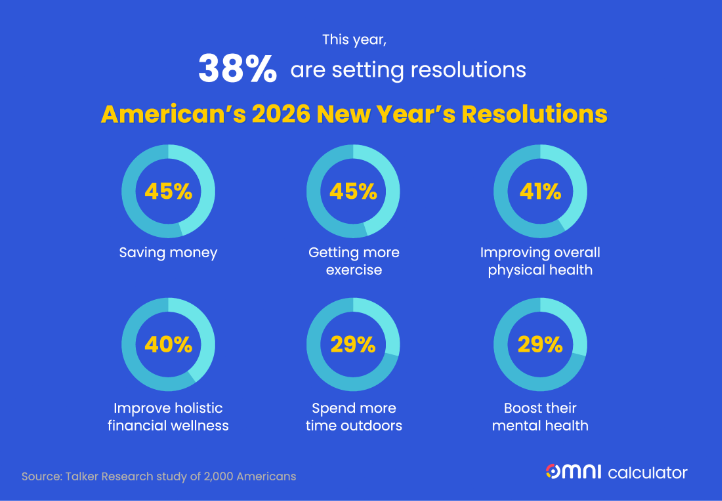
With the new year coming, people are ready for change. A recent survey found that most people walked away from 2025 feeling underwhelmed: only 10% rated the year as "very good," while nearly 70% described it as "just okay" to "awful" [2]. That dissatisfaction is fueling big ambitions for 2026: 38% of Americans, including 57% of Millennials, are entering the new year with resolutions.
Their top goals are clear:
- Saving money (45%);
- Getting more exercise (45%); and
- Improving overall physical health (41%).
But motivation alone doesn't guarantee success. Resolutions often falter under familiar obstacles: not enough money, low energy, and most consistently, not enough time (22% say it's their biggest barrier).
The truth is, there is time. We're just losing it to mindless scrolling.
"Five minutes of scrolling doesn't seem like much… until it quietly becomes two hours a day, all while dreaming of the side business, vacations, or fitness goals you can't ever find the time for." —
That average daily time adds up to a staggering 876 hours per year, directly competing with the very goals people set for themselves. It becomes harder to get healthier, stronger, or wealthier when hundreds of hours of the day are absorbed by mindless scrolling.
💡 Important: The problem isn't using social media itself. It's the mindless act of swiping and scrolling. Time spent on apps without actively choosing them can quietly displace activities that matter most.
Studies increasingly show the net impact can be negative; for example, research on teenagers finds that "using social media more than three times a day predicts poor mental health and well-being." Excessive social media use is even compared to gambling or drinking in terms of its addictive effects [3].
The good news? You can take control, break free from algorithms, dopamine-driven loops, and time distortion, and consciously choose how to spend your hours.
Each year, people blame "willpower," especially Baby Boomers (37%) [2], but the real problem is that goals for New Year's Resolutions are usually abstract. When you convert lost time into real, achievable opportunities, change becomes inevitable.
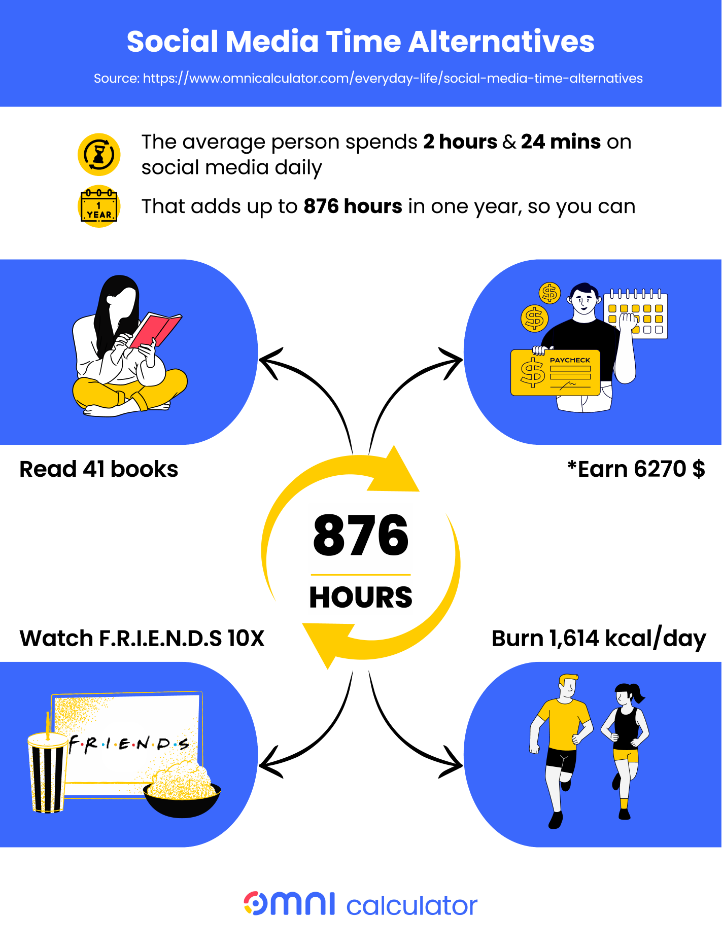
Here's what 876 reclaimed hours could achieve in 2026:
- Boost Your Bank Account: If you used that time for a side hustle, freelance work, or other money-making projects, you could earn extra income over the course of 2026. Even small, consistent efforts, such as tutoring, online freelancing, or selling handmade items, can add up significantly over the course of a year.
- Get Healthier and Transform Your Body: Use the time for regular exercise and burn over 25,000 calories in a year. That could be enough to meet the needs of the 45% focused on fitness and the 41% prioritizing overall health — whether through jogging, home workouts, or weekend sports.
- Become Well-Read: 876 hours is enough to finish 41 books without sacrificing sleep. This is perfect for anyone looking to expand their knowledge, learn new skills, or simply enjoy more leisure reading.
- Master a New Skill: A year of reclaimed hours is enough to become conversational in a new language, or develop another high-value skill.
Small, consistent time blocks make learning achievable even alongside work and family responsibilities.
You can explore exactly how much time you can reclaim and see what it could do for your goals using tools like Social Media Time Alternatives, TikTok Time Alternatives, and New Year's Resolutions Calculator.
Millennials (42%), Gen X (48%), and Baby Boomers (55%) agree: failure is part of the process. While this mindset is healthy, it isn't enough. The biggest external challenges, money, mental health, are complex. However, the internal challenge of a lack of time is solvable.
Timing matters, too. Many resolutions start to falter around Quitter's Day, traditionally falling on the second Friday of January. This is the point at which motivation dips, and ambitious New Year's goals begin to falter.
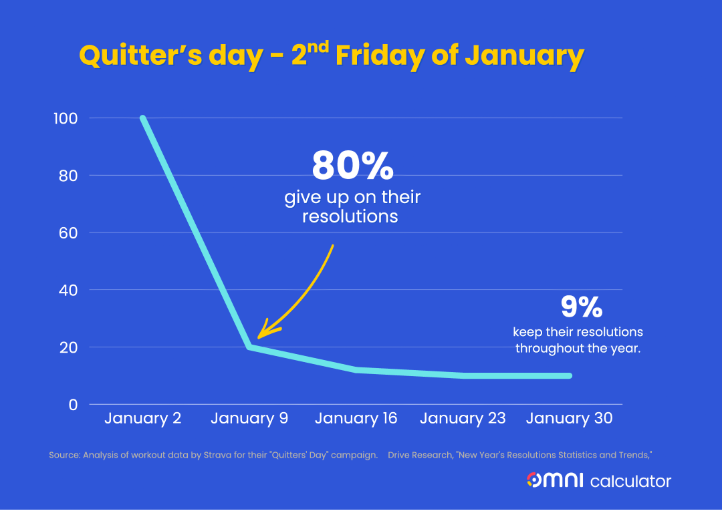
Understanding this pattern can help you plan ahead, set realistic milestones, and create small, consistent habits that keep resolutions alive beyond that critical early slump.
This shift in focus — from sheer willpower to strategic habit-building — is exactly what high-achievers use to manage their personal goals alongside demanding professional lives. As Bogna Szyk, Omni's COO, who balances significant executive responsibilities with being a mother, notes:
"In professional life, you have goals, KPIs, or a boss who keeps you accountable. But in personal life, you don't — and in my opinion, you shouldn't, unless you want to treat life like an endless to-do list. I don't have KPIs for spending quality time with my kid. Instead, I focus on reducing friction between myself and that goal.
I sometimes lack ideas for what to do on workday evenings. So I make a list of 10 things to try that get me excited about our evening together. It's all about building a system that makes it effortless."
By being intentional with your time and recognizing common pitfalls, such as Quitter's Day, you can make your resolutions stick, turning early-year intentions into long-term achievements.