
Table of contents
1 in 3 Workers Report a Ghost Downsizing As AI Shrinks Their Teams — But Most Bosses Disagree
Report Highlights
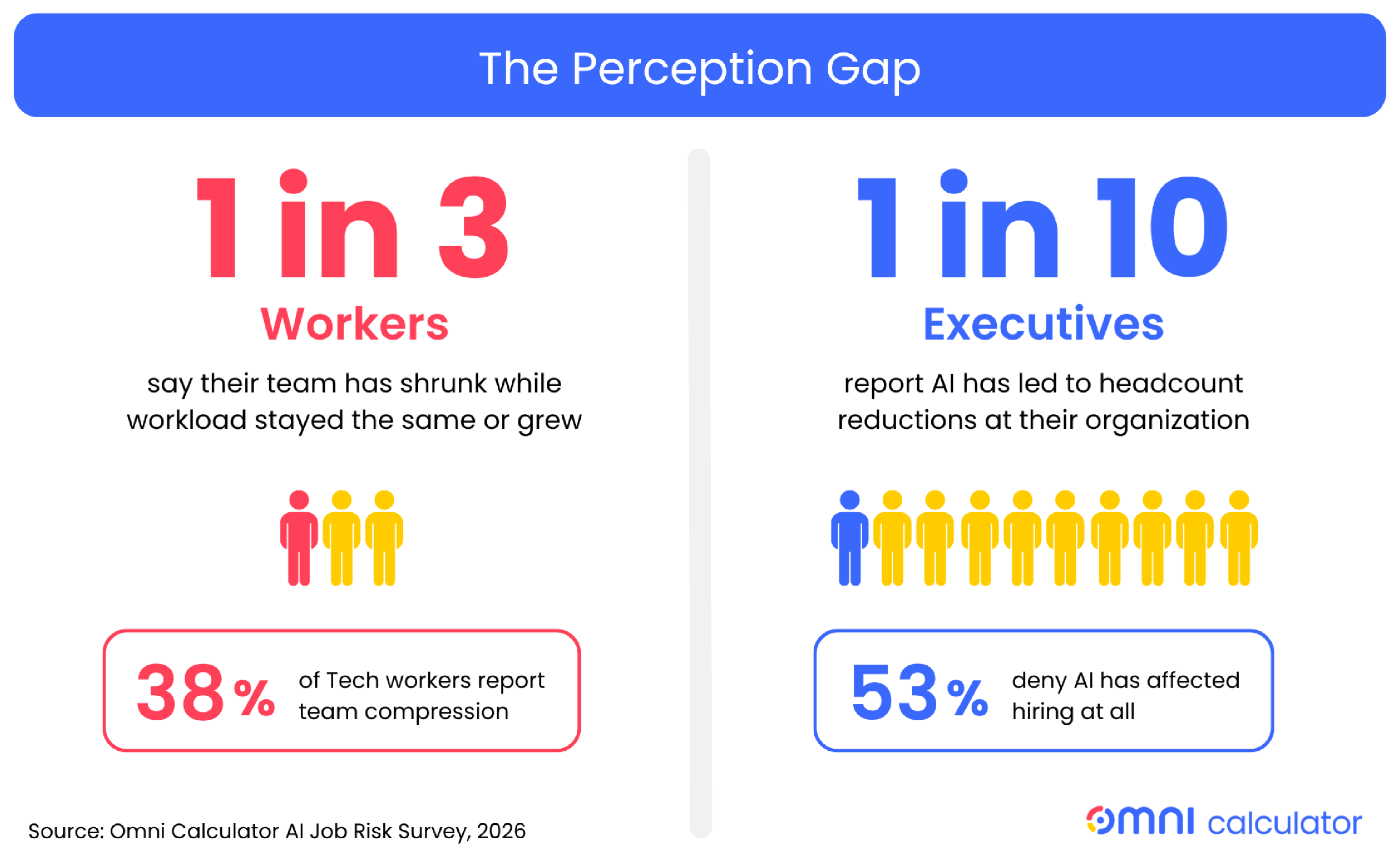
- 1 in 3 American workers say their team has shrunk while their workload stayed the same or grew, yet only 1 in 10 executives report the same
- In Tech, 38% of workers report team compression, yet Tech executives lead every sector in active headcount reductions (17%) and hiring freezes (11%)
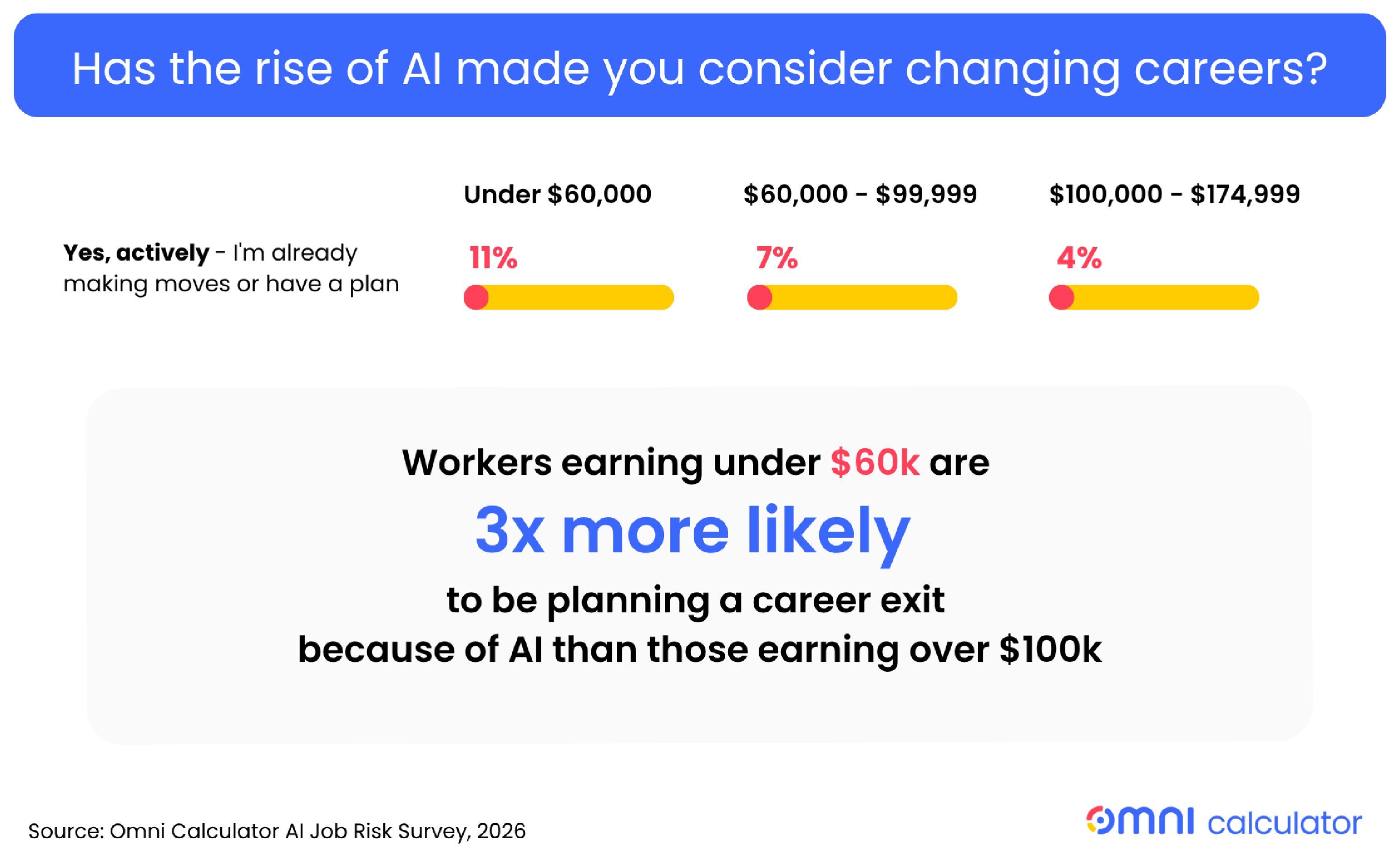
- Workers earning under $60k are 3x more likely to be planning a career exit because of AI than those earning over $100k.
- High earners report 0% resentment toward AI at work. Low earners report 9%.
- Remote workers are 4x more likely to fear skill obsolescence than fully on-site staff.
- Hybrid workers report the highest AI empowerment of any work arrangement: 62%, versus 41% of fully remote workers.
- Only 23% of organizations have a formal AI preparation program with a dedicated budget
- 53% of workers feel empowered using AI. Only 9% of their bosses feel excited about its pace.
Ask an American worker how AI is changing their job, and ask the CEOs the same question. The answers do not describe the same organization.
From one account, teams are getting smaller, workloads are rising, and the ground beneath people’s careers is shifting in ways that feel impossible to name or confront. From the other, hiring decisions are proceeding normally, disruption is a future concern rather than a present one, and the transition is largely under control.
This report draws on two parallel surveys conducted with mirrored methodologies: one of 665 employed US adults and one of 354 C-suite executives and directors. That design allows the gap between workers and leaders to be measured directly rather than approximated. Use our AI Job Risk Calculator to understand where your own role sits across the dimensions this report examines.
AI is not landing equally across the income spectrum. This survey measures that gap as a reflection of how technology is being experienced right now by people at different income levels within the same labor market.
For workers earning between $100,000 and $175,000, AI functions as an administrative partner. 67% describe their AI exposure as augmentation: the technology makes them faster and better at work, but they are still directing. 60% feel empowered when using AI. 0% report resentment. This cohort has the lowest rate of non-use and the highest rate of productivity excitement at 44%, and not a single respondent in this income band believes more than half their tasks will be automated within five years.
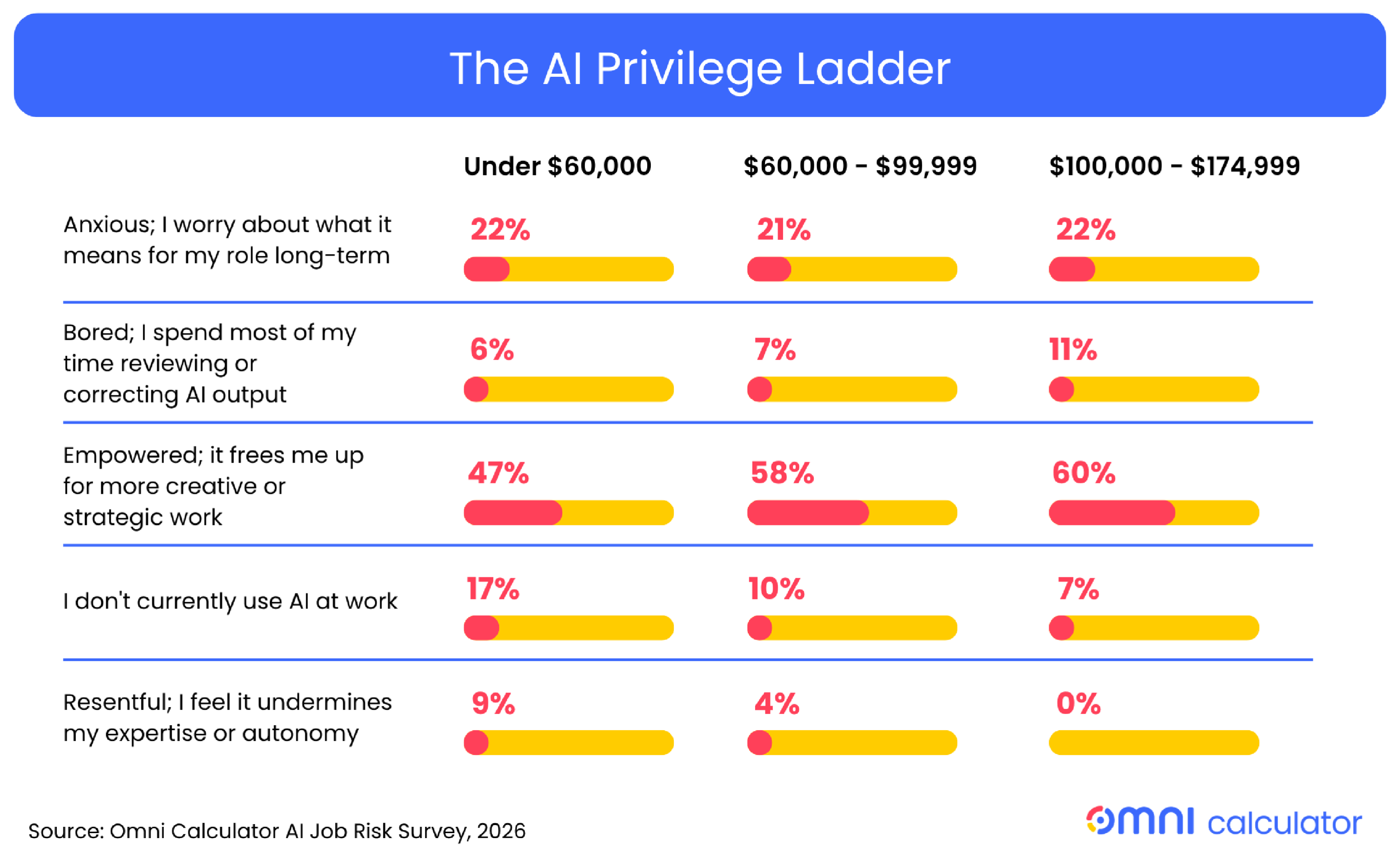
For workers earning under $60,000, the same technology reads as a threat. Only 47% feel empowered, a 13-point gap from high earners. 9% report active resentment, describing AI as undermining their expertise or autonomy. 26% expect AI to automate more than half of their daily tasks within five years.
This aligns with Goldman Sachs Research findings published in April 2026, which found that the negative effects of AI on job creation are falling largely on younger, less experienced workers, the same cohort most represented in lower-income brackets [2].
💡 Workers earning under $60k are nearly 3x more likely to be actively planning a career change because of AI: 11% versus 4% of high earners.
Education follows the same gradient. Workers with a Master’s degree or higher report 42% being excited about higher productivity and 13% skepticism about AI’s benefits. High school graduates report 26% productivity excitement, and 21% who see no benefit at all. Income and education together define an AI experience that is, at the extremes, barely recognizable as the same phenomenon.
If AI adoption continues to concentrate its benefits at the upper end of the income distribution while concentrating anxiety and displacement risk at the lower end, the workforce impact of this technology will compound existing inequality rather than distribute opportunity across it. The behavioral data already reflects this: lower-income workers are not simply more worried; they are already moving and changing careers at nearly three times the rate of their higher-earning counterparts.
The most statistically significant finding in this study is the relationship between where a worker physically performs their job and how exposed they feel to AI displacement.
Fully on-site workers are the most psychologically secure group in the survey. 40% strongly disagree that their skills will be obsolete within three years. Only 3% are in what the data classifies as acute panic, strongly agreeing that obsolescence is imminent. They report the lowest anxiety when using AI at 17% and the lowest resentment at 4%. For on-site workers, physical presence functions as a cognitive shield.
Remote workers are experiencing a completely different reality. 36% fear their skills will become obsolete within three years. 13% are in acute panic, more than four times the on-site rate. They report the highest anxiety when using AI at 28%, the lowest empowerment of any work arrangement at 41%, and the highest job loss fear at 73%. (p = 0.000000000385, the highest statistical significance finding in the study.)
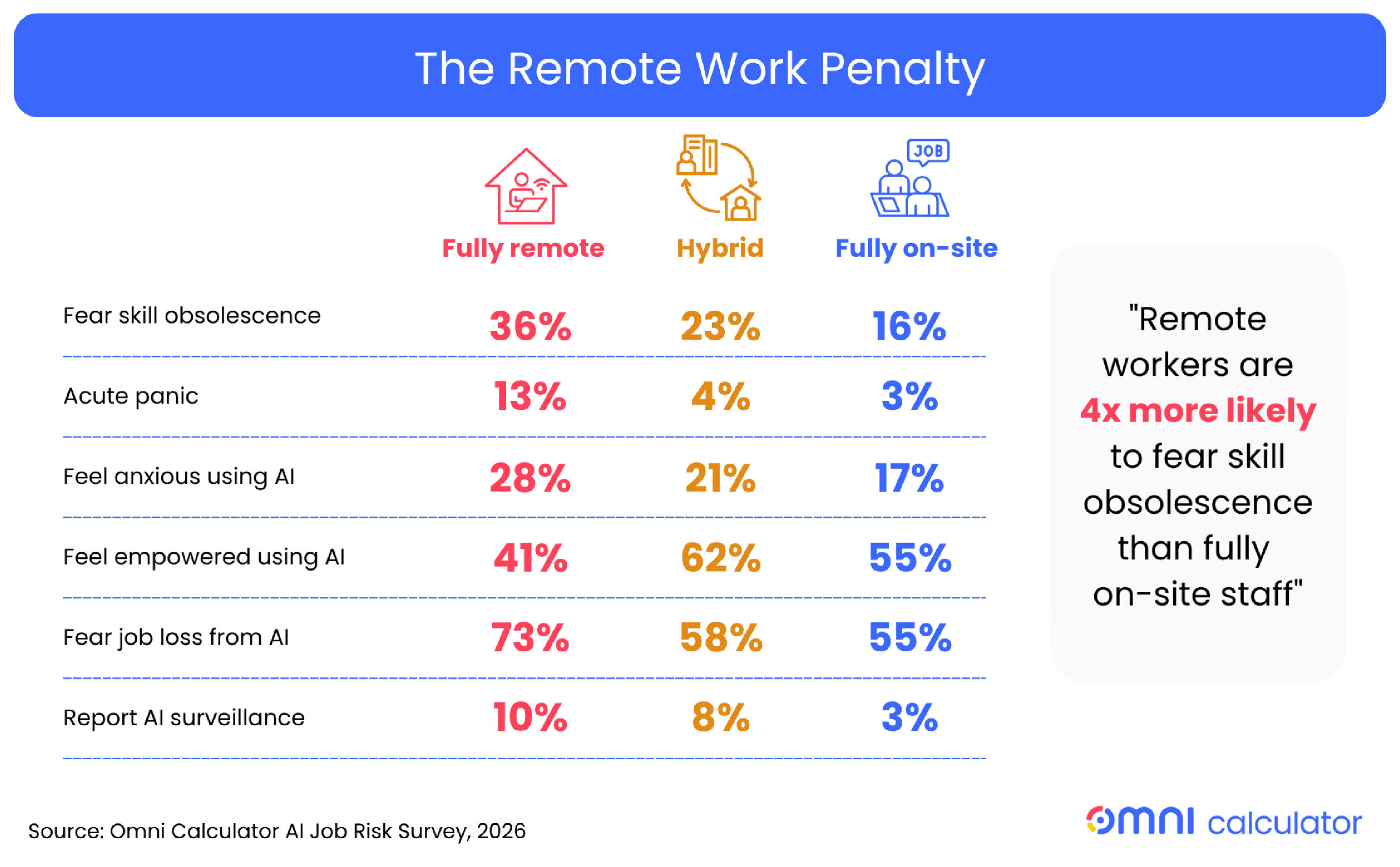
Remote workers report AI surveillance at 10%, more than three times the on-site rate of 3%. Their outputs are more visible, more measurable, and easier to compare with AI-generated alternatives than those of workers whose value is partly expressed through physical presence. They are not imagining the exposure. They are working inside it.
Hybrid workers represent the clearest outlier in the dataset. At 62% empowerment, they are the most positive group about AI of any work arrangement, higher than both fully remote and fully on-site workers. They report the lowest acute panic at 4% and a job-loss fear rate of 58%, which is closer to on-site workers than to remote ones. Whether the hybrid arrangement represents a durable equilibrium in the AI era or a transitional advantage is a question this data cannot answer. What it can confirm is that the gap between hybrid and remote outcomes is large, consistent, and statistically robust.
Workers and their leaders converge on one question with near-identical results: what actually protects a worker from AI displacement.
Both groups place physical or hands-on work first: 58% of workers and 58% of executives. Both place strong interpersonal and communication skills second: 55% of workers and 51% of executives. The consensus holds across sectors, seniority levels, and company sizes. It is the most stable finding in both surveys, and it runs counter to the prevailing public advice on AI-proofing a career, which tends to emphasize technical upskilling and digital fluency above all else.
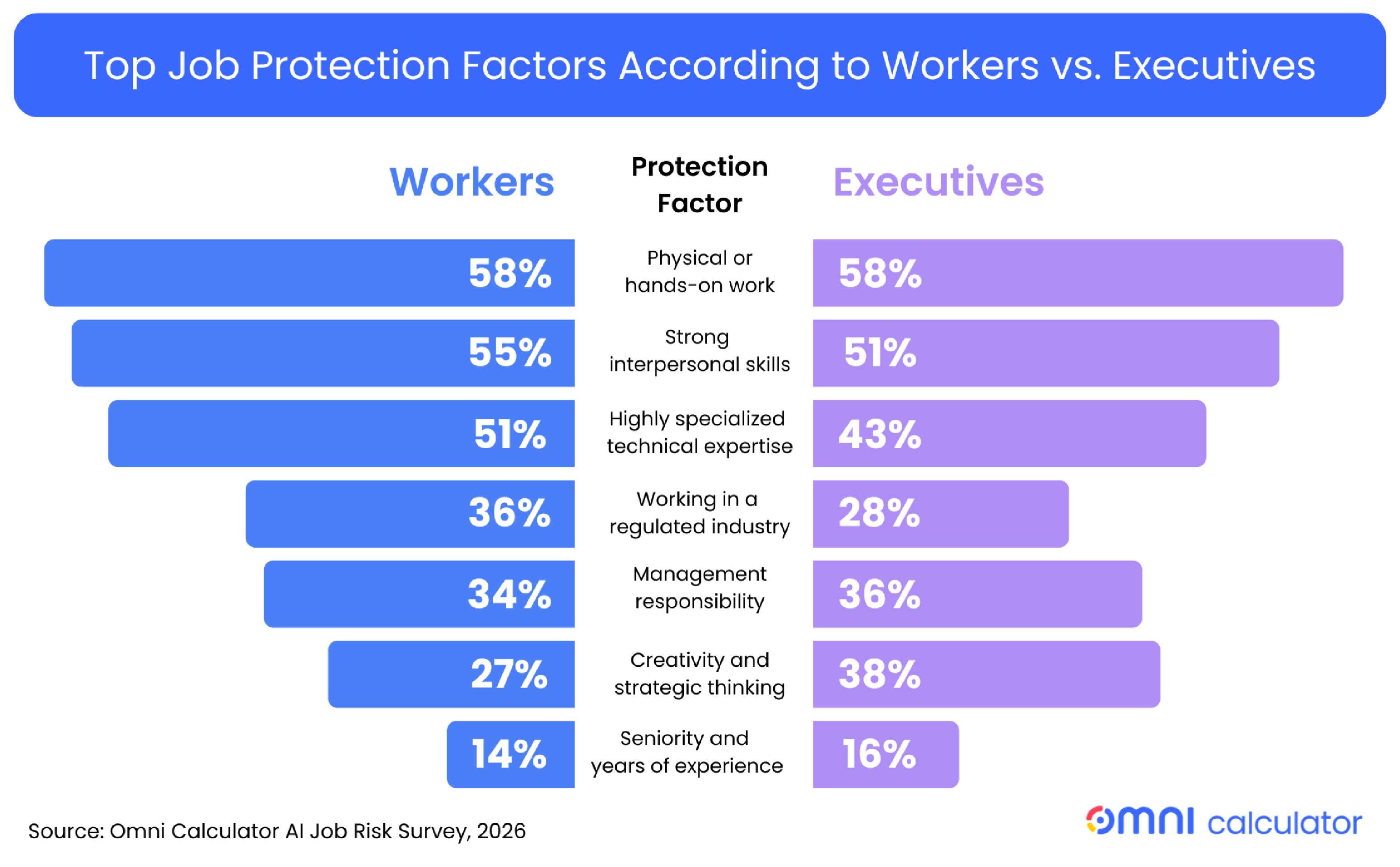
The divergence appears further down the list. Executives rank creativity and strategic thinking fourth at 38%, well above the 27% of workers who share that view. Leaders place a significantly higher premium on creative and strategic capacity than the employees who are supposed to be deploying it. That gap may reflect how executives understand value creation differently from how workers experience their daily tasks.
Both groups dismiss seniority. Workers rank it last at 14%; executives rank it last at 16%. In a labor market where institutional knowledge has historically been the most reliable career moat, its near-unanimous dismissal as a protective factor is a finding that deserves to sit without elaboration.
💡 53% of workers feel empowered when using AI at work. Only 9% of their bosses feel excited about its pace.
Every one of these findings leads back to the same individual question: what does this mean for me?
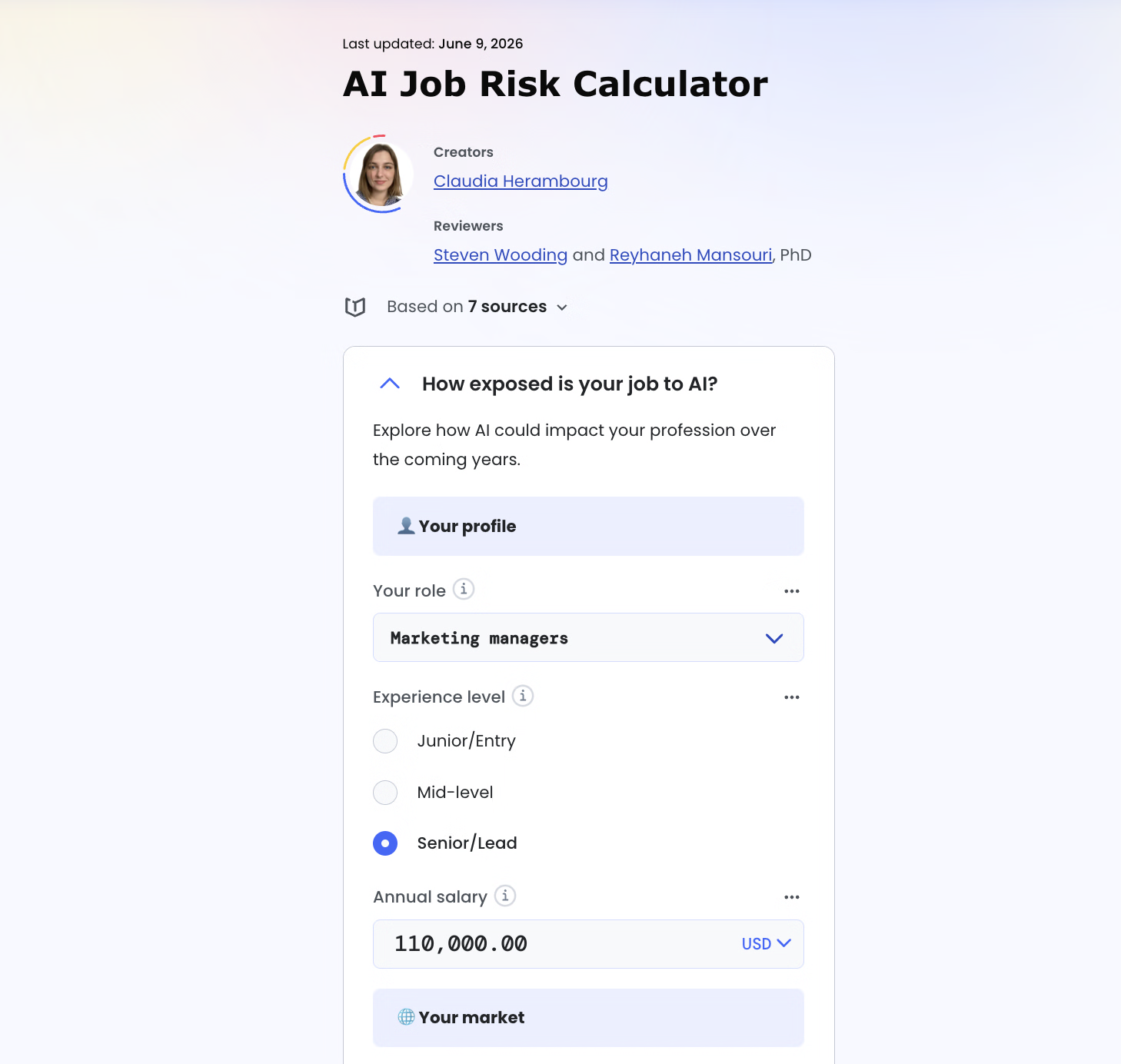
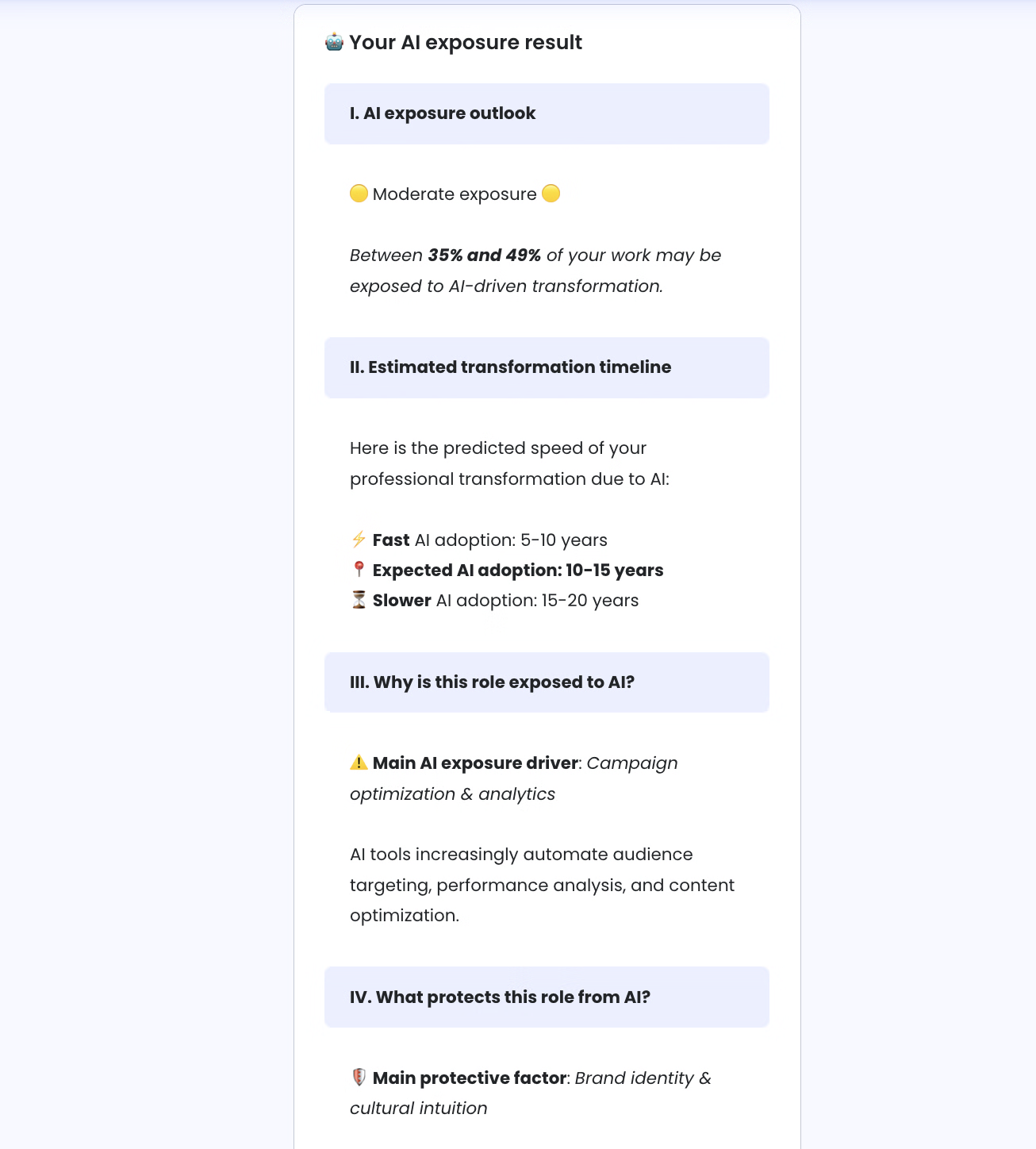
Our AI Job Risk Calculator answers that question at the task level. Rather than categorizing entire professions as safe or at risk, it analyzes the specific skills, activities, and work context of your occupation, along with your seniority, salary, location, and work mode. The result gives you a map of where you stand.