
Table of contents
Tip Survey: 4 in 10 Americans Shun Some Businesses over Tip Prompts
Report Highlights
- More than three in five Americans (62%) say they're asked to tip in more situations today than two years ago.
- Four in 10 Americans (40%) go as far as avoiding certain businesses to dodge tip prompts.
- Some 38% hold a negative overall view of tipping in 2026, compared with 31% who hold a positive view.
- Half (50%) view pre-entered tip options negatively on payment screens.
- About two in three (66%) feel pressure to tip when a digital payment screen is visible to an employee.
- Sit-down restaurants are the most consistent tipping setting, with 93% always or often leaving a tip.
- Service quality drives tip size more than anything else, cited by 66% of respondents.
Tipping is showing up in more places than ever.
This survey of 500 US adults looks at how often Americans are asked to tip, how much they spend, how attitudes vary by gender and generation, and how tip culture shapes spending decisions.
Tipping requests are a routine part of daily spending for most Americans.
The most common frequency is 3-5 times per month, reported by 30% of respondents, followed by 6-10 times per month at 23% and 1-2 times per month at 18%.
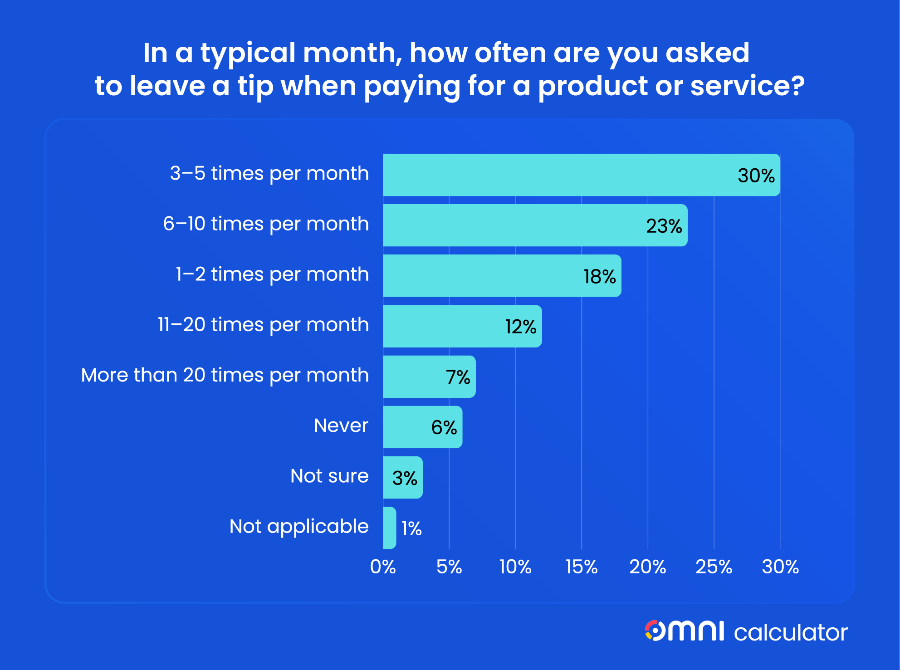
Some 12% are asked 11-20 times per month, and 7% more than 20 times.
Just 6% say they are never asked to tip.
Most US adults have noticed an increase.
Some 62% say they’re asked to tip in more situations today than two years ago, while 32% say frequency has stayed about the same.
Compared to 2 years ago, do you feel you are asked to tip in more situations today? | Overall (2026) |
|---|---|
Yes, in more situations | 62% |
About the same | 32% |
In fewer situations | 3% |
Not sure | 2% |
Not applicable | 1% |
Just 3% report being asked less often.
Monthly tip spending is concentrated in the lower range.
The most common bracket is $10-$24, reported by 28% of respondents, followed by $25-$49 at 26%. Together, these two ranges cover more than half of all respondents.
Thinking about a typical month, approximately how much money do you personally spend on tips in total?
Overall (2026) | Male | Female | Gen Z | Millennials | Gen X | Baby boomers | |
|---|---|---|---|---|---|---|---|
$10-$24 | 28% | 26% | 31% | 29% | 27% | 24% | 35% |
$25-$49 | 26% | 23% | 28% | 25% | 26% | 26% | 26% |
$1-$9 | 13% | 13% | 14% | 16% | 12% | 16% | 9% |
$50-$74 | 11% | 10% | 12% | 13% | 8% | 12% | 12% |
$100-$149 | 8% | 9% | 7% | 2% | 10% | 8% | 9% |
$75-$99 | 5% | 6% | 3% | 6% | 5% | 5% | 3% |
$0 | 3% | 4% | 2% | 2% | 6% | 3% | 3% |
Not sure | 3% | 5% | 1% | 6% | 2% | 3% | 1% |
$150-$299 | 2% | 5% | — | — | 3% | 4% | 2% |
$300 or more | 1% | 0% | 2% | 1% | 1% | 1% | 1% |
Smaller shares report $1-$9 (13%), $50-$74 (11%), $75-$99 (5%), or $100-$149 (8%). Some 2% spend $150-$299, 1% spend $300 or more, and 3% spend nothing on tips.
Women skew toward the $10-$24 range (31% vs. 26% of men) and $25-$49 (28% vs. 23%).
Baby boomers most often fall in the $10-$24 range (35%). Gen Z and Gen X both lead the $1-$9 bracket at 16%. Millennials have the highest share of non-tippers (6%) and the highest representation in the $100–149 bracket (10%).
Most tipping habits have stayed consistent.
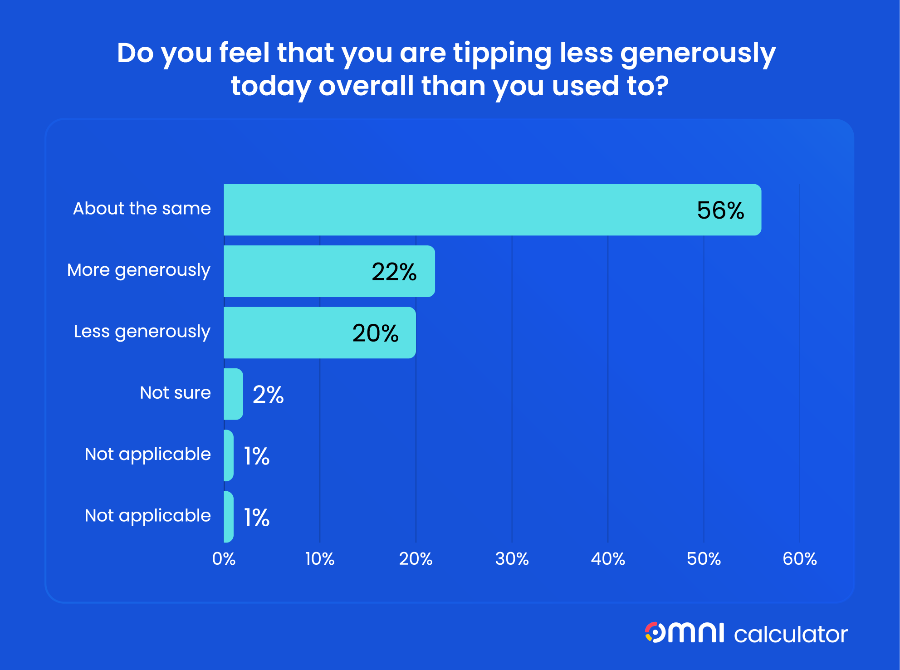
Some 56% say they tip about the same as they used to, 22% say they now tip more generously, and 20% say they tip less.
Overall, 31% of respondents are neutral toward tipping, 25% are somewhat negative, 21% are somewhat positive, 13% are very negative, and 10% are very positive.
Combined negative sentiment (38%) outpaces positive (31%).
Which of the following best describes your overall attitude toward tipping in 2026?
Overall | Male | Female | Gen Z | Millennials | Gen X | Baby boomers | |
|---|---|---|---|---|---|---|---|
Neutral | 31% | 33% | 30% | 34% | 33% | 31% | 27% |
Somewhat negative | 25% | 28% | 23% | 27% | 22% | 25% | 27% |
Somewhat positive | 21% | 19% | 23% | 18% | 22% | 20% | 22% |
Very negative | 13% | 14% | 11% | 13% | 19% | 11% | 9% |
Very positive | 10% | 7% | 13% | 9% | 5% | 12% | 15% |
Men are more likely to be somewhat negative (28% vs. 23% of women), while women are more likely to be very positive (13% vs. 7% of men). Neutrality is similar across genders at 33% for men and 30% for women.
Millennials report the highest rate of very negative attitudes at 19%, compared with 9% of baby boomers. Baby boomers are the most likely to be very positive at 15%. Gen Z and millennials show the highest neutrality at 34% and 33%, respectively.
Respondents were also invited to share in their own words what makes them feel negative about tipping.
The most common theme was being asked to tip in settings where it was not previously expected: fast-food counters, retail stores, and carryout orders. Many felt that businesses are shifting the cost of wages to customers rather than building it into pricing.
The loss of voluntary choice was widely noted, with specific frustration around digital screens that default to high suggested percentages and the discomfort of being watched while deciding. Rising prices, combined with higher expected tip percentages, added to this for many respondents.
Pre-entered tip options draw more negative reactions than positive ones.
Some 30% view them somewhat negatively and 20% very negatively, for a combined 50%. Another 18% are somewhat positive, 7% very positive, and 24% neutral.
How do you generally feel about pre-entered tip options on payment screens?
Overall (2026) | Male | Female | Gen Z | Millennials | Gen X | Baby boomers | |
|---|---|---|---|---|---|---|---|
Somewhat negative | 30% | 28% | 33% | 31% | 28% | 37% | 25% |
Neutral | 24% | 25% | 22% | 26% | 24% | 20% | 27% |
Very negative | 20% | 23% | 18% | 15% | 22% | 19% | 25% |
Somewhat positive | 18% | 18% | 18% | 15% | 20% | 20% | 15% |
Very positive | 7% | 6% | 9% | 13% | 7% | 5% | 6% |
Women report somewhat higher negative sentiment (33% vs. 28% of men), while men lead in very negative sentiment (23% vs. 18%). Positive sentiment totals 24% for men and 27% for women.
Gen X reports the highest somewhat negative rate at 37%. Baby boomers lead in very negative at 25%, tied with somewhat negative, making them the most uniformly negative generation on this question. Millennials are most likely to feel somewhat positive (20%), and Gen Z shows the highest very positive sentiment at 13%, nearly double the overall 7%.
Sit-down restaurants are the most consistent tipping setting, with 93% of respondents always or often leaving a tip. Food delivery follows at 77%, and personal care services (hair salons, barbers, nail salons, and spas) at 66%.
Tipping drops below the majority threshold for ride-hailing services or taxis (52%), bars or nightclubs (46%), hotel staff such as housekeeping or bellhops (38%), and coffee shops (36%).
In which of the following situations do you always or often leave a tip? | Overall (2026) |
|---|---|
Sit-down restaurants | 93% |
Food delivery | 77% |
Hair salons, barbers, nail salons, or spas | 66% |
Ride-hailing services or taxis | 52% |
Bars or nightclubs | 46% |
Hotel staff (e.g., bellhop, porter, housekeeping) | 38% |
Coffee shops | 36% |
None of these | 1% |
At sit-down restaurants, 45% typically tip 20%–22%, with 15%-17% (15%) and 10%-14% (13%) as the next most common ranges.
When you dine at a sit-down restaurant and leave a tip, how much do you typically tip? | Overall (2026) |
|---|---|
20%-22% | 45% |
15%-17% | 15% |
10%-14% | 13% |
18%-19% | 9% |
5%-9% | 9% |
23-%25% | 4% |
More than 25% | 2% |
Less than 5% | 1% |
Not applicable | 0% |
I don’t usually tip here | 0% |
At personal care services, 20%–22% leads at 29%, followed by 10%-14% (14%) and 15%-17% (12%).
When you receive services at a hair salon, barber, nail salon, or spa and leave a tip, how much do you typically tip? | Overall (2026) |
|---|---|
20%-22% | 29% |
10%-14% | 14% |
Not applicable | 13% |
15%-17% | 12% |
5%-9% | 8% |
I don’t usually tip here | 7% |
18%-19% | 5% |
23%-25% | 5% |
More than 25% | 4% |
Less than 5% | 3% |
For food delivery, 10%-14% is the most common at 23%, followed by 15%-17% (20%) and 20%-22% (19%).
When you order food for delivery and leave a tip, how much do you typically tip? | Overall (2026) |
|---|---|
10%-14% | 23% |
15%-17% | 20% |
20%-22% | 19% |
5%-9% | 13% |
Not applicable | 8% |
18%-19% | 6% |
Less than 5% | 4% |
23%-25% | 3% |
I don’t usually tip here | 2% |
More than 25% | 1% |
For ride-hailing services and taxis, among those who tip, 10%-14% leads at 18%, followed by 15%-17% (17%) and 20%-22% (15%). Some 9% don’t usually tip for these services.
When you use ride-hailing services or taxis and leave a tip, how much do you typically tip? | Overall (2026) |
|---|---|
Not applicable | 19% |
10%-14% | 18% |
15%-17% | 17% |
20%-22% | 15% |
5%-9% | 11% |
I don’t usually tip here | 9% |
18%-19% | 5% |
Less than 5% | 4% |
23%-25% | 2% |
More than 25% | 1% |
At bars and nightclubs, among those who tip, 20%-22% leads at 18%, followed by 10%-14% (16%) and 15%-17% (12%). Some 6% don’t usually tip at bars or nightclubs.
When you are at a bar or nightclub and leave a tip, how much do you typically tip? | Overall (2026) |
|---|---|
Not applicable | 27% |
20%-22% | 18% |
10%-14% | 16% |
15%-17% | 12% |
5%-9% | 8% |
I don’t usually tip here | 6% |
18%-19% | 5% |
Less than 5% | 4% |
More than 25% | 2% |
23%-25% | 1% |
Hotel staff see the highest non-tipping rate among all measured settings. Some 25% don’t usually tip hotel staff. Among those who do tip, 10%-14% is the most common at 16%, followed by 5%-9% (10%) and 15%-17% (9%).
When you tip hotel staff (such as a bellhop, porter, or housekeeping), how much do you typically tip? | Overall (2026) |
|---|---|
I don’t usually tip here | 25% |
Not applicable | 18% |
10%-14% | 16% |
5%-9% | 10% |
15%-17% | 9% |
Less than 5% | 8% |
20%-22% | 8% |
18%-19% | 3% |
More than 25% | 1% |
23%-25% | 1% |
Coffee shops have the highest active non-tipping rate among all settings.
Some 28% don’t usually tip, and among those who do tip, 10%-14% leads at 18%, followed by 15%-17% (11%) and 5%-9% (10%).
When you order at a coffee shop and leave a tip, how much do you typically tip? | Overall (2026) |
|---|---|
I don’t usually tip here | 28% |
10%-14% | 18% |
Not applicable | 11% |
15%-17% | 11% |
5%-9% | 10% |
20%-22% | 9% |
Less than 5% | 9% |
18%-19% | 2% |
23%-25% | 1% |
More than 25% | 1% |
Next, we asked respondents whether they steer clear of certain businesses to avoid being prompted to tip, and 4 in 10 Americans reported some level of avoidance.
Some 19% sometimes avoid businesses due to tip prompts, 14% do so occasionally, and 7% do so very often.
Do you avoid certain businesses specifically to avoid being prompted to tip? | Overall (2026) |
|---|---|
Never | 36% |
Rarely | 23% |
Sometimes | 19% |
Occasionally | 14% |
Very often | 7% |
Not applicable | 1% |
By contrast, 36% never avoid businesses for this reason, and 23% rarely do.
When asked what factors most influence how much Americans tip, quality of service came out on top at 66%, well ahead of the size of the bill (35%) and a personal rule or habit about tipping (31%).
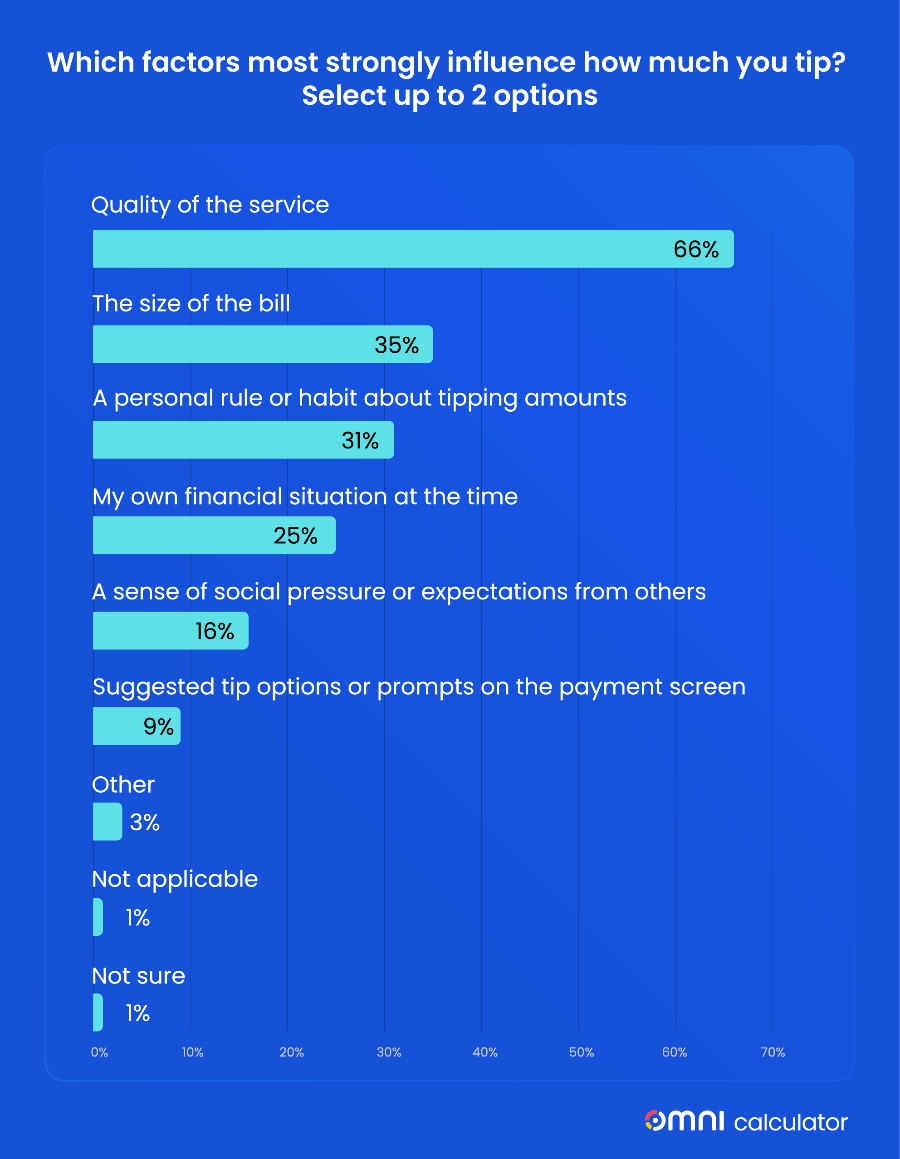
Financial situation at the time of purchase is cited by 25%, social pressure or expectations from others by 16%, and suggested tip prompts on a payment screen by 9%.
When service is poor, 54% of respondents tip less than usual.
When service quality is poor, which best describes what you usually do? | Overall (2026) | Male | Female | Gen Z | Millennials | Gen X | Baby boomers |
|---|---|---|---|---|---|---|---|
Tip less than usual | 54% | 49% | 59% | 55% | 49% | 56% | 57% |
Tip about the same as usual | 16% | 15% | 16% | 13% | 19% | 14% | 16% |
Usually don’t tip | 15% | 19% | 12% | 16% | 20% | 14% | 9% |
Leave a minimal or token tip | 14% | 17% | 11% | 13% | 12% | 14% | 15% |
Not sure | 1% | — | 2% | 1% | 1% | — | 2% |
Not applicable | 0% | 0% | 0% | 1% | — | 1% | — |
Smaller shares tip about the same (16%), don’t tip at all (15%), or leave a minimal or token amount (14%).
Women are more likely to reduce their tip (59% vs. 49% of men). Men are more likely to skip tipping entirely (19% vs. 12%) or leave a token amount (17% vs. 11%).
Baby boomers and Gen X are most likely to tip less than usual, at 57% and 56%, respectively. Millennials are the most likely to tip the same regardless of service quality (19%) and the most likely to withhold a tip entirely (20%).
Among Gen Z, 55% tip less than usual.
Finally, we asked about the ever-present tipping screen.
Most survey participants say they feel pressured to leave a tip when a digital payment terminal showing suggested amounts is facing the employee.
Some 39% somewhat agree, and 27% strongly agree, for a combined 66%.
"When a digital payment screen suggests tip amounts, I feel pressure to leave a tip, especially if an employee can see the screen." | Overall (2026) |
|---|---|
Somewhat agree | 39% |
Strongly agree | 27% |
Strongly disagree | 14% |
Somewhat disagree | 11% |
Neither agree nor disagree | 8% |
By contrast, 14% strongly disagree, and 11% somewhat disagree, for a combined 25%.
The survey was conducted between February 2 and 4, 2026, using the Prolific online research platform. The sample included 500 US adults, with the distribution aligned with US Census data to reflect the broader population. Among participants, 48.2% identified as male, 50.2% as female, and 1.6% as other or preferred not to say. Age distribution was as follows: Gen Z (ages 18-29): 21%; millennials (ages 30-45): 27.6%; Gen X (ages 46-61): 29.4%; baby boomers (ages 62+): 22%; less than 1% preferred not to say. The survey was designed with a 95% confidence level and a 4% margin of error, and it included an attention-check question. In some cases, percentages may not add up to 100% due to rounding. All results rely on participants’ self-reported answers and may reflect recall errors.
Omni Calculator helps over 15 million monthly users solve calculation problems through 3,800+ expert-reviewed tools.
The content in this article is for noncommercial use only. When sharing, please include a link back to Omni Calculator as the original source.
Need to run some quick numbers? Check out the calculators below for help with savings, rent, and math.