
Table of contents
How Many People Own Cryptocurrency? (2026 Study)
Report Highlights
- 42% of US adults own cryptocurrency in 2026.
- Men are more likely than women to own cryptocurrency: 53% vs. 33%.
- Gen X reports the highest ownership rate at 42%, narrowly ahead of Gen Z (41%), followed by baby boomers (37%) and millennials (36%).
- Bitcoin (BTC) is the most commonly held asset, owned by 23% of cryptocurrency users.
- Most cryptocurrency portfolios fall below $5,000, with $100-$999 (28%) and $1,000-$4,999 (25%) as the most common ranges.
- Losing money due to price volatility is the top cryptocurrency concern, cited by 26%.
- Looking 5-10 years ahead, 42% of survey participants are optimistic about the future of cryptocurrency.
Cryptocurrency has grown quickly in size and visibility.
There are now over 18,000 cryptocurrencies globally (with some level of activity or relevance), and the market was valued at $6.34B in 2025, with projections reaching $18.26B by 2033.
With this in mind, we’ve surveyed US adults to understand how cryptocurrency adoption plays out at the individual level in 2026. The study examines the number of people who own cryptocurrency, portfolio sizes, motivations, perceived risks, and plans.
At Omni, we found that 42% of US adults currently own cryptocurrency, and another 13% are former owners, bringing the total lifetime exposure to 55%.
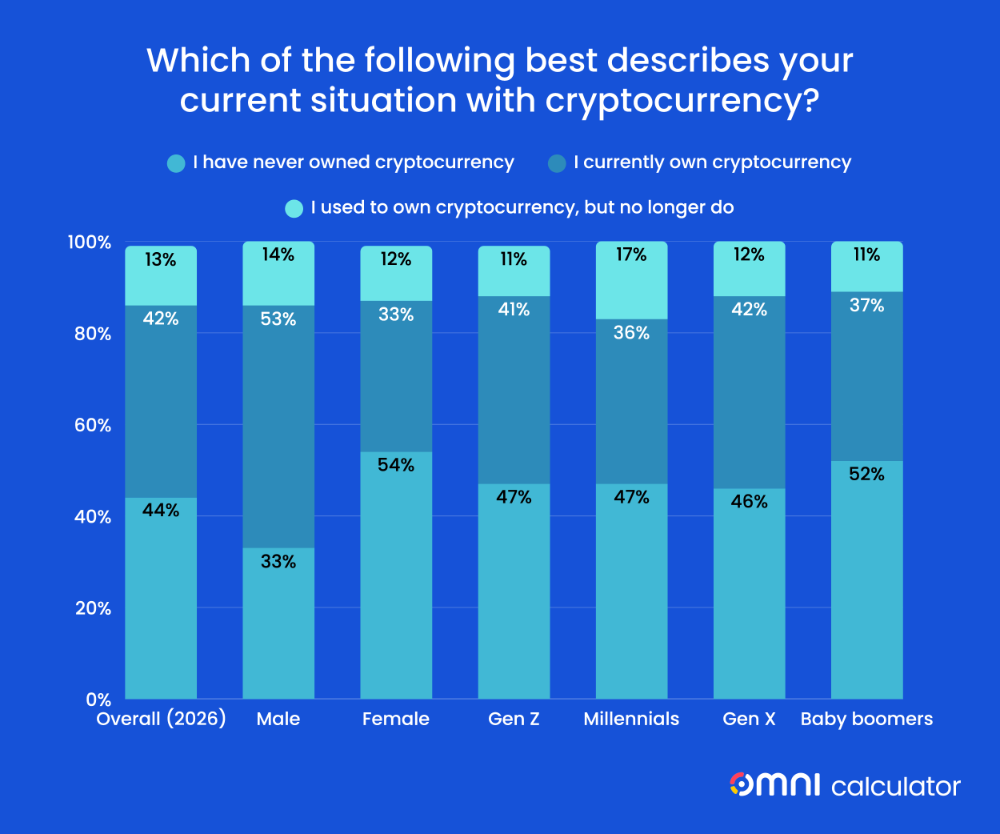
Ownership varies by gender: 53% of men report current ownership, compared with 33% of women. Across age groups, ownership levels are similar, as Gen X (42%) and Gen Z (41%) report nearly identical rates, followed by baby boomers at 37% and millennials at 36%.
Looking at what Americans own, Bitcoin (BTC) is the most commonly held asset at 23%.
Which of the following cryptocurrencies do you currently own? | Overall (2026) |
|---|---|
Bitcoin (BTC) | 23% |
Ethereum (ETH) | 14% |
Dogecoin (DOGE) | 7% |
USD Coin (USDC) | 6% |
Solana (SOL) | 5% |
XRP (XRP) | 5% |
Portfolio breadth is generally limited, with 35% of owners holding just one cryptocurrency, making single-asset portfolios the most common.
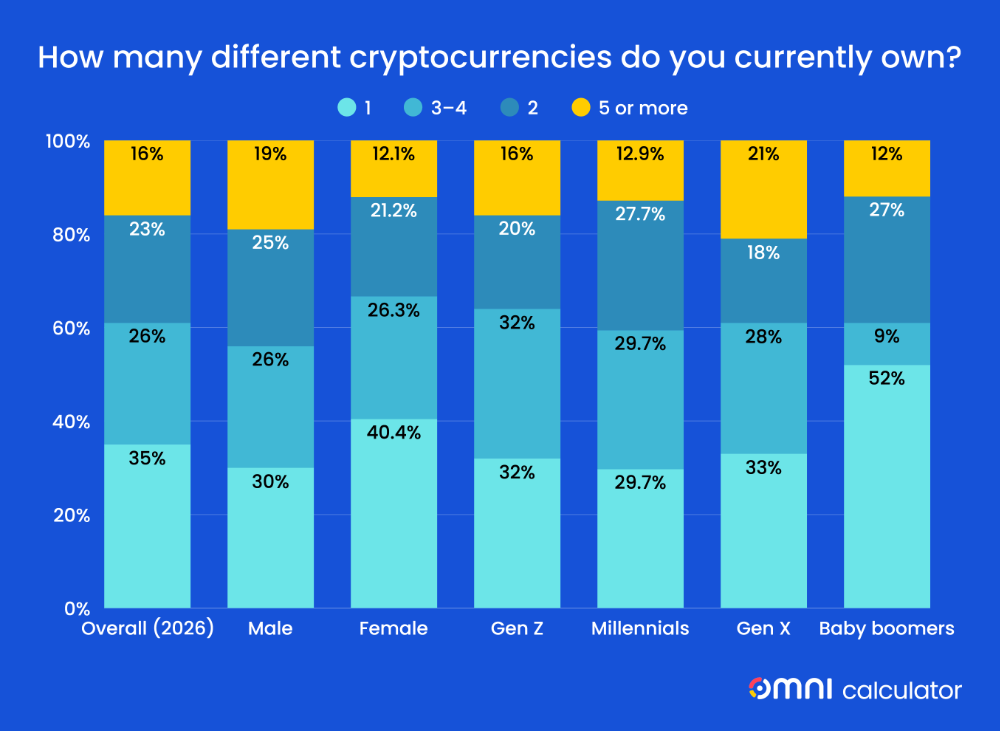
Women are more concentrated in single-coin ownership (40% versus 30% among men) and are less represented in larger portfolios, with only 12% of women holding five or more cryptocurrencies compared with 19% among men.
By age, 52% of baby boomers hold one cryptocurrency, and only 9% hold three to four, while Gen X has the highest share at 21% holding five or more cryptocurrencies. Gen Z most often holds three to four cryptocurrencies (32%), with 16% holding five or more, and millennials show a more even spread, with 13% holding five or more.
The total value of cryptocurrency holdings is distributed primarily in the $100-$999 range (28%), followed by $1,000-$4,999 (25%), with higher-value portfolios making up a smaller portion of the sample.
Approximately what is the total value of the cryptocurrency you currently own, based on current prices (in US dollars)? | Overall (2026) |
|---|---|
$100-$999 | 28% |
$1,000-$4,999 | 25% |
Less than $100 | 21% |
$5,000-$9,999 | 13% |
$10,000 or more | 13% |
Investment motives dominate initial cryptocurrency adoption, with 50% of survey participants reporting that their primary reason for first owning cryptocurrency was to invest or potentially grow their money.
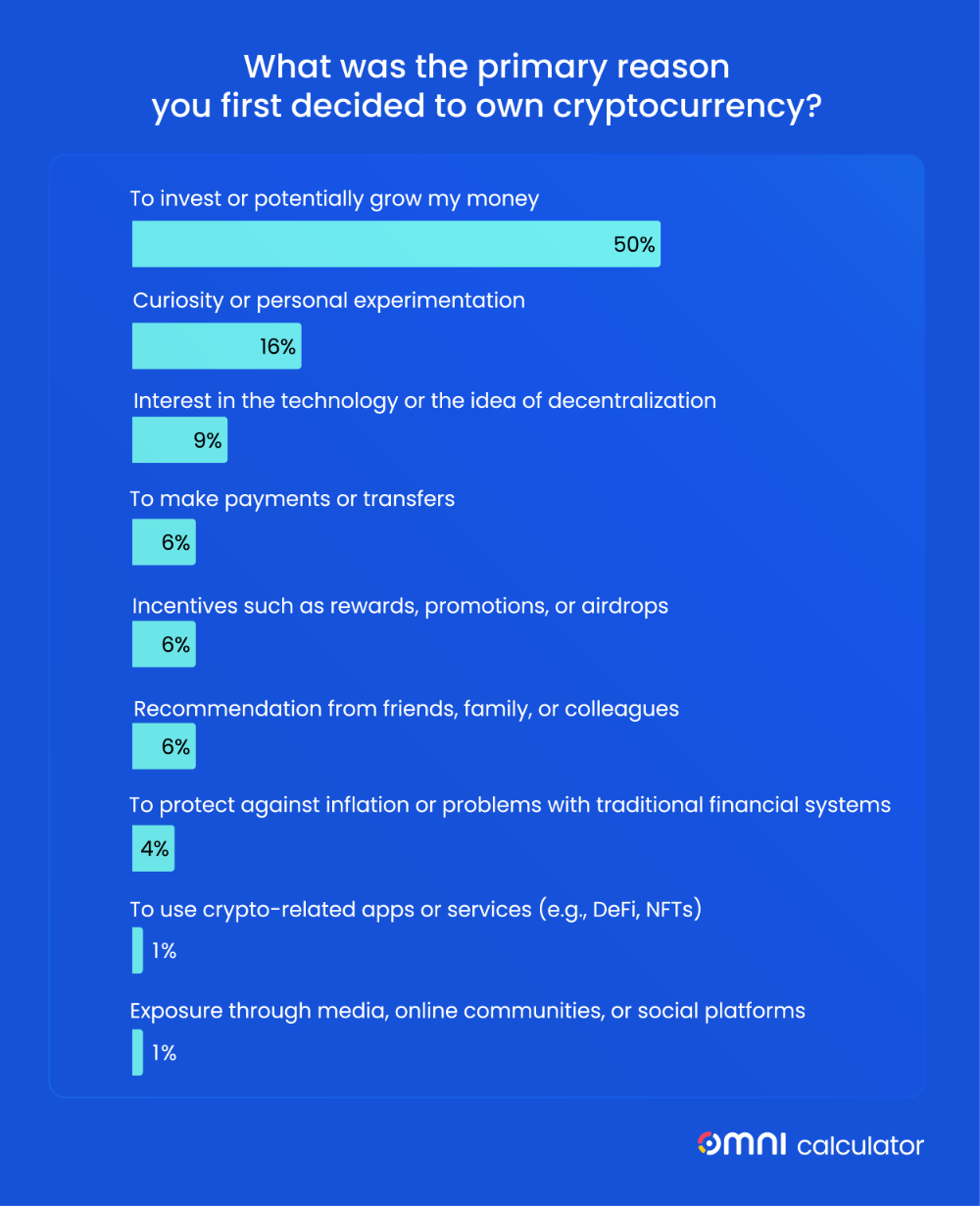
Secondary motivations are substantially smaller, led by curiosity or personal experimentation (16%), followed by interest in the underlying technology or decentralization (9%).
Practical use cases account for a limited share: 6% cite payments or transfers, and another 6% point to incentives such as rewards, promotions, or airdrops. Social influence also represents 6%, driven by recommendations from friends, family, or colleagues.
Defensive or utility-oriented reasons are less common: 4% cite protection against inflation or issues in traditional financial systems, while 1% each cite the use of crypto-related apps or services and exposure through media, online communities, or social platforms.
As for sentiment toward cryptocurrency, it differs between users and non-users. Among those who’ve used cryptocurrency in the past or present, 35% say they wish they had gotten involved sooner, 30% feel neutral about their relationship with cryptocurrency, and 28% say they are glad they got involved, while 5% report regret.
Looking back, which statement best describes how you feel about your relationship with cryptocurrency? | Cryptocurrency users (past or present) | Non-cryptocurrency users |
|---|---|---|
I feel neutral about it | 30% | 29% |
I wish I had gotten involved sooner | 35% | 13% |
I’m glad I got involved | 28% | - |
I’m glad I did not get involved | - | 55% |
I regret getting involved | 5% | - |
Among non-users, 55% say they’re glad they didn’t get involved, 29% feel neutral, and 13% wish they had gotten involved sooner.
Concerns about cryptocurrency are led by financial risk, with 26% of respondents citing the risk of losing money due to price volatility as their primary concern.
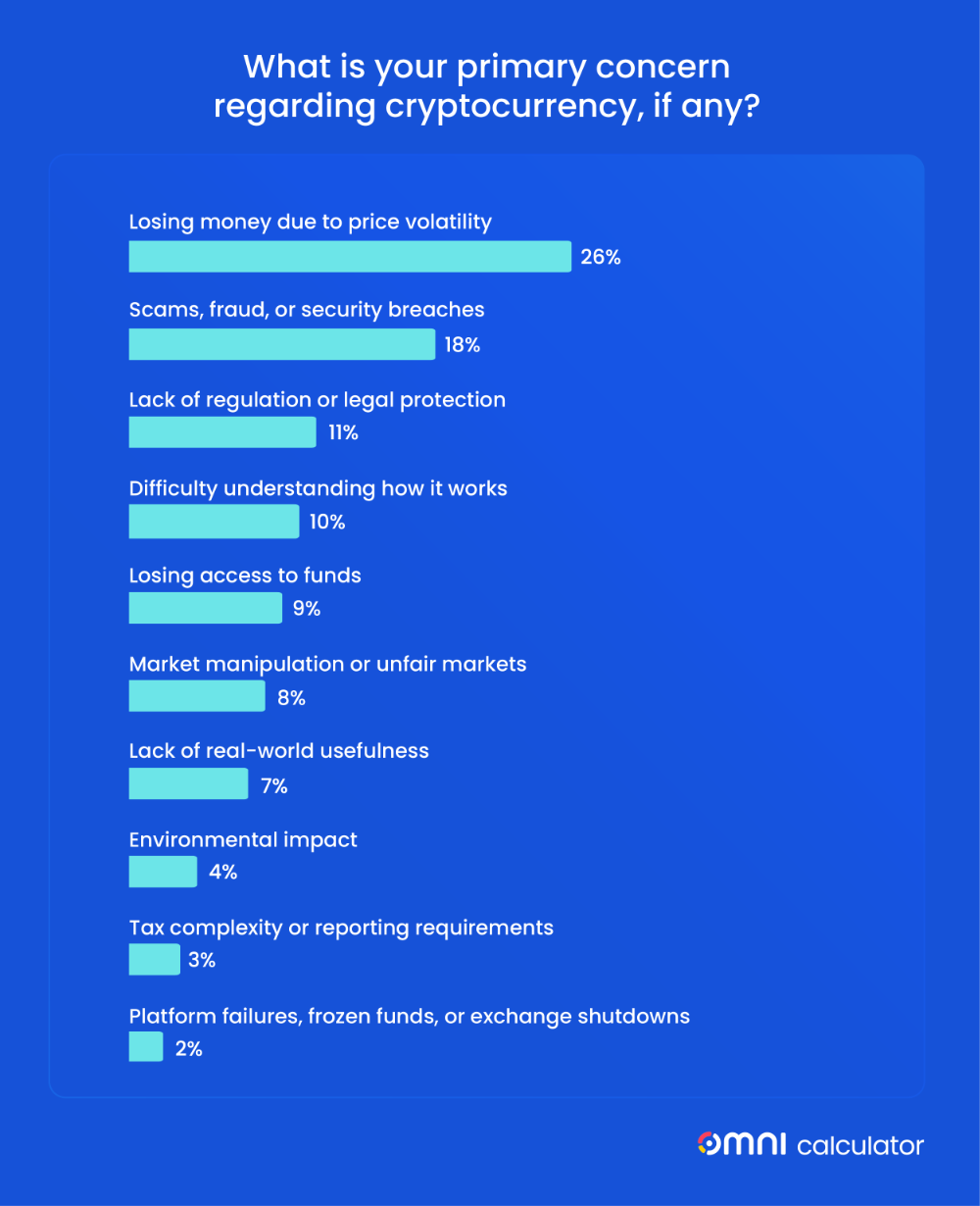
Security-related risks follow, as 18% point to scams, fraud, or security breaches, while 11% cite a lack of regulation or legal protection.
Complexity-related concerns are also present: 10% say cryptocurrency is difficult to understand, and 9% are concerned about losing access to funds due to lost keys or irreversible errors. Market and structural issues are mentioned less often, including market manipulation or unfair markets (8%) and a lack of real-world usefulness (7%), while fewer respondents cite environmental impact (4%), tax complexity or reporting requirements (3%), or platform failures such as frozen funds or exchange shutdowns (2%).
Beyond specific concerns, attitudes toward cryptocurrency have largely remained stable over the past 12 months, with 48% of respondents overall saying their view has stayed about the same, including 51% of crypto users and 44% of non-users.
How has your attitude toward cryptocurrency changed over the past 12 months? | Overall (2026) | Cryptocurrency users (past or present) | Non-cryptocurrency users |
|---|---|---|---|
Stayed about the same | 48% | 51% | 44% |
I am not familiar enough with cryptocurrency to say | 14% | 4% | 26% |
Become somewhat more negative | 12% | 11% | 14% |
Become somewhat more positive | 11% | 10% | 6% |
Become much more negative | 9% | 8% | 9% |
Become much more positive | 6% | 10% | 1% |
Sentiment shifts are relatively balanced, with 21% overall reporting a more negative attitude (12% somewhat more negative, 9% much more negative) and 17% reporting a more positive attitude (11% somewhat more positive, 6% much more positive).
Among crypto users, 20% report becoming more positive compared with 7% of non-users, while negative shifts are similar across groups, ranging from 19% to 23%.
Views on the long-term future of cryptocurrency are divided, with optimism and neutrality evenly represented overall: 27% are somewhat optimistic, and another 27% describe themselves as neither optimistic nor pessimistic.
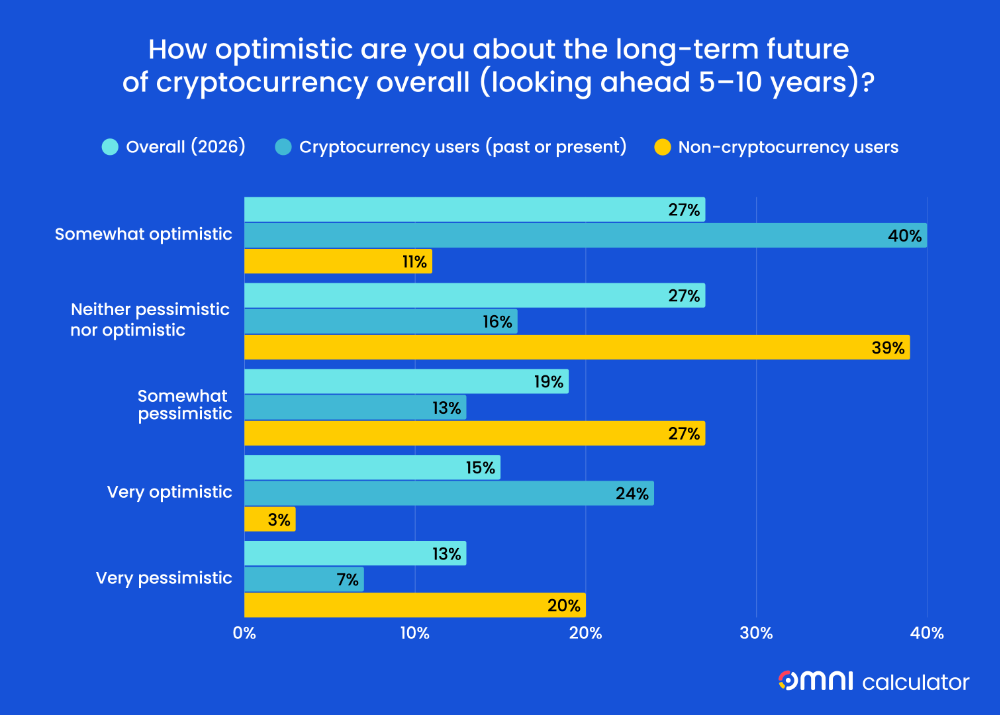
Pessimism accounts for a smaller but notable share: 19% are somewhat pessimistic, and 13% are very pessimistic, while 15% are very optimistic.
Sentiment differs sharply by usage status, as crypto users are more positive, with 40% somewhat optimistic and 24% very optimistic, compared with 16% neutral and 20% expressing pessimism. Non-users are more likely to be neutral or pessimistic: 39% are neither optimistic nor pessimistic, 27% are somewhat pessimistic, and 20% are very pessimistic, while only 11% are somewhat optimistic and 3% are very optimistic.
These outlook differences are reflected in forward-looking plans.
Among crypto users, intentions skew toward continued or increased involvement: 37% plan to increase ownership or usage, 29% expect to keep it about the same, 14% are unsure, and only small shares plan to stop (3%) or reduce (1%) their involvement.
Which statement best describes your plans regarding cryptocurrency over the next 24 months? | Cryptocurrency users (past or present) | Non-cryptocurrency users |
|---|---|---|
I do not plan to own or use cryptocurrency | 10% | 64% |
I plan to increase my ownership or usage | 37% | - |
I am unsure | 14% | 25% |
I plan to keep my ownership or usage about the same | 29% | - |
I plan to start owning or using cryptocurrency | 5% | 9% |
I plan to stop owning or using cryptocurrency | 3% | - |
I plan to reduce my ownership or usage | 1% | - |
Among non-users, disengagement remains the dominant outlook, as 64% say they don’t plan to own or use cryptocurrency, 25% are unsure, and only 9% plan to start owning or using cryptocurrency over the next 24 months.