
Table of contents
Survey: Most Americans Have Financial Regrets for 2025
Report Highlights
- 8 in 10 Americans (80%) have financial regrets for 2025.
- Overspending on non-essentials is the top financial misstep, cited by 29%.
- Clothing, luxury items, or accessories (19%) lead regret-linked categories, followed by travel or vacation expenses (11%) and technology/electronic devices (11%).
- Rushed decisions, without enough planning (28%), were the leading cause of financial mistakes.
- Some 31% say a higher income, such as a raise, promotion, or additional work, would most improve their finances in the next 6-12 months.
With 2026 underway, many Americans are reflecting on their financial decisions from 2025.
This new survey from Omni Calculator examines how often financial regret occurs, what decisions lead to it, how much it costs, and more.
A majority of respondents reported some level of financial regret.
Overall, 46% say they regret at least one small financial decision, while 34% report multiple financial missteps.
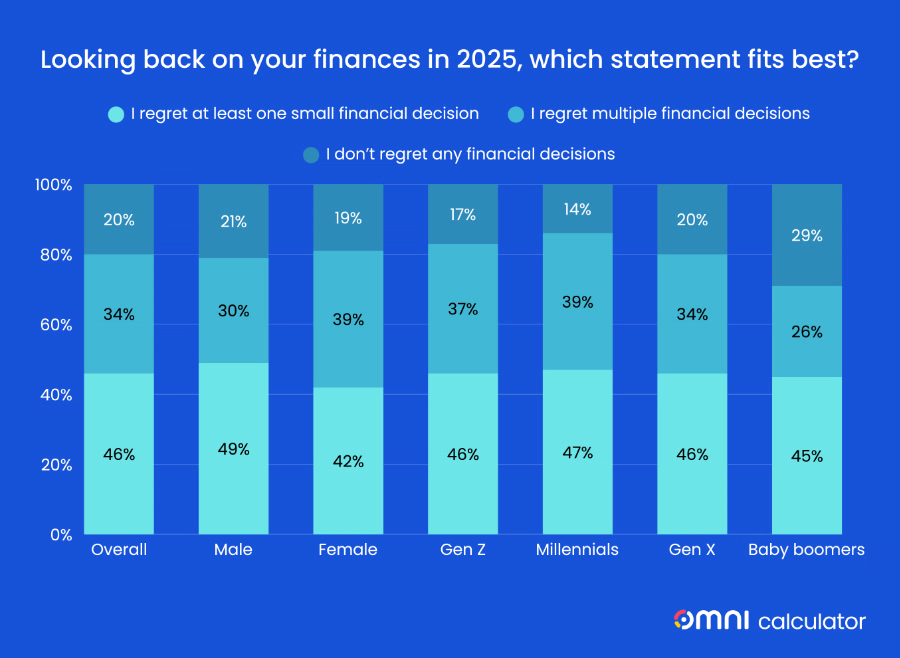
By gender, 49% of men report at least one small regret compared with 42% of women, while multiple regrets are more common among women at 39% vs. 30% of men.
Across generations, single small regrets are consistent, at 47% among millennials, 46% among Gen Z and Gen X, and 45% among baby boomers. Multiple regrets are highest among millennials at 39%, followed by Gen Z at 37% and Gen X at 34%, while baby boomers report the lowest rate at 26%.
One in five adults (20%) report no financial regrets for 2025, with baby boomers leading the way (29%).
Looking at the nature of survey participants’ single biggest financial regret, overspending on non-essential purchases ranks first at 29%.
Which of the following best describes your single biggest financial regret from 2025? | Overall |
|---|---|
Overspending on non-essential purchases | 29% |
I don’t have any financial regrets from 2025 | 11% |
Falling into or relying too much on credit card debt | 10% |
Not saving enough overall for my financial goals | 10% |
Taking on more debt than I could comfortably manage | 9% |
Not having an emergency fund | 7% |
Not saving enough for retirement | 7% |
Not investing earlier | 6% |
Not negotiating a higher salary, pay raise, or seeking better work | 3% |
Investing money without fully understanding the risks | 2% |
I’m not sure | 2% |
Making a housing decision, I regret, such as buying or not buying a home | 1% |
Other | 5% |
Debt- and savings-related issues follow: 10% regret relying too much on credit card debt, and another 10% regret not saving enough for their financial goals. Another 9% say taking on more debt than they could comfortably manage was their primary regret.
About 7% report not having an emergency fund, 7% regret not saving enough for retirement, 6% regret not investing earlier, and 3% cite not negotiating a higher salary, pay raise, or seeking better work. Regrets concerning the risks of investment (2%) or specific housing decisions, such as buying or not buying a home (1%), were among the least cited.
We also examined the size of the single-day spending decision Americans regret most.
Some 45% report regretting a financial decision under $1,000 made in a single day, making it the most common spending threshold.
At any point in 2025, did you spend money in a single day on a financial decision that you later regretted? | Overall | Male | Female | Gen Z | Millennials | Gen X | Baby boomers |
|---|---|---|---|---|---|---|---|
Yes, less than $1,000 | 45% | 41% | 49% | 58% | 48% | 44% | 33% |
No, I did not | 32% | 33% | 32% | 21% | 32% | 36% | 36% |
Yes, $1,000 to $2,499 | 10% | 11% | 8% | 12% | 10% | 6% | 12% |
Yes, $2,500 to $4,999 | 5% | 7% | 3% | 3% | 3% | 8% | 4% |
I’m not sure | 3% | 3% | 4% | 2% | 2% | 2% | 7% |
Yes, $10,000 or more | 2% | 3% | 2% | 2% | 1% | 3% | 5% |
Yes, $5,000 to $9,999 | 2% | 2% | 3% | 2% | 4% | 1% | 3% |
By gender, 49% of women report regretting a purchase under $1,000, compared with 41% of men. Men are slightly more likely to report larger regrets: 11% regret spending $1,000-$2,499 and 7% regret spending $2,500-$4,999, compared with 8% and 3% of women, respectively.
By generation, 58% of Gen Z report regretting a purchase under $1,000, while 21% report no single-day regrets. Among baby boomers, 33% report regrets under $1,000, and 36% report none. For regrets of $10,000 or more, 5% of baby boomers report this level, compared with 3% of Gen X, 2% of Gen Z, and 1% of millennials.
When asked which type of purchase was most directly involved in their biggest financial mistake, 19% point to clothing, luxury items, or accessories, followed by 11% for travel or vacation expenses, and 11% for technology or electronic devices such as phones, computers, or gadgets.
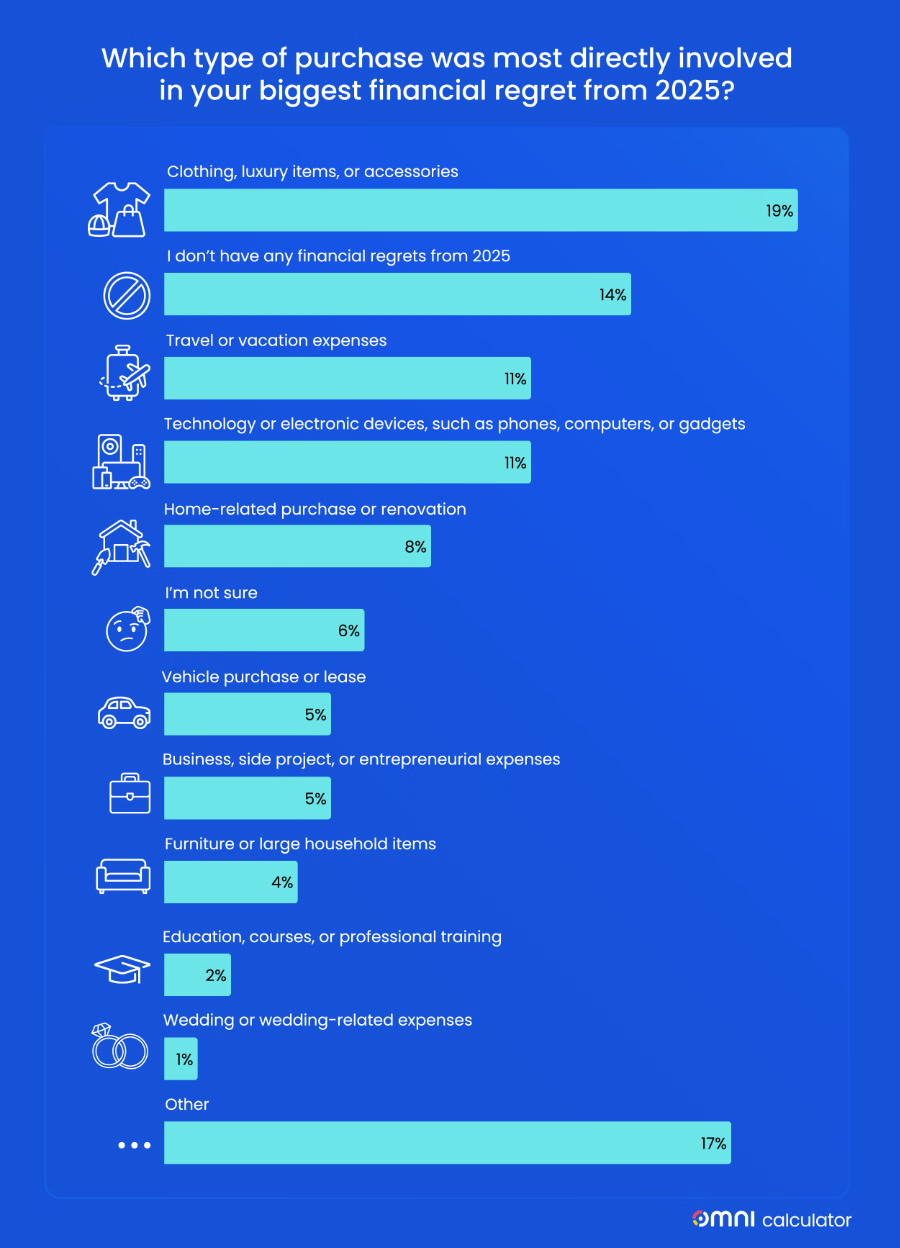
Another 8% point to home-related purchases or renovations, 5% report vehicle purchases or leases, and 5% identify business or entrepreneurial expenses. In comparison, 4% reference furniture or large household items, 2% point to education or professional training, and only 1% report wedding-related expenses.
A substantial 17% selected “Other”, which allowed respondents to write in their own answers.
Responses in this category often reference food and dining, including fast food, delivery, and restaurants; entertainment and lifestyle expenses such as gambling, gaming, alcohol, and social events; seasonal spending such as holiday gifts; financial support to friends or family; taxes, legal fees, and investment decisions; medical, veterinary, and car repair costs; and, in some cases, a lack of saving rather than a specific purchase.
The most common driver of financial regret in 2025 was making a decision too quickly without sufficient planning, cited by 28% of respondents.
What was the main factor that led to your biggest financial regret in 2025? | Overall |
|---|---|
I made the decision quickly, without enough planning | 28% |
Multiple factors played a role, and it’s hard to identify just one | 16% |
I don’t have any financial regrets from 2025 | 13% |
The decision was influenced by family, friends, or a partner | 10% |
An unexpected event or emergency influenced the decision | 7% |
I felt pressure to match the lifestyle or spending of others | 6% |
I waited too long to take action | 5% |
I did not have enough relevant information at the time | 5% |
I relied on advice that turned out to be unhelpful or incomplete | 3% |
I’m not sure what led to it | 3% |
I did not fully understand the risks or trade-offs involved | 2% |
Other | 3% |
Another 10% said their decision was influenced by family, friends, or a partner, and 6% pointed to pressure to match others’ lifestyles or spending habits. About 7% attributed their regret to an unexpected event or emergency.
Some 5% said they lacked sufficient relevant information at the time, and another 5% felt they waited too long to act. Smaller shares cited unhelpful or incomplete advice (3%), a lack of understanding of risks or trade-offs (2%).
The most common regret amounts in 2025 were below the $1,000 threshold. Within this group, 23% reported losses of $500 or less, and 20% reported costs between $500 and $999.
Approximately how much money did your biggest financial regret from 2025 cost you, either directly or indirectly (in USD)? | Overall | Male | Female | Gen Z | Millennials | Gen X | Baby boomers |
|---|---|---|---|---|---|---|---|
Less than $500 | 23% | 19% | 26% | 35% | 22% | 21% | 17% |
$500 to $999 | 20% | 23% | 18% | 21% | 25% | 19% | 16% |
$1,000 to $2,499 | 16% | 16% | 17% | 18% | 15% | 14% | 19% |
I don’t have any financial regrets from 2025 | 13% | 15% | 11% | 8% | 10% | 14% | 19% |
$5,000 to $9,999 | 8% | 7% | 9% | 5% | 11% | 9% | 6% |
$2,500 to $4,999 | 7% | 8% | 7% | 5% | 7% | 10% | 6% |
I’m not sure | 4% | 4% | 4% | 6% | 4% | 2% | 6% |
$10,000 to $24,999 | 4% | 6% | 3% | - | 5% | 6% | 5% |
$0 or close to $0 | 1% | 1% | 2% | - | 1% | 1% | 4% |
$25,000 to $49,999 | 1% | 1% | 1% | - | 1% | 2% | 2% |
$50,000 or more | 1% | 1% | 1% | 2% | - | 1% | 1% |
Among females, 26% reported regrets under $500 compared with 19% of males, while males were more likely to report costs between $500 and $999 (23% vs. 18%). Higher-value regrets also skewed toward men, with 6% of men reporting losses of $10,000 to $24,999, compared with 3% of women.
Generational patterns show younger respondents concentrated in lower-cost regrets. Gen Z reported the highest share under $500 at 35%, while millennials led the $500 to $999 bracket at 25%, followed by Gen Z at 21%. Mid-range losses between $1,000 and $2,499 appeared consistent across cohorts, peaking at 19% for baby boomers and 18% for Gen Z.
At the top end, 2% of Gen Z reported regrets of $50,000 or more, compared with 1% of Gen X and 1% of baby boomers.
Many respondents report changes in how they manage money after their biggest financial misstep in 2025, with 20% of Americans now taking more time before making spending decisions.
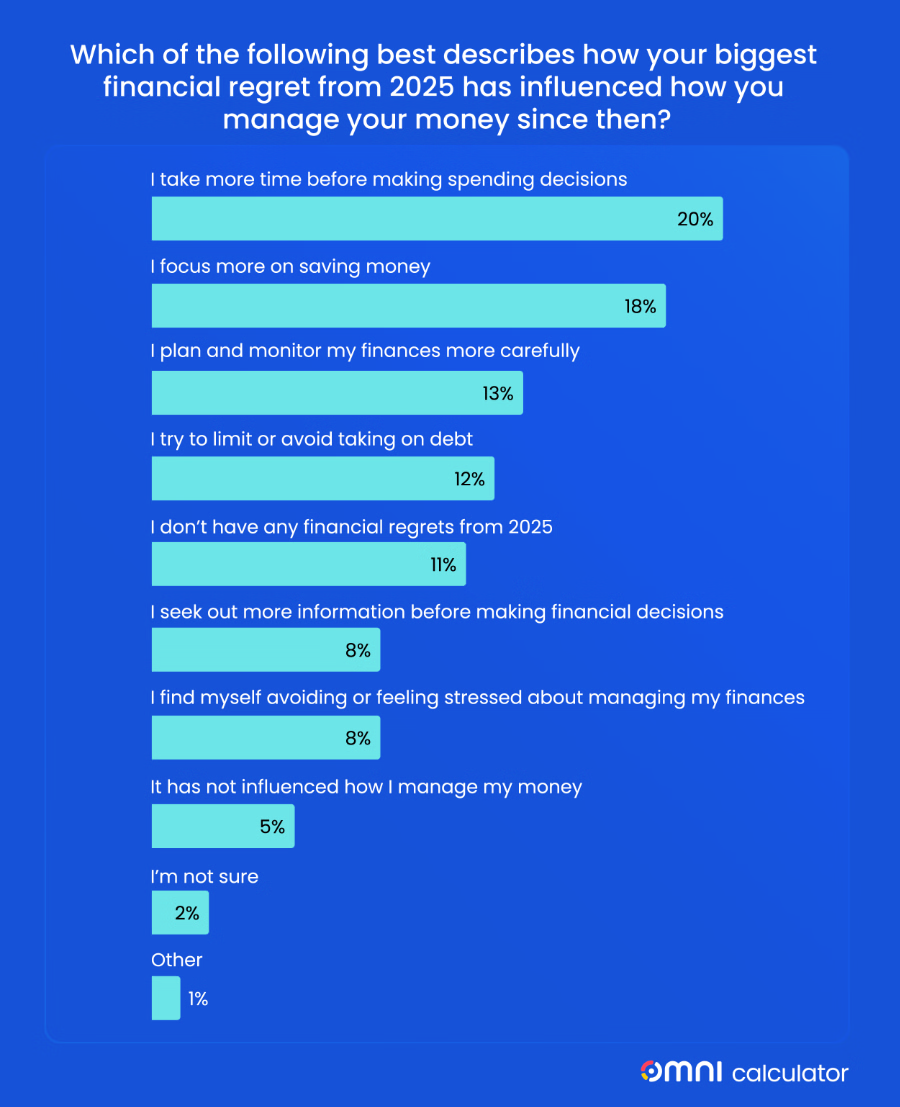
An additional 18% mentioned a stronger focus on saving, while 13% said they plan and monitor their finances more carefully. Another 12% indicated they now try to limit or avoid taking on debt.
Behavioral adjustments also included 8% seeking more information before making financial decisions, and another 8% reporting increased avoidance or stress around managing finances. A smaller share said their approach didn’t change (5%).
To gather additional context on how these mindset shifts translate into personal advice, respondents answered an open-ended question: “If you could give one piece of financial advice to your 2025 self, what would it be?”
The most common advice was to save more, especially by building an emergency fund and setting money aside consistently, followed by guidance to slow down spending, wait before making purchases, and separate wants from needs. Many responses also stressed better research before major expenses, including vetting contractors, comparing quotes, and reading reviews, alongside stronger debt control, such as avoiding credit card balances and limiting high-interest debt.
Structured planning appeared often, including budgeting, planning large expenses, and staying focused on long-term goals, with additional mentions of investing earlier, seeking professional advice, negotiating pay, and increasing income.
As the final question, respondents were asked what would most improve their personal financial situation over the next 6-12 months. Higher income, such as a raise, promotion, or additional work, is the most commonly cited factor, selected by 31% of participants.
Which one of the following changes would most improve your personal financial situation over the next 6 to 12 months? | Overall |
|---|---|
Higher income, such as a raise, promotion, or additional work | 31% |
Reducing my total debt balance | 20% |
Lower prices for everyday essentials, such as groceries, gas, or utilities | 20% |
Being able to build or maintain an emergency savings fund | 8% |
Lower housing costs, such as rent or mortgage payments | 6% |
Better financial guidance | 5% |
Lower interest rates on loans or credit cards | 4% |
None of these | 2% |
Not applicable | 2% |
I’m not sure | 1% |
Other | 1% |
Reducing total debt and lower prices for everyday essentials, such as groceries, gas, or utilities, were each identified by 20% of respondents. Smaller shares pointed to building or maintaining an emergency fund (8%), lower housing costs such as rent or mortgage payments (6%), and better financial guidance (5%).
Lower interest rates on loans or credit cards were cited by 4% of respondents.
The survey was conducted between January 16 and 17, 2026, using the Prolific online research platform. The sample included 500 US adults, with the distribution aligned with US Census data to reflect the broader population. Among participants, 48% identified as male, 50% as female, and 2% as other or preferred not to say. Age distribution was as follows: Gen Z (ages 18-29): 21.6%; millennials (ages 30-45): 26.2%; Gen X (ages 46-61): 29.8%; baby boomers (ages 62+): 21.8%; 0.6% preferred not to say. The survey was designed with a 95% confidence level and a 4% margin of error, and it included an attention-check question. In some cases, percentages may not add up to 100% due to rounding.
Need to run some quick numbers? Check out the calculators below for help with savings, rent, and math.