
Omni Calculator logo

Table of contents

1. Most Americans have used BNPL at some point

Buy Now Pay Later Trends (2026 Study)

Report Highlights

  • A little over six in 10 US adults (64%) have tried BNPL at some point in their lives.
  • Most BNPL users (70%) made at least one BNPL purchase in 2025.
  • PayPal was the most used BNPL service in 2025 at 29%, followed by Affirm (22%), Klarna (19%), and Afterpay (13%).
  • Electronics are the most common BNPL purchase category, cited by 25%.
  • The most common purchase amount at which consumers start considering BNPL is $500 or more.
  • The most common reason for choosing BNPL is to make large purchases more manageable (36%).
  • Overspending is the most commonly reported BNPL issue at 15%.
  • 64% of BNPL users are likely to use the service in 2026, compared with 9% of non-users.

Buy now, pay later (BNPL) has become a common payment option.

In the US alone, the market is set to reach $127.94B in 2026 and may grow to about $258.40B by 2031. To examine how people use it, we surveyed 500 Americans about adoption, spending patterns, repayment habits, and much more.

A little over six in 10 US adults (64%) report having used BNPL at some point.
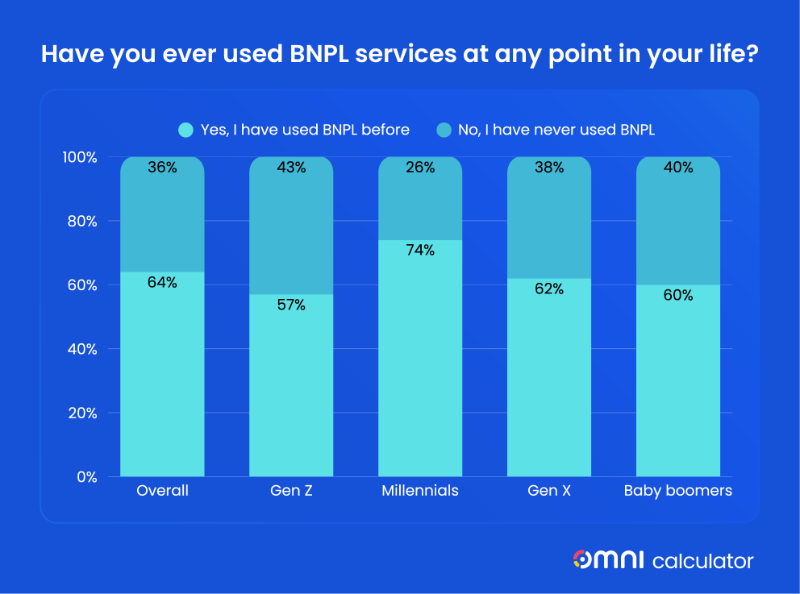
Chart showing whether Americans have ever used BNPL services by overall population and generation
Have you ever used BNPL services at any point in your life?

Millennials report the highest usage rate at 74%, followed by Gen X at 62% and baby boomers at 60%, while Gen Z reports the lowest adoption at 57%.

Among the 36% who’ve never used BNPL, the most common reason is a preference to pay the full amount upfront, cited by 35%.

What is the main reason you did not use BNPL?

Overall

I prefer to pay the full amount upfront

35%

I want to avoid “debt stacking” from multiple overlapping payment plans

15%

I am concerned about impulse overspending triggered by installment models

12%

I do not see a need to use BNPL

12%

I prefer credit card rewards like cash back and travel points

9%

I am concerned about fees, penalties, or overdraft charges

7%

Other

4%

I do not trust BNPL providers or their complex terms of service

3%

I do not clearly understand how BNPL works

2%

I am concerned about the direct impact on my credit score

1%

I am concerned about the difficult refund and return process

1%

I am concerned about the lack of consumer/fraud protection compared to credit cards

1%

I am concerned BNPL use will hurt my eligibility for a mortgage or auto loan

0%

Another 15% say they avoid BNPL to prevent “debt stacking” from multiple overlapping payment plans, 12% cite concern about impulse overspending, and another 12% say they don’t see a need for the service.

A further 9% say they prefer credit card rewards such as cash back or travel points, and 7% cite concerns about fees, penalties, or overdraft charges. Smaller shares mention a lack of trust in BNPL providers (3%) or uncertainty about how the service works (2%).

Concerns about credit score impacts, refund or return difficulties, and limited consumer or fraud protection are each cited by 1% of respondents.

Looking closer at recent behavior, most BNPL users (70%) say they used a BNPL service at least once in 2025.

Which of the following best describes your experience with BNPL?

Overall

Male

Female

Gen Z

Millennials

Gen X

Baby boomers

I used BNPL at least once in 2025

70%

73%

68%

68%

83%

67%

58%

I used BNPL in the past, but not in 2025

29%

27%

32%

32%

17%

32%

42%

Among male users, 73% used the service compared with 68% of women. Across generations, 83% of millennials used BNPL, while Gen Z and Gen X show similar levels at 68% and 67% respectively. Baby boomers report the lowest usage at 58%.

In terms of frequency, BNPL use was typically infrequent, with half of the respondents (50%) reporting using the service once or twice during the year.

In 2025, how often did you use BNPL?

Overall

Male

Female

Gen Z

Millennials

Gen X

Baby boomers

Once or twice during the year

50%

57%

43%

48%

51%

47%

53%

Once every 2-3 months

26%

27%

23%

28%

21%

33%

24%

About once a month

20%

13%

27%

20%

24%

16%

18%

Weekly or more often

4%

2%

7%

5%

2%

5%

5%

Not sure

0%

1%

-

-

1%

-

-

Another 26% report using BNPL once every two to three months, while 20% say they use it about once a month; weekly or more frequent use is at 4%.

Among men, 57% report using BNPL once or twice in 2025, compared with 43% of women, while women report higher monthly (27% vs. 13%) and weekly (7% vs. 2%) usage.

Across generations, the share using BNPL once or twice during the year ranges from 47% among Gen X to 53% among baby boomers. Gen X records the highest share of usage every 2-3 months at 33%, while millennials report the highest monthly usage at 24%.

When asked which BNPL service they used most often in 2025, PayPal came out on top at 29%. Affirm followed at 22%, while Klarna accounted for 19% and Afterpay for 13%.
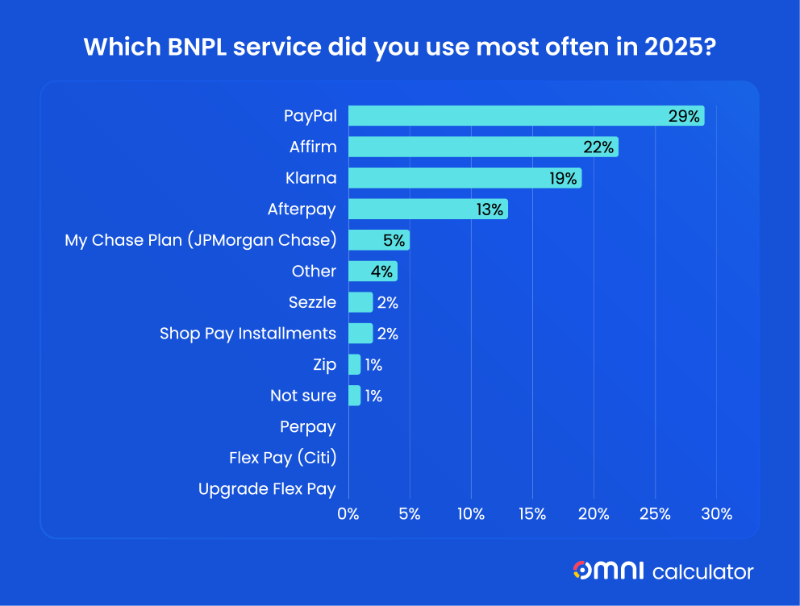
Chart showing which BNPL service Americans used most often in 2025
Which BNPL service did you use most often in 2025?

My Chase Plan (JPMorgan Chase) accounted for 5%, while Sezzle and Shop Pay Installments each accounted for 2%, and Zip for 1%.

Americans use BNPL most often for electronics such as phones, laptops, or similar devices (25%).

When you used BNPL in 2025, which category did you use it for most often?

Overall

Electronics or personal technology (e.g., phones, laptops)

25%

Clothing, shoes, or accessories

19%

Furniture, home décor, or large home items

10%

Travel (flights, hotels, transportation)

8%

Other

6%

Tools or home improvement items

5%

Groceries or everyday household items

4%

Beauty or personal care products

4%

Automotive repairs

4%

Events or experiences (concerts, sports, attractions)

3%

Toys or children’s items

3%

Food delivery or takeout

2%

Healthcare (Dental, Vision, elective procedures)

2%

Educational courses and tuition

1%

Pet care and veterinary services

1%

Insurance premiums

1%

B2B business supplies

1%

Sporting or fitness equipment

0%

Wellness services (Therapy, Spa)

0%

Clothing, shoes, and accessories account for 19%, followed by furniture, home décor, and large household items at 10%. Travel-related expenses, including flights and hotels, represent 8%.

Tools or home improvement items make up 5%, while groceries, beauty products, and automotive repairs each stand at 4%, followed by events or experiences and toys or children’s items at 3%. Food delivery or takeout and healthcare services each represent 2%, while educational courses, pet care, insurance premiums, and B2B business supplies each stand at 1%.

When asked at what purchase amount they typically start considering BNPL, the most common threshold is $500 or more, cited by 27%.

At what purchase amount, if any, did you typically start considering BNPL in 2025?

Overall

Male

Female

Gen Z

Millennials

Gen X

Baby boomers

$500 or more

27%

34%

21%

25%

29%

28%

21%

$100-199

24%

19%

28%

33%

26%

17%

24%

$200-299

22%

24%

20%

20%

18%

23%

32%

Under $100

13%

8%

20%

10%

11%

20%

11%

$300-499

13%

15%

10%

10%

16%

11%

11%

Not sure

1%

-

2%

3%

-

-

3%

Another 24% consider BNPL for purchases of $100-$199, while 22% cite the $200-$299 range. Purchases under $100 and those between $300 and $499 each serve as the starting point for 13% of respondents.

Among men, the most common starting point is $500 or more, reported by 34%. For women, the most common threshold is $100-$199, cited by 28%. Women are also more likely to consider BNPL for smaller purchases, with 20% reporting using it for purchases under $100, compared with 8% of men.

Patterns also vary across generations, with Gen Z most often considering BNPL for purchases of $100-$199 (33%) while millennials and Gen X most often cite $500 or more, at 29% and 28% respectively. As for baby boomers, the most common threshold is $200-$299, selected by 32%.

When asked why survey participants choose BNPL over other payment options, the most common reason is to make large purchases more manageable, cited by 36%.

Thinking about your use of BNPL in 2025, what was usually the main reason you chose it over other payment options?

Overall

To make a large purchase more manageable

36%

To preserve my cash or savings

21%

To avoid credit card interest or debt

13%

To buy something I otherwise couldn’t afford

13%

To bridge the gap until my next payday

11%

Other

2%

For speed and convenience at checkout

1%

For better security than a debit card

1%

It was my only available credit option

1%

Another 21% report using BNPL to preserve cash or savings, while 13% say they chose it to avoid credit card interest or debt. An equal share (13%) used BNPL to purchase items they otherwise couldn’t afford.

A further 11% say they used BNPL to bridge the gap until their next payday, while 1% cite speed and convenience at checkout, 1% say it offers better security than a debit card, and 1% report it was their only available credit option.

When asked about their experience with BNPL in 2025, 46% of respondents encountered no issues. Still, among those who report a problem, the most common issue is that BNPL makes it easier to spend more than planned, cited by 15%.
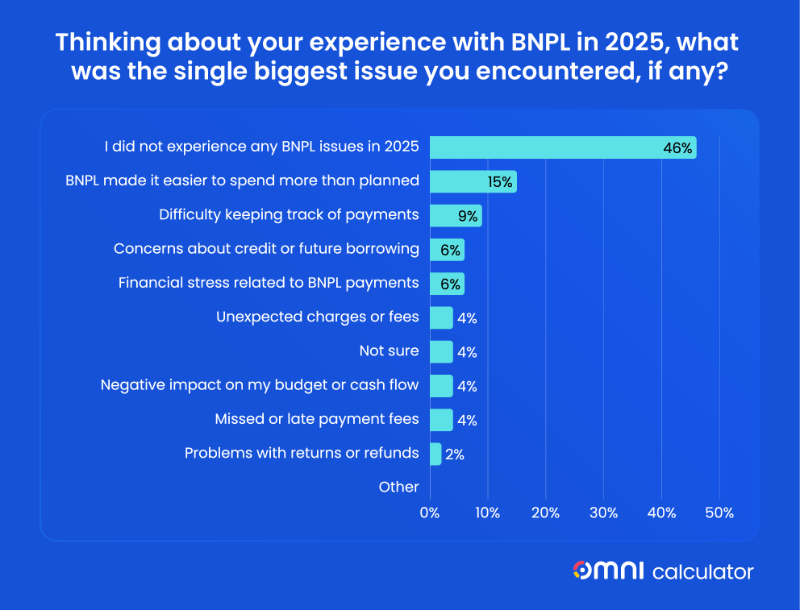
Chart showing the biggest issues Americans encountered when using BNPL in 2025
Thinking about your experience with BNPL in 2025, what was the single biggest issue you encountered, if any?

Another 9% say their main difficulty is keeping track of multiple payments.

Smaller shares report worries about credit or future borrowing (6%) and financial stress related to ongoing payments (6%).

Other issues appear less frequently, including unexpected charges or fees (4%), negative effects on budget or cash flow (4%), and missed or late payment fees (4%). 2% of survey participants report problems with refunds or returns.

In 2025, most BNPL users report making all payments on time, with 81% saying they never missed or paid late.

In 2025, how often did you miss or pay late on a BNPL payment?

Overall

Male

Female

Never

81%

90%

73%

Two or three times

8%

5%

12%

Once

6%

3%

9%

Four or more times

3%

1%

3%

Not sure

2%

1%

3%

Among those who did report late payments, 8% say they missed two or three payments during the year, 6% say they missed one payment, and 3% say they missed four or more.

Among men, 90% report never missing a payment compared with 73% of women.

Many BNPL users report planning their payments in advance, with 43% saying they always budget for them.

In 2025, how often did you plan or budget for your BNPL payments in advance?

Overall

Male

Female

Always

43%

44%

42%

Sometimes

17%

16%

19%

Often

16%

18%

12%

Never

11%

13%

9%

Rarely

10%

7%

13%

Not sure

4%

3%

5%

Some 16% say they often plan ahead, and 17% say they sometimes do. In comparison, smaller shares report planning less frequently: 10% rarely budget for BNPL payments, 11% never do, and 4% aren’t sure.

Among men, 44% say they always plan BNPL payments compared with 42% of women.

In 2025, the most common total paid in a typical month with active BNPL payments was between $50 and $99, reported by 32%.

In 2025, in a typical month when you had active BNPL payments, about how much did you pay in total?

Overall

Male

Female

$50-$99

32%

29%

36%

$100-$199

25%

21%

27%

Less than $50

14%

13%

14%

$300 or more

13%

16%

10%

$200-$299

13%

14%

11%

Not sure

0%

5%

2%

Another 25% report monthly payments of $100-$199, while smaller shares report paying less than $50 (14%), $200-$299 (13%), or $300 or more (13%).

Among women, 36% report paying $50-$99 per month, compared with 29% of men, while 27% report paying $100-$199, compared with 21% of men. Men also report higher shares at higher payment levels: 16% say they typically pay $300 or more per month, and 14% report $200-$299, compared with 10% and 11% among women, respectively.

In 2025, most BNPL users report having only a few plans active at the same time: 34% say the most they had at once was one, and 33% say two.
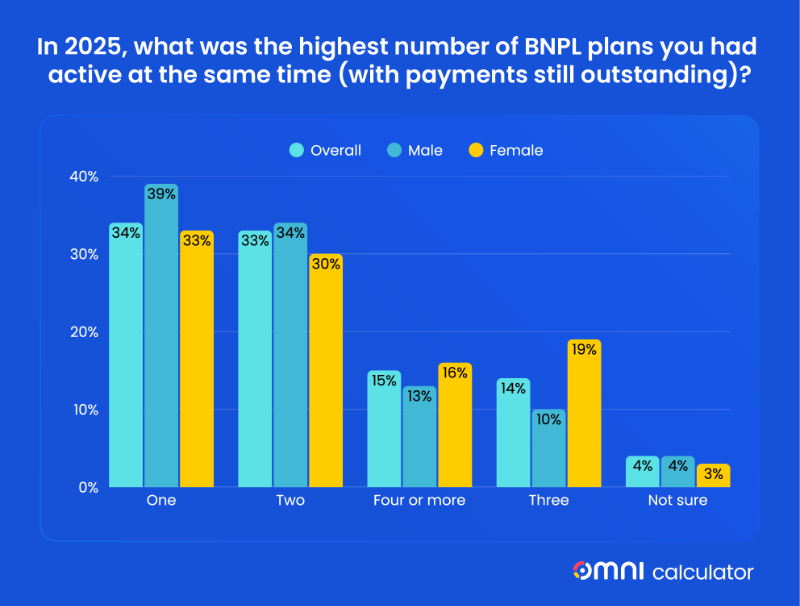
Chart showing the highest number of BNPL plans Americans had active at the same time in 2025 by gender
In 2025, what was the highest number of BNPL plans you had active at the same time (with payments still outstanding)?

Some 14% say they had three active BNPL plans at the same time, while 15% report having four or more.

Among men, 39% report having only one active plan at a time compared with 33% of women, while rates for two active plans are similar at 34% among men and 30% among women.

Women report higher shares at higher plan counts: 19% say they had three active plans, compared with 10% of men, and 16% report four or more, compared with 13% of men.

A full 91% of our respondents reported being satisfied with their BNPL experience in 2025, including 67% who were very satisfied and 24% who were somewhat satisfied.

Overall, how satisfied were you with your experience using BNPL in 2025?

Overall

Very satisfied

67%

Somewhat satisfied

24%

Neither satisfied nor dissatisfied

6%

Very dissatisfied

2%

Somewhat dissatisfied

1%

A smaller share reports neutral views: 6% say they are neither satisfied nor dissatisfied, while only 3% report dissatisfaction, including 2% who are very dissatisfied and 1% who are somewhat dissatisfied.

In 2025, most BNPL users (82%) reported no regret about purchases made with the service.

In 2025, did you experience regret about any purchase you made using BNPL?

Overall

No

82%

Yes, once

8%

Yes, more than once

8%

Not sure

3%

A smaller share reports some level of regret: 8% say they experienced it once, and another 8% say they experienced it more than once.

Perceptions of financial risk differ between BNPL users and non-users.

Among BNPL users, the most common view is that the service is somewhat risky (33%), followed by not very risky (28%) and not risky at all (23%), while smaller shares describe it as very risky (10%) or say they aren’t sure (5%).

Overall, how risky do you consider BNPL to be from a financial perspective?

BNPL users

Non-BNPL users

Somewhat risky

33%

46%

Not very risky

28%

18%

Not risky at all

23%

3%

Very risky

10%

22%

Not sure

5%

11%

Non-users report higher perceived risk: 46% say BNPL is somewhat risky, 22% say it’s very risky, 18% say it’s not very risky, and only 3% say it's not risky at all.

Intentions for future use also differ between BNPL users and those who’ve never used the service.

Among existing users, 64% say they are likely to use BNPL at least once in 2026, including 42% who are very likely and 22% who are somewhat likely.
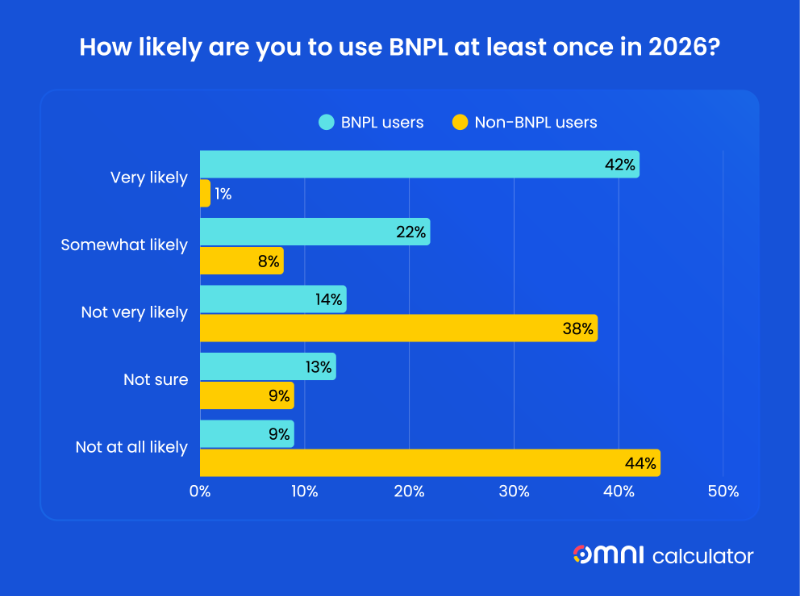
Chart showing how likely BNPL users and non-users are to use BNPL at least once in 2026
How likely are you to use BNPL at least once in 2026?; suggested chart type: grouped column chart

Among non-users, only 9% say they are likely to try BNPL in 2026, including 1% who are very likely and 8% who are somewhat likely.

The survey was conducted between February 2 and 3, 2026, using the Prolific online research platform. The sample included 500 US adults, with the distribution aligned with US Census data to reflect the broader population. Among participants, 48.3% identified as male, 49.5% as female, and 2.2% as other or preferred not to say. Age distribution was as follows: Gen Z (ages 18-29): 20.8%; millennials (ages 30-45): 26.7%; Gen X (ages 46-61): 30.5%; baby boomers (ages 62+): 21.8%; less than 1% preferred not to say. The survey was designed with a 95% confidence level and a 4% margin of error, and it included an attention-check question. In some cases, percentages may not add up to 100% due to rounding.

Need to run some quick numbers? Check out the calculators below for help with savings, rent, and math.

Authors of the report

Ask the authors for a quote

Copyrights