
Omni Calculator logo

Table of contents

1. Most have 4-6 active paid subscriptions

Average Subscription Cost per Month (2026)

Report Highlights

  • The typical American with unused subscriptions spends around $17 per month on services they rarely or never use, or about $204 per year.
  • Nearly one in three US adults (32%) pays for at least one subscription they rarely or never use.
  • Most respondents (41%) have 4-6 active paid subscriptions, and the most common monthly spend is $50-$99.
  • More than half (57%) feel they overspend on paid subscriptions.
  • Nearly three-quarters (71%) canceled at least one subscription in the past 12 months, most often because they weren’t using it enough (67%).
  • Some 59% have already cut back or are actively planning to cut back on subscriptions due to the economic climate.

From streaming TV to cloud storage to GenAI tools, the average monthly subscription cost can add up fast.

We surveyed 500 US adults about their subscription habits to find out how much they’re spending, what they’re keeping, and what they’re cutting.

Paid subscriptions have become a standard part of American spending, and having 4-6 active paid subscriptions is the most common range, reported by 41% of respondents.
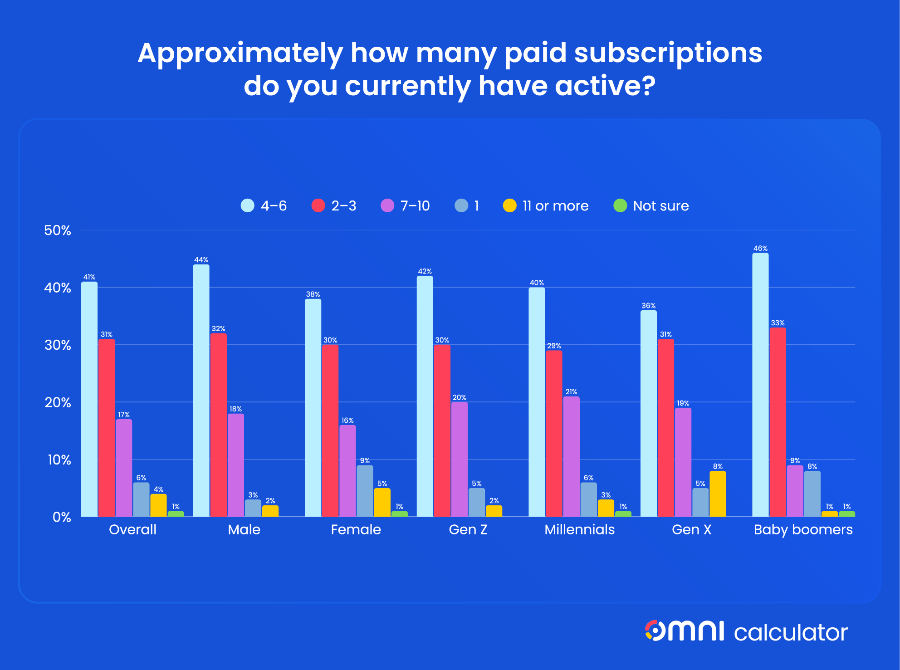
Bar chart showing how many paid subscriptions Americans have active
Approximately how many paid subscriptions do you currently have active?

The 2-3 subscription range is the next most common at 31%, followed by 7-10 at 17%. Just 6% of respondents have only one active subscription.

By gender, men are more likely than women to report having 4-6 subscriptions (44% vs. 38%), whereas generationally, baby boomers report the highest rate of 4-6 subscriptions at 46%, while Gen Z and millennials are most likely to have 7-10, at 20% and 21%, respectively.

When it comes to what Americans subscribe to, one category stands out: Streaming TV (e.g., Netflix, Hulu, Max) at 89%.

Which of the following types of paid subscriptions do you currently have? (Select all that apply)

Overall

Male

Female

Gen Z

Millennials

Gen X

Baby boomers

Streaming TV (e.g., Netflix, Hulu, Max)

89%

88%

90%

90%

87%

90%

87%

E-commerce/delivery (e.g., Amazon Prime, Walmart+)

56%

57%

56%

59%

50%

59%

60%

Music (e.g., Spotify, Apple Music)

56%

57%

54%

74%

63%

54%

32%

Cloud storage (e.g., iCloud, Google One)

37%

35%

39%

42%

37%

35%

32%

Gaming (e.g., Xbox Game Pass, PlayStation Plus)

25%

29%

21%

37%

35%

21%

6%

Software or productivity (e.g., Adobe, Microsoft 365)

23%

25%

21%

20%

23%

25%

22%

GenAI tools (e.g., Claude, ChatGPT)

17%

21%

13%

19%

18%

18%

13%

Fitness or wellness (e.g., Peloton, Calm, Noom)

13%

15%

11%

16%

13%

16%

7%

News or magazines (e.g., NYT, The Atlantic)

13%

16%

10%

7%

9%

13%

23%

Food/meal kits (e.g., HelloFresh, Blue Apron)

6%

6%

6%

7%

6%

5%

7%

Clothing or retail boxes (e.g., Stitch Fix)

3%

2%

4%

4%

2%

4%

1%

Other

7%

4%

7%

11%

4%

7%

6%

E-commerce, delivery services, and music subscriptions are tied for the next-most-common type at 56% each. Cloud storage follows at 37%, gaming at 25%, and software or productivity tools at 23%. Only 17% of respondents subscribe to GenAI tools such as Claude or ChatGPT.

Interestingly, men are more likely than women to hold gaming (29% vs. 21%), GenAI (21% vs. 13%), and news or magazine subscriptions (16% vs. 10%).

Music subscriptions, on the other hand, show the most pronounced generational split: Gen Z reports the highest rate at 74%, compared to 32% among baby boomers. Gaming follows a similar pattern, with Gen Z (37%) and millennials (35%) well ahead of baby boomers (6%).

News or magazine subscriptions trend older, with baby boomers reporting the highest rate at 23%, compared to 7% among Gen Z.

Our data shows that 30% of respondents spend $50-$99 per month across all their paid subscriptions, the most common spending range overall.

Roughly how much do you spend per month across all your paid subscriptions?

Overall

Male

Female

Gen Z

Millennials

Gen X

Baby boomers

$50-$99

30%

31%

30%

31%

33%

25%

31%

$20-$49

25%

24%

27%

31%

21%

25%

24%

$100-$149

17%

19%

16%

19%

19%

16%

17%

Less than $20

11%

9%

13%

7%

11%

11%

16%

$150-$199

7%

10%

5%

6%

7%

9%

6%

$200 or more

7%

7%

7%

5%

7%

11%

3%

Not sure

2%

1%

2%

2%

1%

4%

Prefer not to say

1%

1%

1%

1%

The $20-$49 range is the next most common at 25%, followed by $100-$149 at 17%. Some 11% spend less than $20 per month, while 7% each fall into the $150-$199 and $200 or more brackets.

Men are more likely to spend $100-$149 (19% vs. 16%) and $150-$199 (10% vs. 5%). Women are more likely to spend less than $20 per month (13% vs. 9%).

Gen Z is most likely to fall in the $20-$49 range at 31%, while Gen X reports the highest rate of $200 or more spending at 11%, compared to 3% for baby boomers.

Despite the number of subscriptions US adults hold, 42% of respondents say they review them every few months.
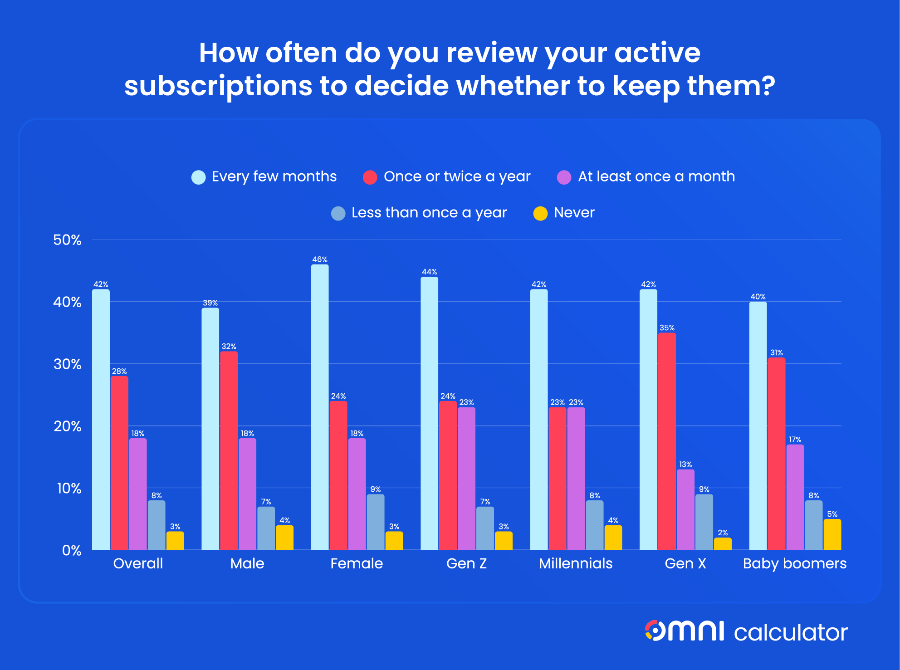
Bar chart showing how often Americans review their active subscriptions
How often do you review your active subscriptions to decide whether to keep them?

Once or twice a year accounts for 28% of respondents, and at least once a month for 18%. Just 3% say they never review their subscriptions.

Women are more likely to review every few months (46% vs. 39%), while men are more likely to do so once or twice a year (32% vs. 24%). Gen Z and millennials are most likely to review at least once a month, at 23% each, compared to 13% among Gen X.

Baby boomers report the highest rate of never reviewing at 5%.

Not all active subscriptions are actually being used.

Nearly one in three (32%) respondents say they're currently paying for at least one subscription they rarely or never use.

Do you currently pay for any subscriptions you rarely or never use?

Overall

Male

Female

Gen Z

Millennials

Gen X

Baby boomers

No

61%

55%

66%

62%

55%

59%

71%

Yes

32%

37%

27%

32%

37%

35%

21%

Not sure

7%

8%

6%

6%

8%

6%

7%

Men are more likely than women to report paying for unused subscriptions (37% vs. 27%).

Millennials and Gen X report the highest rates at 37% and 35%, respectively, while baby boomers are the least likely at 21%.

Among those with unused subscriptions, the issue rarely stops at just one.

More than half (56%) of those with unused subscriptions are paying for 2-3 that they rarely or never use.

How many subscriptions are you currently paying for but rarely or never using?

Overall

Male

Female

Gen Z

Millennials

Gen X

Baby boomers

2-3

56%

54%

61%

58%

54%

54%

65%

1

40%

44%

35%

39%

44%

38%

35%

4 or more

2%

2%

2%

3%

2%

2%

Not sure

2%

3%

6%

Some 40% of this group report just one unused subscription, while 2% have four or more.

Women with unused subscriptions are more likely to report 2-3 of them (61% vs. 54%), while men are more likely to report just one (44% vs. 35%).

Baby boomers in this group report the highest rate of 2-3 unused subscriptions at 65%.

Next, we asked respondents with unused subscriptions how much they estimate those services cost them each month.

More than half (53%) estimate spending $10-$24 per month on subscriptions they rarely or never use. That's roughly $120–$288 per year.
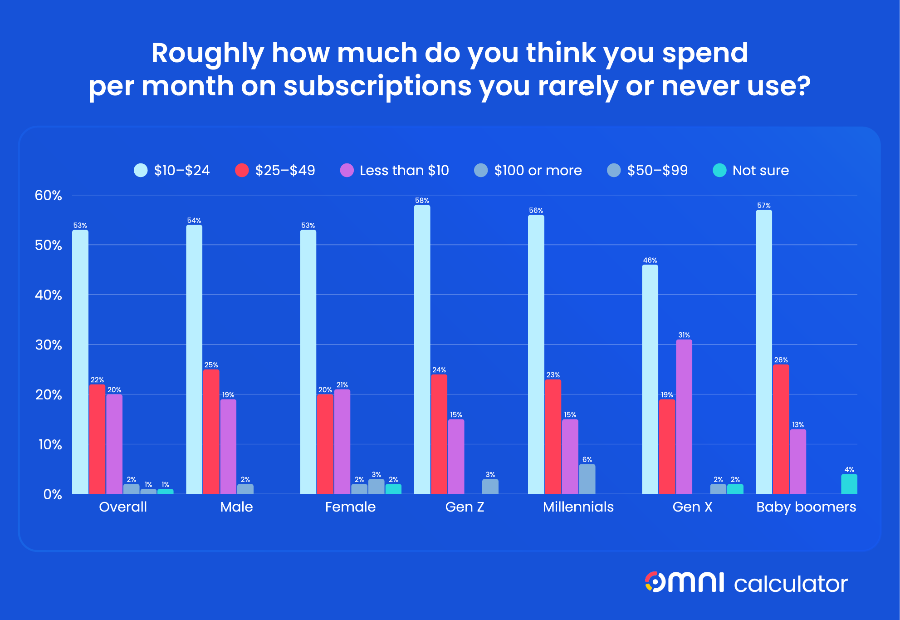
Bar chart showing estimated monthly spending on unused subscriptions
Roughly how much do you think you spend per month on subscriptions you rarely or never use?

The $25-$49 range accounts for 22% of this group, and the less than $10 range accounts for 20%. Some 2% estimate spending $100 or more per month on subscriptions they rarely or never use.

Gen Z and millennials are most likely to estimate spending $10-$24 on unused subscriptions, at 58% and 56%, respectively. Gen X is most likely to estimate spending less than $10 at 31%, compared to 15% for both Gen Z and millennials.

Millennials report the highest rate of spending $100 or more at 6%.

About seven in 10 (71%) respondents with unused subscriptions cite the belief they'll use the subscription again in the future as their reason for keeping it.

Why do you continue paying for subscriptions you rarely or never use? (Select all that apply)

Overall

Male

Female

Gen Z

Millennials

Gen X

Baby boomers

I think I might use it again in the future

71%

74%

70%

82%

73%

67%

65%

I keep meaning to cancel, but forget

32%

30%

35%

33%

38%

31%

17%

Someone else in my household uses it

26%

24%

29%

27%

37%

19%

13%

The price isn’t high enough to bother canceling

19%

24%

12%

30%

23%

13%

4%

Canceling feels like too much effort

13%

13%

14%

18%

6%

15%

17%

I’m worried about losing my account history or data

9%

12%

6%

9%

13%

10%

I’m locked into a long-term contract

5%

5%

5%

6%

6%

4%

4%

Other

2%

2%

2%

2%

4%

4%

About 32% say they keep meaning to cancel but forget, and 26% cite another household member using the subscription. 19% cite the price being too low to bother canceling, while 13% say the cancellation process itself feels like too much effort.

By gender, men are more likely to cite the low price as a factor (24% vs. 12%), while women are more likely to say they forget to cancel (35% vs. 30%).

Gen Z reports the highest rate of expecting future use at 82%. Millennials report the highest rate of another household member using the subscription at 37%, and are also the most likely to express concern about losing account history at 13%.

Baby boomers are the least likely to cite the low price (4%) or forgetting to cancel (17%).

Free trials are a common entry point for subscriptions and a common source of surprise charges, as 74% of respondents have been unintentionally charged for a subscription after a free trial ended.

Have you ever been charged for a subscription after a free trial ended when you didn’t intend to be?

Overall

Male

Female

Gen Z

Millennials

Gen X

Baby boomers

Yes, more than once

45%

46%

44%

54%

47%

47%

33%

Yes, once

29%

28%

31%

22%

37%

29%

26%

No

24%

25%

23%

22%

15%

24%

37%

Not sure

2%

1%

2%

3%

1%

4%

Nearly 45% say it has happened more than once, and 29% say it has happened once. Just 24% have never experienced an unintended post-trial charge.

Men and women are broadly aligned, with men slightly more likely to report being charged more than once (46% vs. 44%). Gen Z reports the highest rate of being charged more than once at 54%.

Baby boomers are the most likely to have never been unintentionally charged at 37%, while millennials are the least likely at 15%.

Moving on, we found that 71% of respondents canceled at least one paid subscription in the past 12 months.
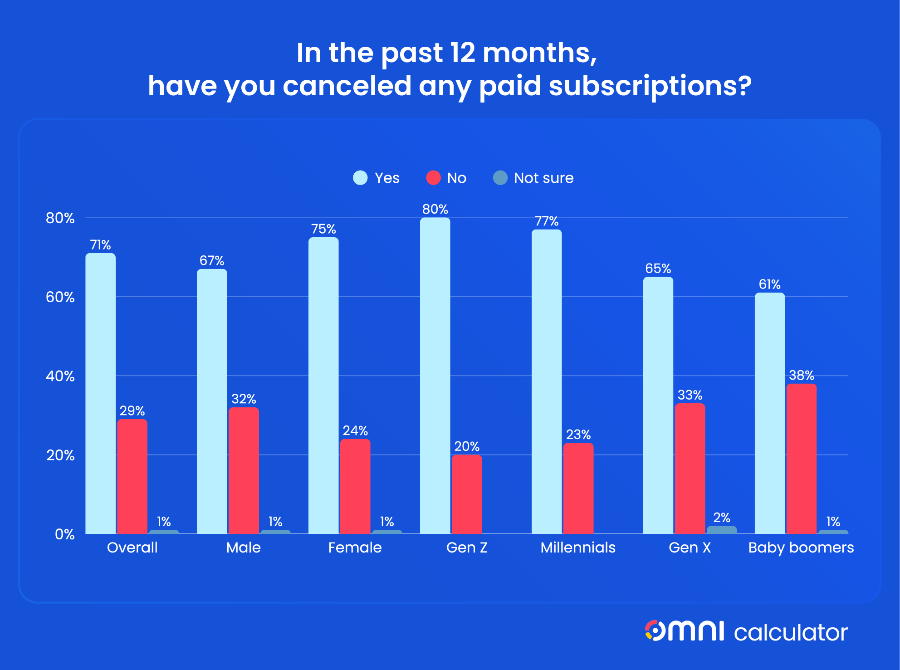
Bar chart showing the share of Americans who canceled a subscription in the past 12 months
In the past 12 months, have you canceled any paid subscriptions?

The remaining 29% didn’t cancel any subscriptions in that period.

Women report a higher cancellation rate than men (75% vs. 67%). Generationally, Gen Z (80%) and millennials (77%) are the most likely to have canceled at least one subscription, while baby boomers (61%) and Gen X (65%) report the lowest rates.

Among respondents who canceled a subscription in the past year, 67% cite not using the service enough to justify the cost as their primary reason.

What were the main reasons you canceled? (Select all that apply)

Overall

Male

Female

Gen Z

Millennials

Gen X

Baby boomers

I wasn't using it enough to justify the cost

67%

68%

66%

57%

69%

69%

73%

Too expensive / cost of living pressures

52%

50%

54%

55%

53%

56%

44%

The price increased

39%

47%

31%

41%

38%

37%

38%

I only subscribed for a specific show, season, event, or task

27%

26%

28%

24%

28%

26%

32%

I was doing a financial cleanse / cutting back

26%

24%

28%

24%

29%

27%

24%

I found a better or cheaper alternative

13%

14%

12%

16%

13%

10%

14%

The service quality declined

5%

5%

6%

5%

7%

4%

5%

Other

1%

1%

2%

2%

2%

Cost-of-living pressures or the service being too expensive follows at 52%, and a price increase is cited by 39%. Subscribing for a specific show, season, or event accounts for 27%, and conducting a financial cleanse or general cutback accounts for 26%.

Men are more likely to cite a price increase as a reason for canceling (47% vs. 31%), while women are more likely to cite cost-of-living pressures (54% vs. 50%).

Baby boomers are the most likely to cancel due to insufficient use at 73%, while Gen Z is the least likely at 57%. Gen X reports the highest rate of citing cost-of-living pressures at 56%.

More than half (57%) of respondents feel they spend more than they would like on paid subscriptions, with 45% saying they spend a bit more than they'd like and 12% saying they spend far more than they should.

Do you feel you overspend on paid subscriptions?

Overall

Male

Female

Gen Z

Millennials

Gen X

Baby boomers

Yes, I spend a bit more than I'd like

45%

44%

47%

57%

49%

43%

33%

No, my spending feels about right

42%

43%

40%

30%

35%

45%

56%

Yes, I spend far more than I should

12%

13%

11%

13%

14%

10%

10%

Not sure

1%

2%

1%

1%

1%

Some 42% feel their spending is about right.

Women are slightly more likely to feel they overspend a bit (47% vs. 44%), while men are marginally more likely to feel they overspend far more (13% vs. 11%).

Gen Z reports the highest rate of feeling they overspend a bit at 57%. Baby boomers are the most likely to feel their spending is about right, at 56%, and the least likely to feel they overspend a bit, at 33%.

Millennials report the highest rate of feeling they overspend far more, at 14%.

The broader economic climate is shaping how people think about their subscriptions.

Some 59% of respondents say they have already cut back significantly or are actively planning to reduce their subscription spending in response to the current economic climate.
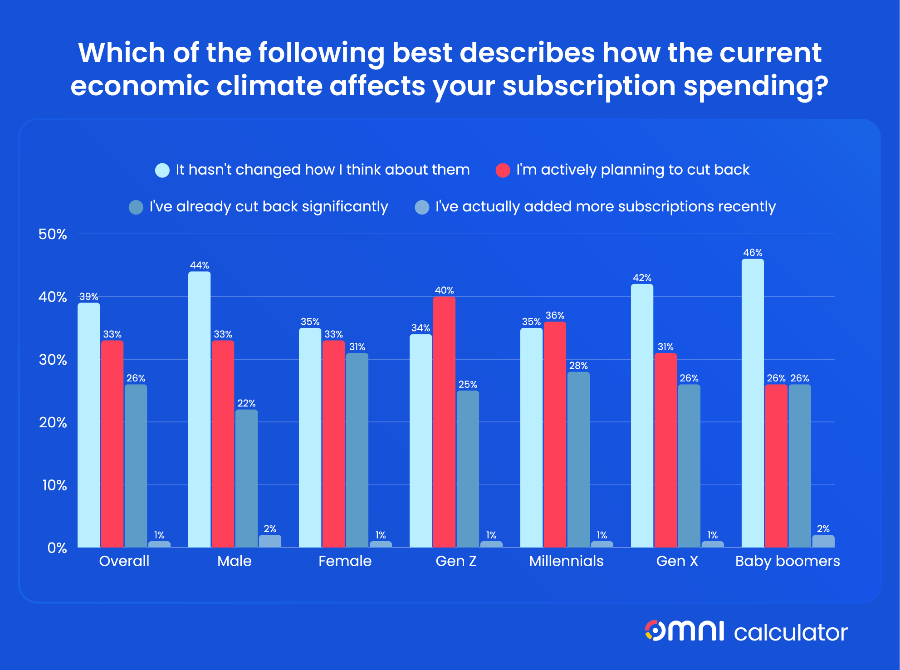
Bar chart showing how the economic climate is affecting subscription spending
Which of the following best describes how the current economic climate affects your subscription spending?

Some 39% say the economic climate hasn't changed how they think about subscriptions, and just 1% report having added more recently.

Women are more likely to have already cut back significantly (31% vs. 22%), while men are more likely to report no change (44% vs. 35%). Gen Z is the most likely to be actively planning to cut back at 40%, followed by millennials at 36%.

Baby boomers are the most likely to report no change at 46%, followed by Gen X at 42%.

When forced to choose between a subscription and other everyday spending, 35% of respondents say they'd give up daily café coffee first.

If you had to choose, which would you give up first?

Overall

Male

Female

Gen Z

Millennials

Gen X

Baby boomers

Daily coffee from a café

35%

35%

36%

38%

34%

32%

39%

Going out to eat once a week

22%

24%

19%

12%

26%

25%

22%

A gym membership

21%

19%

23%

19%

19%

21%

26%

A subscription service (e.g., Netflix, Spotify, Claude)

21%

22%

21%

31%

19%

22%13%

Other

1%

1%

1%

1%

Going out to eat once a week (22%), giving up a gym membership (21%), and giving up a subscription service entirely (21%) are each cited at roughly equal rates.

Men and women are closely aligned on coffee at cafés (35% vs. 36%). Women are slightly more likely to give up a gym membership (23% vs. 19%), while men are more likely to give up eating out (24% vs. 19%).

Gen Z is the most likely to say they would give up a subscription service first, at 31%, compared to just 13% of baby boomers. Baby boomers are the most likely to give up café coffee at 39%.

When it comes to the one subscription respondents couldn't give up, streaming TV leads at 36%.

Which type of subscription would you be the absolute last to cancel?

Overall

Male

Female

Gen Z

Millennials

Gen X

Baby boomers

Streaming TV

36%

33%

40%

25%

32%

41%

44%

Music

17%

19%

15%

29%

22%

13%

6%

E-commerce/delivery (e.g., Amazon Prime)

17%

15%

18%

14%

13%

14%

28%

I’d cancel all of them equally / no preference

7%

5%

9%

5%

7%

11%

5%

Cloud storage

6%

6%

6%

8%

6%

5%

6%

Fitness or wellness

4%

6%

3%

2%

6%

7%

1%

GenAI tools (e.g., Claude, ChatGPT)

4%

5%

2%

4%

6%

3%

2%

Gaming

3%

4%

1%

6%

4%

1%

1%

Software or productivity tools

3%

4%

1%

6%

1%

3%

1%

News or magazines

1%

1%

1%

1%

1%

3%

Other

1%

1%

1%

1%

1%

2%

Not sure

1%

1%

2%

1%

1%

4%

Music subscriptions and e-commerce or delivery services are tied at 17% each. 6% cite cloud storage, and 7% say they’d cancel all subscriptions equally.

Women are more likely than men to name streaming TV as their last-to-cancel subscription (40% vs. 33%), while men are more likely to cite music (19% vs. 15%) and GenAI tools (5% vs. 2%). Streaming TV is most valued by baby boomers (44%) and Gen X (41%), compared to just 25% for Gen Z. Gen Z is the most likely to name music as their last to cancel at 29%, compared to 6% for baby boomers.

Baby boomers also report the highest rate for e-commerce or delivery services at 28%, compared to 13% for millennials.

Next, we asked respondents what keeps them subscribed to the service they’d be last to cancel. Some 57% cite daily or near-daily use as the reason they keep their most essential subscription.
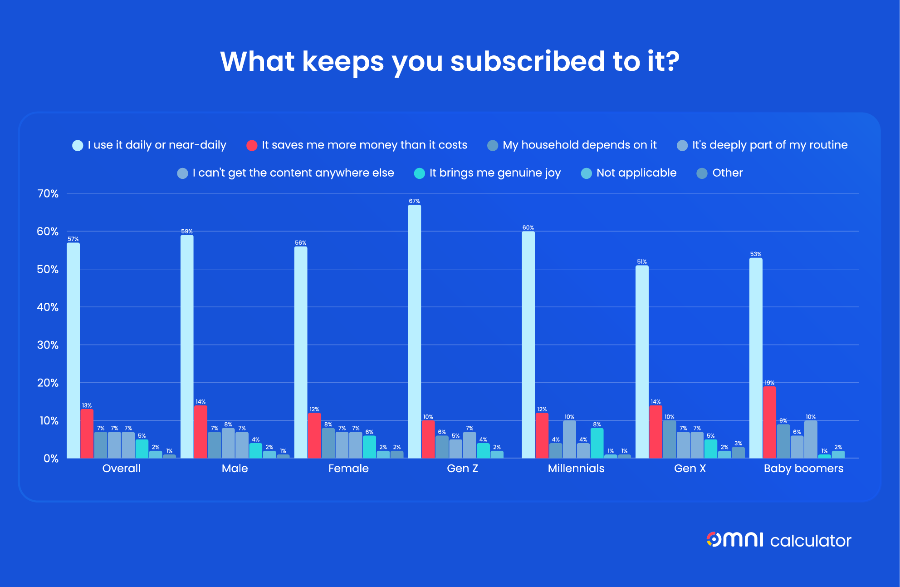
Bar chart showing why Americans keep their must-have subscription
What keeps you subscribed to it?

The subscription saving more money than it costs accounts for 13%, while household dependence, as deeply ingrained in the routine, and access to exclusive content each are cited by 7%.

Men are slightly more likely to cite daily use (59% vs. 56%). Gen Z reports the highest daily use rate at 67%, compared to 51% for Gen X. Baby boomers are the most likely to cite savings at 19%, compared to 10% for Gen Z. Millennials are the most likely to describe the subscription as deeply part of their routine at 10%.

When asked which single subscription offers the best value for money, Amazon Prime is the most frequently named service overall. Respondents commonly point to its combination of free shipping, streaming video, and music as delivering multi-layered value.

Netflix is the second-most-cited service, with breadth of content library as the primary justification. Spotify ranks third, with daily music use cited most often. YouTube Premium appears multiple times, with ad-free viewing and background playback named as key benefits.

Sharing logins remains a common cost-saving approach.

Nearly two in three respondents (62%) share subscription logins with at least one other person.

Do you currently share any subscription logins with anyone?

Overall

Male

Female

Gen Z

Millennials

Gen X

Baby boomers

Yes, with people inside my household only

44%

40%

49%

50%

45%

47%

33%

No

37%

40%

34%

20%

30%

43%

55%

Yes, both inside and outside my household

10%

10%

10%

20%

15%

3%

3%

Yes, with people outside my household

8%

9%

7%

10%

9%

7%

8%

Prefer not to say

1%

1%

1%

1%

1%

1%

Roughly 44% share with people inside their household only, 8% share exclusively with people outside their household, and 10% share both inside and outside. Some 37% don’t share at all.

Women are more likely to share only within the household (49% vs. 40%), while men are more likely not to share at all (40% vs. 34%). Millennials report the highest combined sharing rate at 69%, while baby boomers are the least likely to share, with 55% not sharing at all.

Gen Z is the most likely to share both inside and outside the household at 20%, compared to 3% each for Gen X and baby boomers.

Among those who share subscription logins, household relationships are most common.

Some 65% of respondents who share logins do so with a partner or spouse, the most common recipient by a wide margin.

Who do you share subscription logins with? (Select all that apply)

Overall

Male

Female

Gen Z

Millennials

Gen X

Baby boomers

Partner / spouse

65%

65%

65%

64%

66%

72%

54%

Parents or in-laws

27%

30%

24%

47%

38%

13%

Siblings

24%

24%

23%

48%

28%

8%

2%

Adult children

23%

24%

23%

4%

8%

38%

60%

Friends

12%

15%

9%

21%

18%

2%

4%

Other

4%

2%

5%

2%

5%

5%

Parents or in-laws account for 27% of sharing recipients, siblings for 24%, and adult children for 23%. Friends are cited by 12%.

Men are more likely to share with parents or in-laws (30% vs. 24%) and friends (15% vs. 9%). Gen Z is the most likely to share with parents or in-laws (47%) and siblings (48%), Millennials also report elevated rates for both groups at 38% and 28%, respectively.

Gen X is most likely to share with adult children at 38%, while baby boomers report the highest rate at 60%.

Several streaming services tightened restrictions on shared accounts in recent years, prompting cancellations and workarounds among affected users.

Still, 65% of respondents say they haven't been affected by any account-sharing crackdown in the past year.
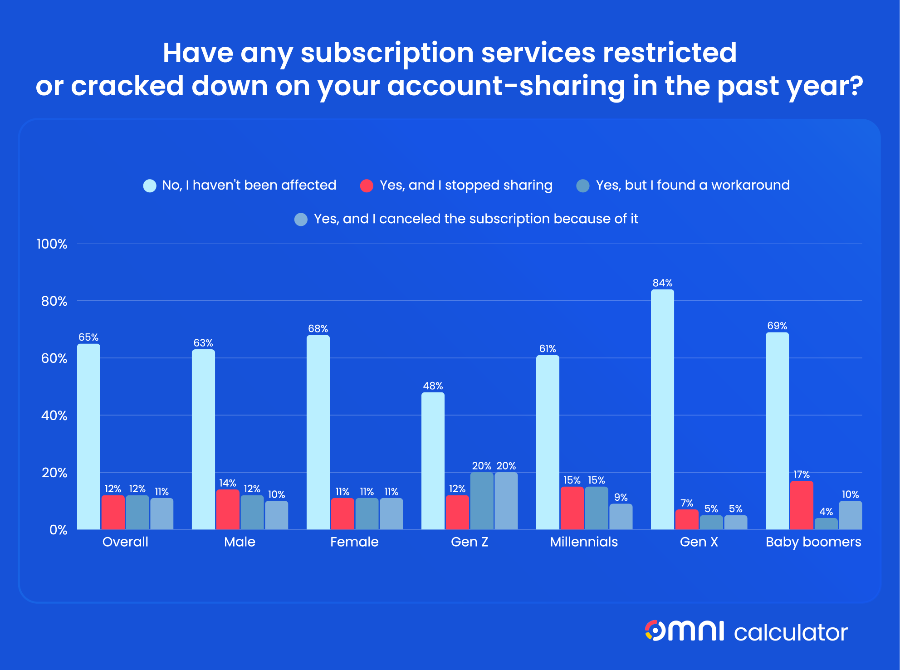
Bar chart showing how account-sharing crackdowns affected Americans
Have any subscription services restricted or cracked down on your account-sharing in the past year?

Among the 35% affected, responses are nearly evenly split: 12% stopped sharing, 12% found a workaround, and 11% canceled the subscription altogether.

Women are slightly more likely to have been unaffected (68% vs. 63%). Gen X reports the highest rate of being unaffected at 84%. Gen Z reports the highest combined impact rate at 52%, with 20% finding a workaround and 20% canceling as a result of the restriction.

Millennials show the highest rate of stopping sharing after a crackdown at 15%.

Lastly, we asked respondents which strategies they use to reduce their subscription costs, and 46% pointed to sharing a login with someone.

Which of the following workarounds have you used to save money on subscriptions? (Select all that apply)

Overall

Male

Female

Gen Z

Millennials

Gen X

Baby boomers

Shared a login with someone

46%

51%

39%

63%

54%

25%

35%

Used someone else’s family plan

32%

31%

33%

49%

38%

16%

23%

Canceled and resubscribed to get a promotional rate

27%

30%

23%

26%

26%

33%

17%

None of the above

20%

16%

24%

9%

17%

29%

29%

Used a student or workplace discount

17%

18%

15%

33%

13%

15%

Not applicable

7%

5%

9%

4%

5%

9%

15%

Used a VPN to access a cheaper regional price

4%

5%

2%

7%

2%

4%

Prefer not to say

2%

2%

1%

2%

1%

1%

2%

Using someone else’s family plan accounts for 32%, and canceling and resubscribing for a promotional rate for 27%. 17% cite using a student or workplace discount. Some 20% report using none of these strategies.

Men are more likely to share a login (51% vs. 39%) and to cancel and resubscribe (30% vs. 23%). Gen Z reports the highest rates across most workaround categories: login sharing (63%), family plan use (49%), and student or workplace discounts (33%). Gen X is most likely to cancel and resubscribe at the promotional rate (33%), compared to 17% for baby boomers.

Baby boomers and Gen X are each the most likely to report using none of the listed workarounds at 29%.

The survey was conducted on April 16, 2026, using the Prolific online research platform. Participants were screened to include only US adults who had at least one active paid subscription service. The sample included 500 US adults, with the distribution aligned with US Census data to reflect the broader population. Among participants, 50% identified as male, 48.2% as female, and 1.8% as other or preferred not to say. Age distribution was as follows: Gen Z (ages 18-29): 20.4%; millennials (ages 30-45): 27.8%; Gen X (ages 46-61): 30%; baby boomers (ages 62+): 21.6%; less than 1% preferred not to say. The survey was designed with a 95% confidence level and a 4% margin of error. In some cases, percentages may not add up to 100% due to rounding or multi-select questions. All results rely on participants' self-reported answers and may reflect recall errors.

Omni Calculator helps over 15 million monthly users solve calculation problems through 3,800+ expert-reviewed tools.

The content in this article is for noncommercial use only. When sharing, please include a link back to Omni Calculator as the original source.

Need to run some quick numbers? Check out the calculators below for help with savings, rent, and math.

Authors of the report

Ask the authors for a quote

Copyrights