A dollar in 1990 equals $2.46 today, but college now costs over five times more and a TV just 1¢ in quality-adjusted terms
• Finance
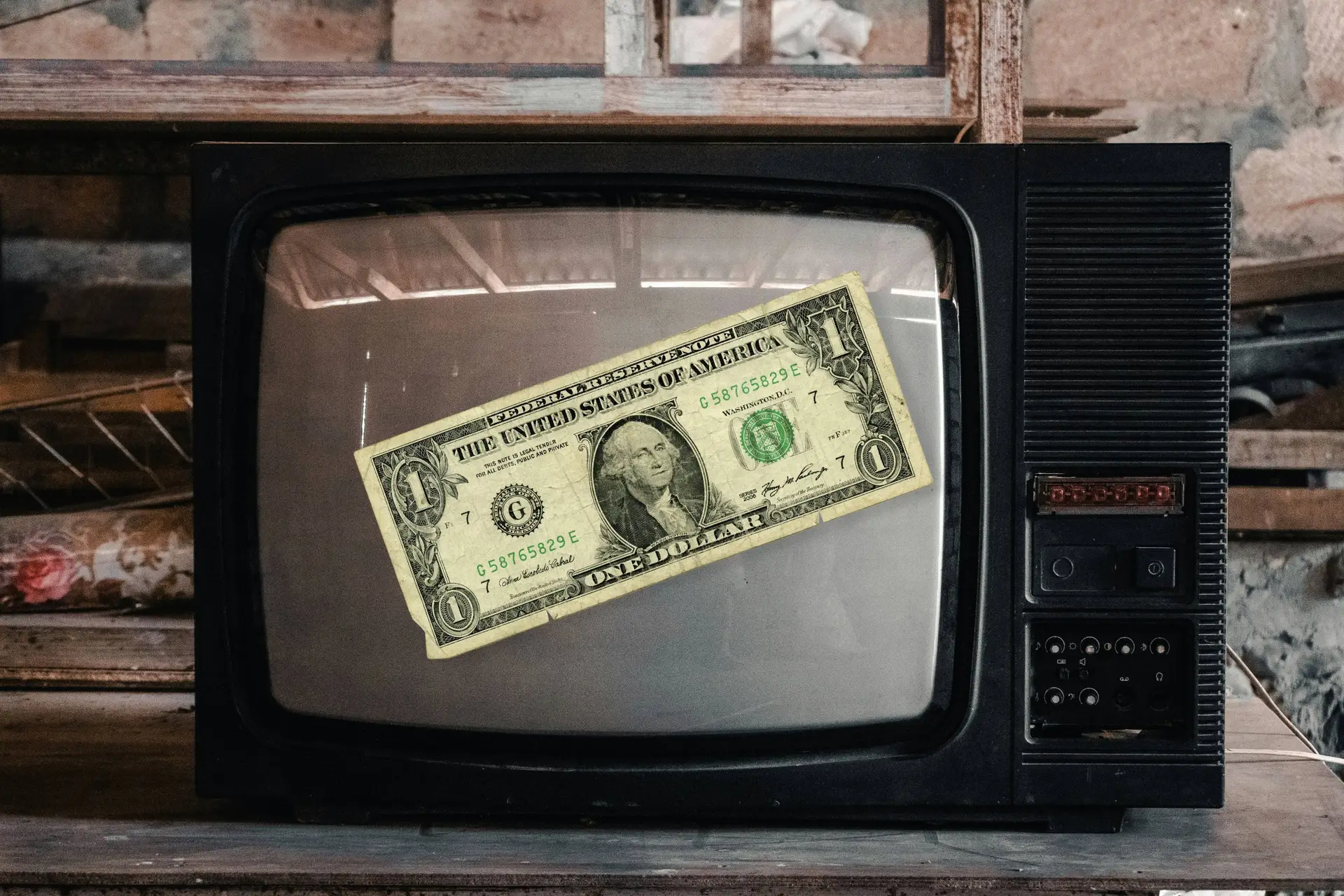
You go to the store in 1990 and spend $1; fast-forward to today, you go to the same store to buy the same thing of the same quality, and you spend $2.46. For every dollar you spent on college 35 years ago, you now need $5.46. Meanwhile, a TV costs about 1% of what it did in 1990. While wages have kept up with general inflation, foundational life costs, like shelter, childcare, and higher education, are significantly more expensive in comparison.
Key takeaways
- You need roughly $2.46 today to buy something that cost $1 in 1990
- College tuition, childcare, and rent now cost roughly 3 to 5.5 times what they did in 1990
- Non-essential items, such as TVs and toys, have dropped to pennies in comparison
The price of adulthood

A 1990 dollar equals $2.46 today, but you would need $5.46 for college tuition and $3.74 for childcare to match 1990 purchasing power.
Higher education is deemed one of the most essential elements of modern society. It gives us the foundation that we need to build our life once we step into adulthood, yet, according to the U.S. Bureau of Labor Statistics, it now costs 5.5 times as much as it did in 1990, a 446% increase—and that’s after accounting for grants and scholarships. For every dollar we paid back then, we now have to spend $3.74 for day care and preschool, $3.14 for rent, and $2.97 for shelter, which includes owners' equivalent rent and lodging. Maybe these didn’t multiply as aggressively as college fees, but they represent a big portion of our day-to-day expenses, therefore taking a significant toll on our household budget.
Life costs skyrocket, gadgets get cheaper

Since 1990, essentials like college tuition and childcare have skyrocketed, while electronics and toys have become significantly cheaper.
While the most essential elements of our life now cost more, some household goods saw a significant decrease in price. For example, a toy that we purchased for $1 in 1990 would now cost 24¢. What’s even more staggering, in quality-adjusted terms, a TV now costs about 1.3% of its 1990 price—that’s a 98.7% drop. This doesn’t mean that a 65-inch 4K OLED costs pennies, but rather that a few hundred dollars buys a way better TV nowadays than anything sold in 1990. The index tracks what you pay for screen size, quality, and features, so, if it was still produced, a TV that cost $2,000 in 1990 would be about $26 today.
Did pay keep up?

While wage growth has outpaced overall inflation since 1990, it falls short of the costs of college tuition, childcare, and rent.
The good news is that wages seem to have risen up to the level of some of the costs of living. Nonsupervisory employees now earn $3.07 for every dollar, and seeing that the overall inflation compared to 1990 hovers around $2.46, pay did beat baseline inflation.
However, it did not grow fast enough to keep up with the costs of college, childcare and housing. While rent only slightly outpaced wages, college tuition and early childhood education are incomparably more expensive.
Stretching the budget
| Category | Multiplier | Change |
| College tuition & fees | 5.46x | +446% |
| Childcare (1991) | 3.74x | +274% |
| Rent | 3.14x | +214% |
| Wages | 3.07x | +207% |
| Shelter | 2.97x | +197% |
| All items | 2.46x | +146% |
| Toys | 0.24x | −76% |
| TVs | 0.013x | −98.7% |
Nowadays, technology is more accessible than ever, yet our budgets feel squeezed beyond their limits. Gadgets don’t provide financial security. While the new generations have more access to information and opportunities, they are crushed by foundational costs that their predecessors could pay for with a summer job. Unfortunately, we can't live inside a flat-screen TV, and a $300 4K display doesn't offset the stress of a $1,400 rent bill.
Data sourced from the U.S. Bureau of Labor Statistics Consumer Price Index databases, excluding series AHETPI, CPIAUCNS, and CUUR0000SERE01, which have been retrieved from FRED®. All BLS data are based on the Consumer Price Index (CPI) and expressed as annual averages from 1990 to 2025, unless stated otherwise. In the absence of an annual average for 2026, data for 2025 has been used. CPI indices adjust for changes in quality.
Sources
Most Read




loading
Loading